Is our water evil?

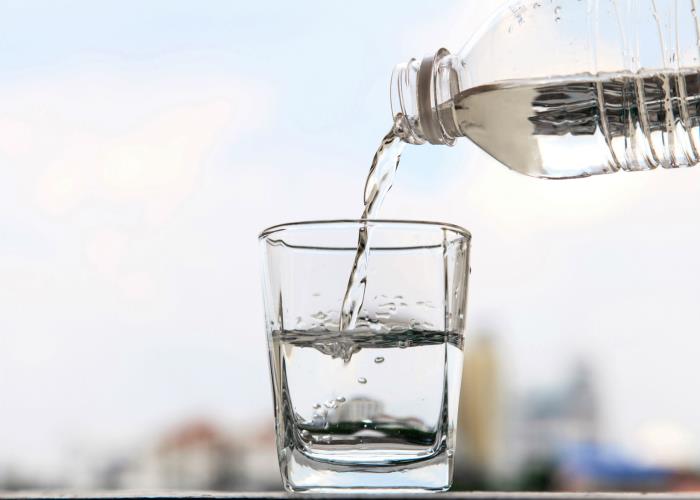
Drinking a lot of water may do you more harm than good.
It's so typical, isn't it?
Guaranteeing us luminous skin, hard nails, glossy hair, weight-loss, good kidney health and stable concentration levels, water can do little wrong. In many ways, it is the ultimate godsend.
Ever discovered a spot taking your face hostage? Feeling sluggish? Been a little ill? Notice your skin has turned scaly, flaky or dry? Drink a little water, someone may at some point have suggested, and it’s certain to vanish …
Dehydration is a myth
But now, it seems, it’s time for a change of heart.
New research has come forward to suggest that water may not in fact be the gem we all believe it to be.
Why? Apparently dehydration is a myth. Total make-believe. And worse, consuming eight glasses of water a day is 'bad' for us.
The claims have been made by Glasgow-based GP Margaret McCartney, who has said that advising people to drink more than six glasses of water a day, is 'not only nonsense, but thoroughly debunked nonsense'.
Despite the fact that water makes up two-thirds of the weight of a human body (which is why scales may tell you different things at different times of the day), it is apparently inessential to resupply what we lose through perspiration, evaporation and urination by taking in a minimum of 1.2 litres.
Its dangers
We glug and glug at water hoping to keep wrinkled skin and overwhelming fatigue at bay, but while we assume we are aiding our health by drinking more, we may in fact be damaging it, too.
Few are aware, but an abundance of water in the body can in fact lead to heart failure through a diluting of sodium and electrolyte levels.
Water intoxication, or hyponatremia, to give it its proper title, can be fatal.
A liquid obsession
Acknowledgment of its perils, of course, wouldn't be as hard to digest if we weren't all hell bent on consuming our body weight in the stuff. And it certainly doesn't help that culinary celebrity Nigella Lawson openly admits that despite the raised alarms, she is a self-confessed ‘aquaholic’, often imbibing 2 litres before going to bed at night.
In effect, water has transformed from necessity, to something to which we all feel we constantly need access. Last year, Britons drank 2.06 billion litres of bottled water, a figure that far outweighs the mere 1.42 billion from the year 2000.
No surprise then, that the bottled water industry is currently worth £90 million in the UK this year alone - a 41% mark up from 2006.
As a result of our newest social obsession, flavoured water has also taken off in spectacular style. Be it lime, strawberry, blackcurrant and even 'oxygen-flavour', water has shed its 'boring' tag and now become just as good, just as healthy and just as plentiful as a replacement to a pudding, or meal.
In some ways, it is reassuring to know that Britons are still drinking more tea and coffee than they do water. But then again, it does make one think twice about the amount of money consumers are happily handing plastic bottle water companies.
Long gone are the days when we walked over to the tap and filled up a container through its free-flowing, just-as-good water. Is it really necessary for us to buy a new bottle every time we feel thirsty?
Even Nigella, who normally has the public hanging off her every last slice of advice, is finding it hard to cut this particular habit.
So what do we drink now?
Despite this furore, it’s crucial we do not forget water’s essential qualities – after all, we need hydration in order to function.
It was because of this that we never thought to question the validity of its advantages - after all, what would we have to fear from a clear, tasteless liquid that contained no alcohol?
Over the last few decades, we’ve taken to having handy little plastic bottles of the stuff by us at all times. In handbags, in the crannies of our elbows and on our desks at work, water has become this century's must have accessory.
But perhaps these findings – whose claims have been lambasted by other members of the NHS who now worry that the public will dramatically reduce its consumption and find itself dehydrated – do encourage us to step back a little. While it’s important to keep ourselves running properly, it is simply not necessary to reduce our stomachs into unnecessary water sacks. (Or make bottle companies filthy rich off our fads.)
“As long as one keeps hydrated and is drinking plenty of fresh water throughout the day, they are helping the body retain its moisture,” a local GP, explains. “There is no need to panic over water being dangerous, but it’s always important to be aware of the consequences of indulgence. Water may not seem harmful, but in excessive amounts, it can be. Just be sensible.”
But where do you sit in this debate? Let us know in the comments box below.
Also worth your attention:
Vitamin water is not nutritious