Chopping boards: Plastic v wood

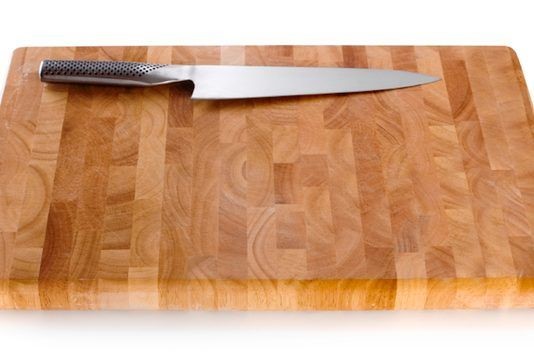
Do you prefer plastic chopping boards such as those by Joseph Joseph, or does the traditional wooden butcher's block grace your kitchen?
The relative hygiene merits of different chopping boards have long posed something of a kitchen quandary. The main fears surround poultry, which we’re advised to keep to one single board. The clean police say we should then have another board for other meats and fish and yet another for fruit and veg.
The story goes that a plastic board is the most effective way to avoid germs and bacterial infections, because it is harder than a wooden board and therefore gets fewer grooves from sharp knives where harmful germs can hang out and infect the next food to come along and sit on the board.
So far, so sensible, except that various tests have shown this reasoning to be wonky. Plastic boards stay damp for longer than wooden boards do, so the bacteria survive on it for longer, and wood contains antibiotic agents which stunt the growth of bacteria. What’s more, you have no doubt used both wooden and plastic chopping boards in your kitchen adventures, and you’ll have seen quite clearly that both end up covered in grooves.
Too posh to chop
That’s assuming you chop on your boards, rather than keeping them as some sort of display item. Given some of the high end and incredibly pricy examples on sale, you may well be precious about using your chopping board for its intended purpose.
The chopping board has evolved into a multi-functioning piece of kit. You can chop on it, display it and even serve food on it, as you’ll know if you’ve visited a gastropub or steakhouse recently – each one seems to have a stash of wooden or slate boards these days, to serve burgers, ribeyes and cheese and biscuits.
The best board for you
At home, if you’ve got your posh pans, cookware and expensive knives, showing off with a chopping board is the next step. Last year, the most covetable board was Joseph Joseph’s Index set of four boards.
Lakeland has special boards to help with common kitchen tasks, such as this glass worktop saver printed with conversion charts and a wooden pastry board with different rolling sizes etched into it.
My own current fling is with this bamboo board from Solus. Or you can go one step further and buy a mandoline for perfect dauphinoise.
As we’ve learnt to love wood again, hefty chunks of timber are making a reappearance on kitchen work surfaces. Wood, of course, is more expensive than plastic. Take this handsome Provenance board from John Lewis at £90, or Raymond Blanc for Analon’s smart brick of acacia at £41.
Would you stretch to treble figures?
More and more home cooks want to show off with professional equipment in their own kitchens. If these examples seem pricy, how do you feel about splashing out £655 on a butchers block and stand – and that’s for the smallest one?
Where most proud cooks want to show off their chopping board, I’ve found one which might be better hidden away. We all know a chef or three who exhibits over-the-top control freakery in their kitchen, demanding every carrot stick be sliced just so and each onion diced with precision. Why not spoil them this Christmas with this OCD Chef board?
If you’re choosy about chopping boards, you might enjoy: