Buildings battling for survival against the sea (copy)
Joseph Curran
05 June 2018
Homes vs the sea – and there's only one winner
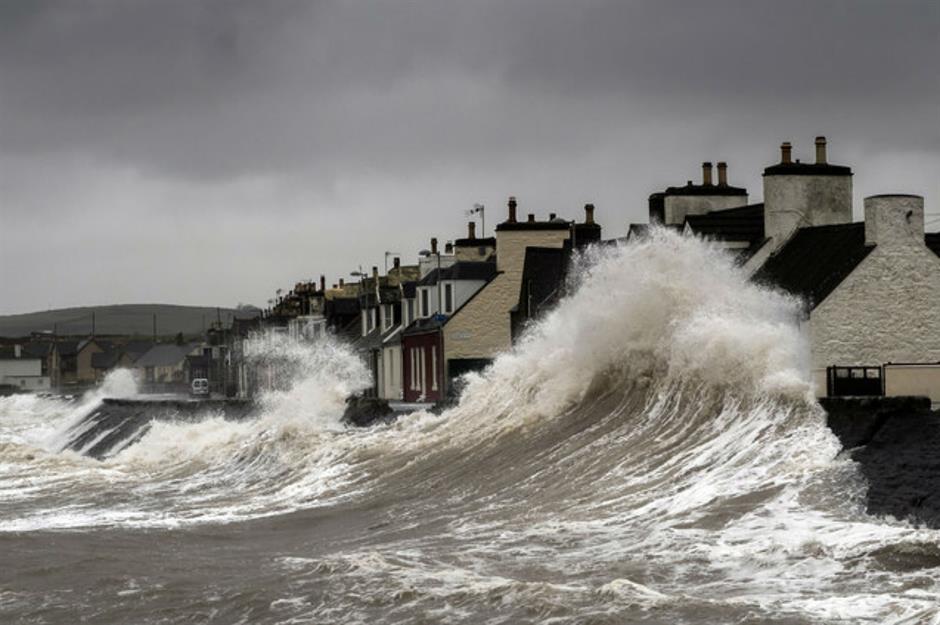
A sea view sometimes comes at a price; the relentless onslaught of wind and water will take its toll over the years, sometimes taking away the very floor beneath your feet. Find out how these houses have fallen victim to the elements...
The Marrams, Hemsby, Norfolk, UK
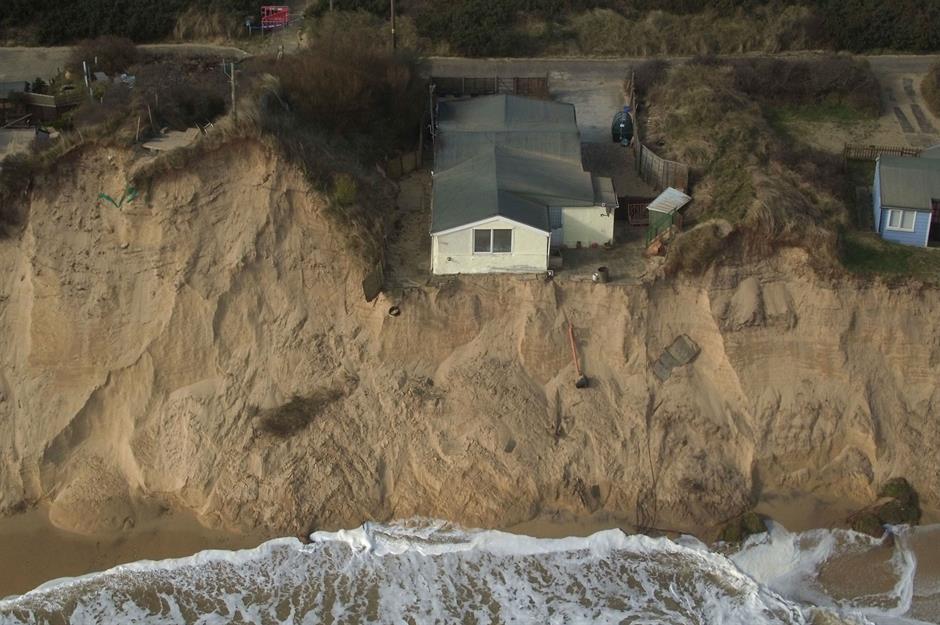
Imagine watching as your home and all of your belongings tumbled into the ocean as you watched on. That's exactly what happened in March 2018, when the clifftop houses of The Marrams in Hemsby, Norfolk, were evacuated as the ground crumbled under the onslaught of the sea.
The Marrams, Hemsby, Norfolk, UK
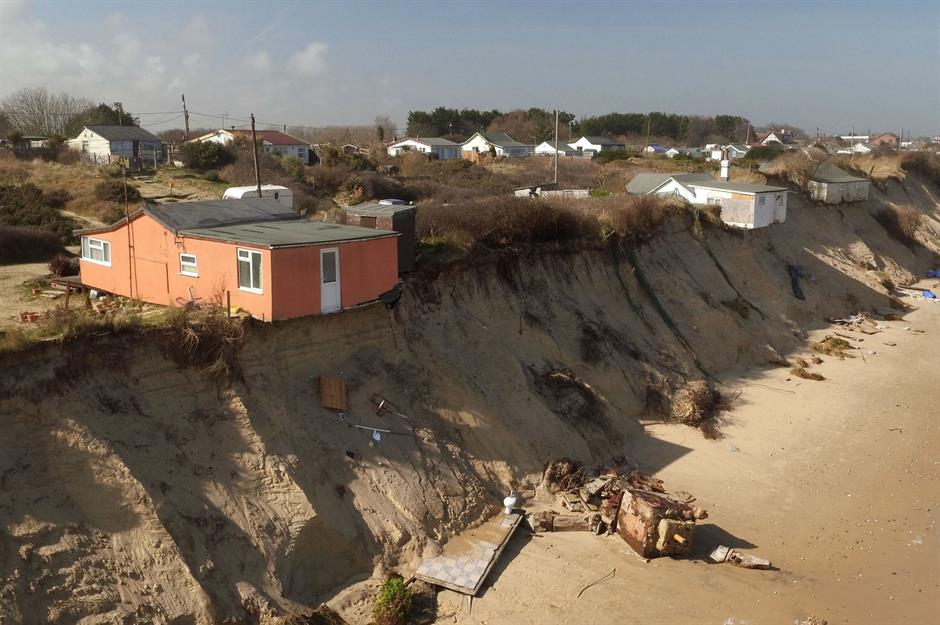
The thirteen homes were getting closer to the ocean's edge after three days of high tides and strong winds. By the time the storm had subsided, five homes had to be demolished by the council as they were deemed unsafe.
Sponsored Content
Bonita Springs, Florida, USA
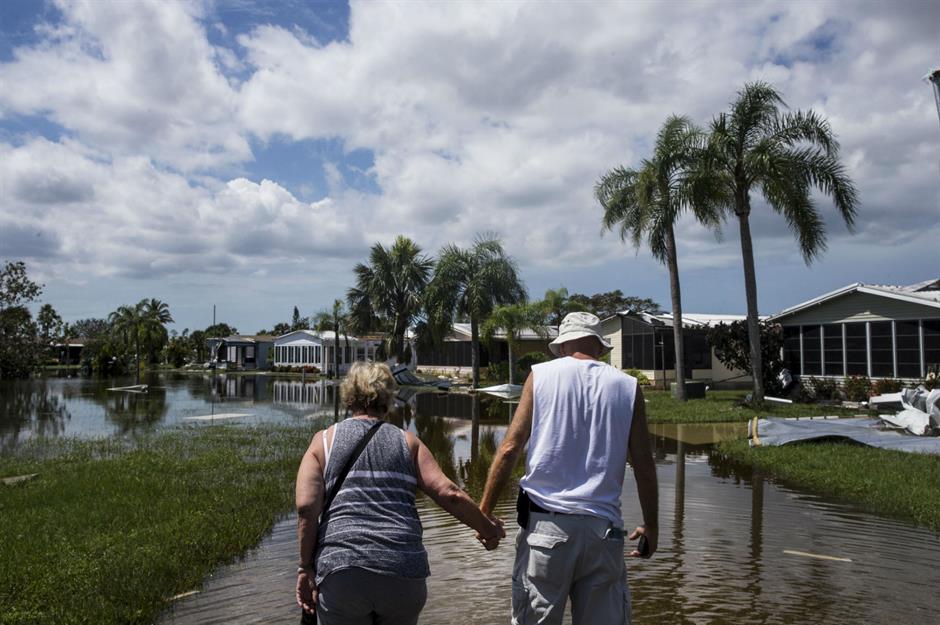
The coastal community of Citrus Park in Bonita Springs, Florida was flooded after Hurricane Irma in September 2017. Linda and Dave Stroshein walked through the park to see their house underwater for the first time three days after the storm.
La Jolla Shores, California
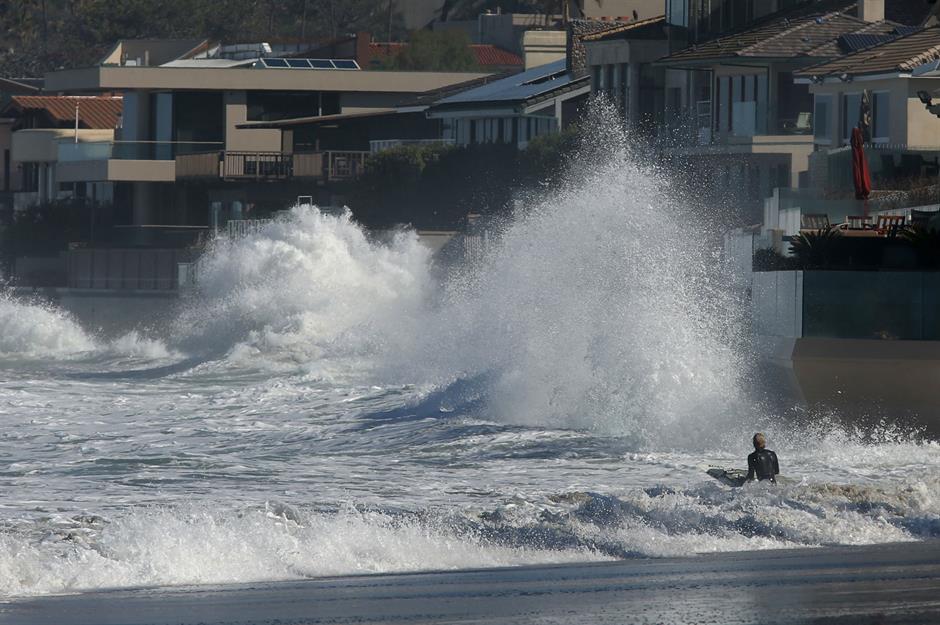
High tides caused coastal flooding in La Jolla Shores, California. Huge waves slammed into the north end of the boardwalk and poured over the seawall into houses.
Collaroy, Australia
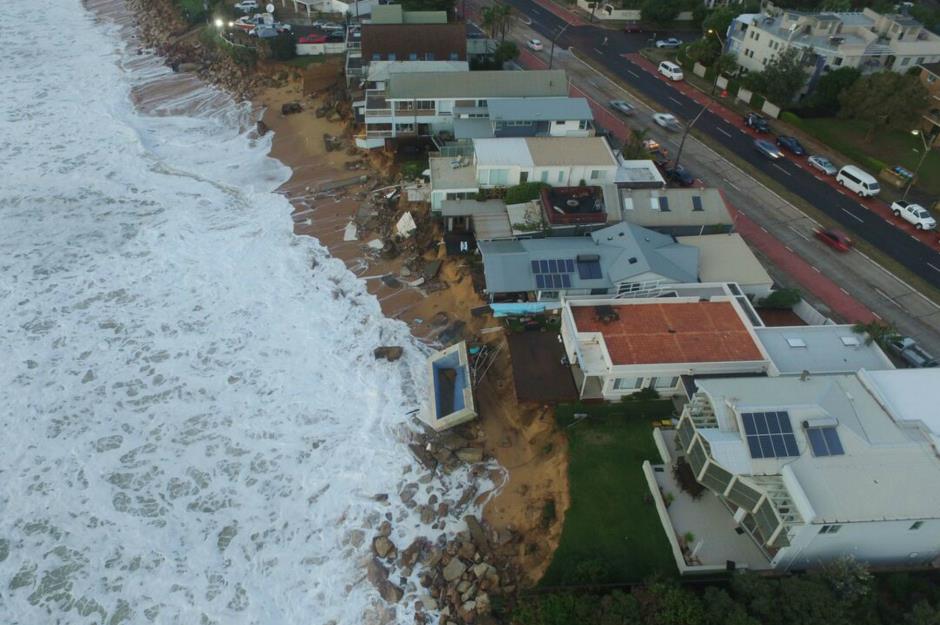
Nine beachfront homes overlooking the beaches of northern Sydney took a battering from an intense storm in 2016, prompting a deluge of erosion that sent whole swimming pools and balconies clattering into the South Pacific Ocean.
Sponsored Content
Collaroy, Australia
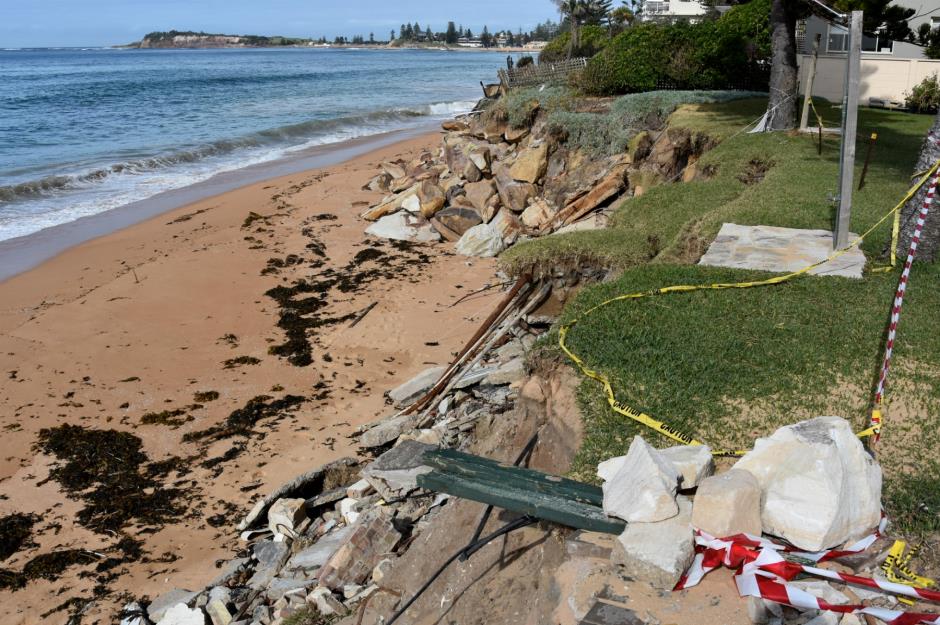
Property prices plummeted by more than $500,000 (£400,000) as a result of the huge storm that whipped up king tides along the coast of New South Wales.
Collaroy, Australia
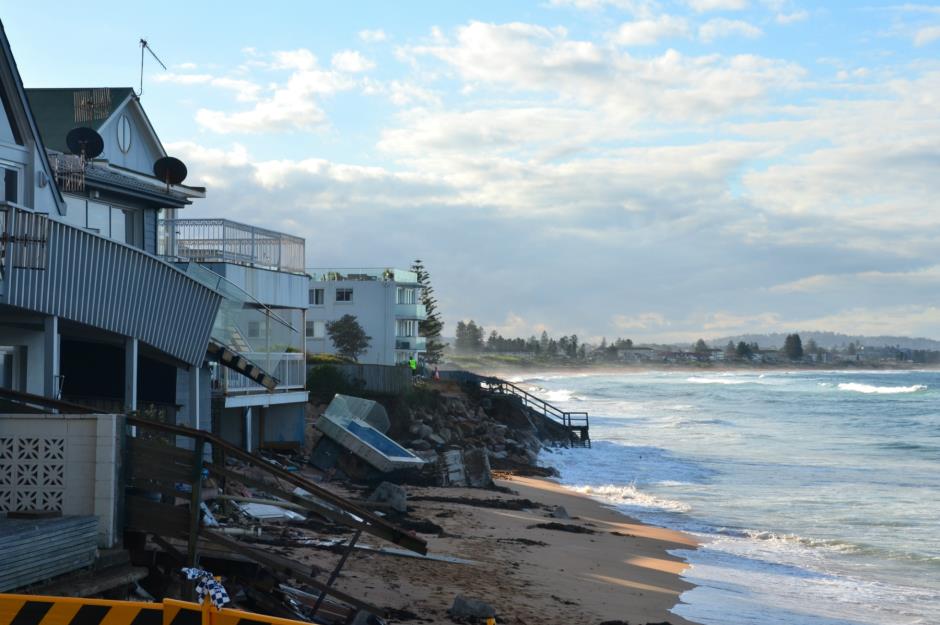
This stretch of properties might be known as ‘Millionaires’ Row’, but many of the people living here didn’t have insurance cover for storm surges, leaving them having to pay for huge repair bills.
Happisburgh, Norfolk
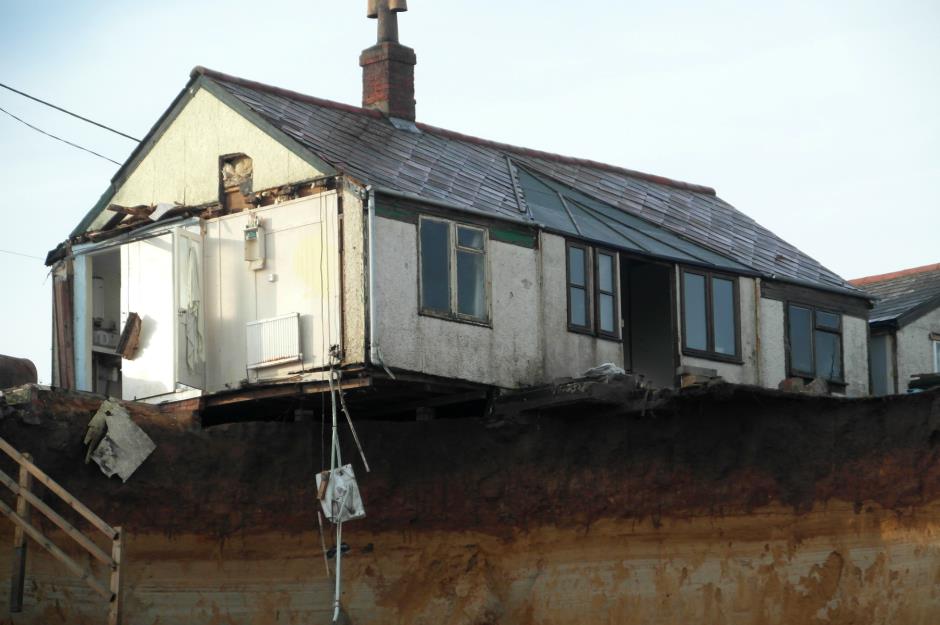
Huge chunks of this bungalow on the UK’s North Sea coast fell into the choppy waters below following the catastrophic tidal surges of 2013.
Sponsored Content
Happisburgh, Norfolk
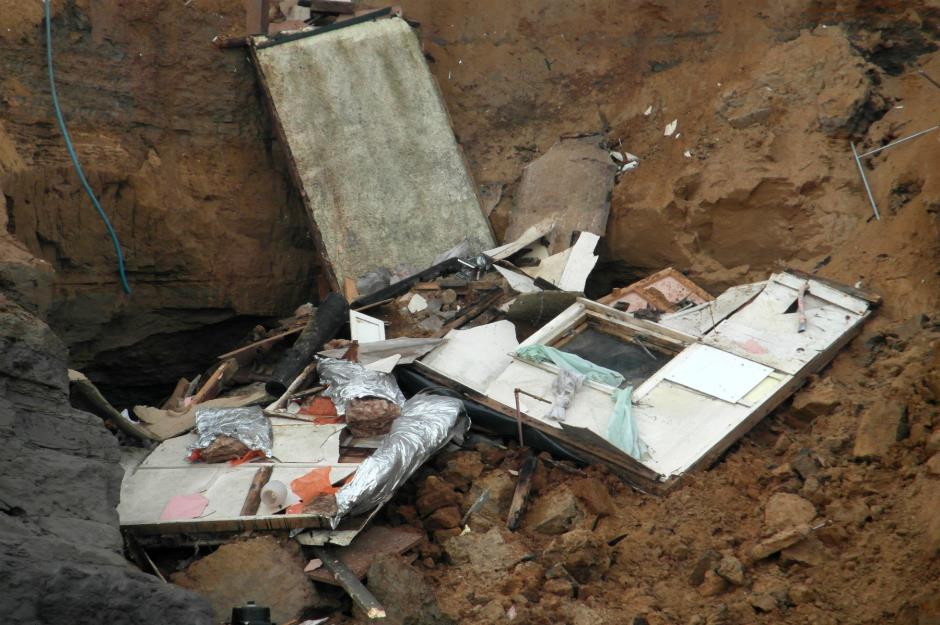
One side of the 1930s building was left in tatters on the beach. The woman who lived in the stricken building was forced to move into temporary accommodation across the road.
Happisburgh, Norfolk
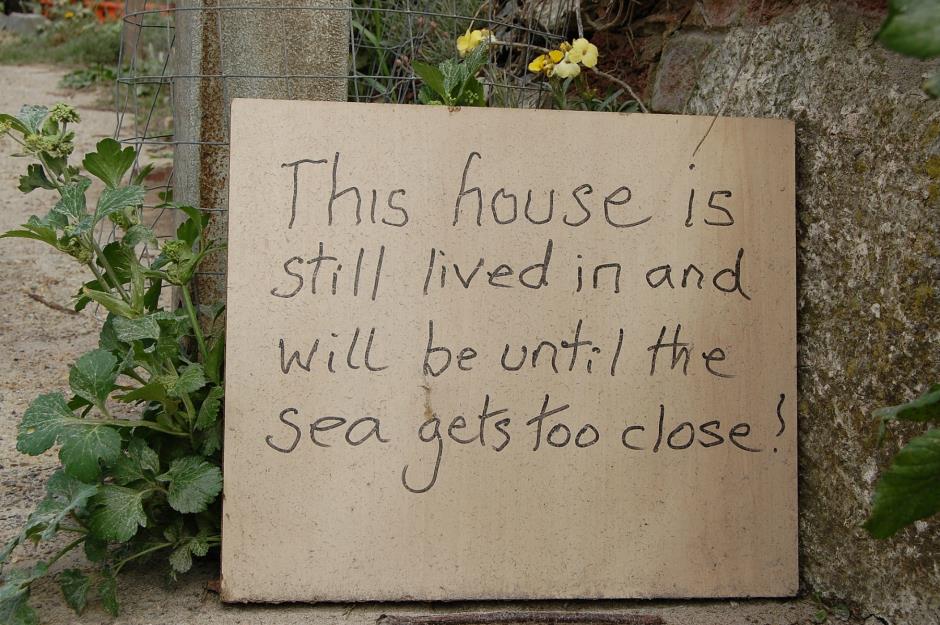
Until 2013, Bryony Nierop-Reading was the only resident of the street after her neighbours vacated their properties three years earlier to avoid the incoming erosion.
Happisburgh, Norfolk
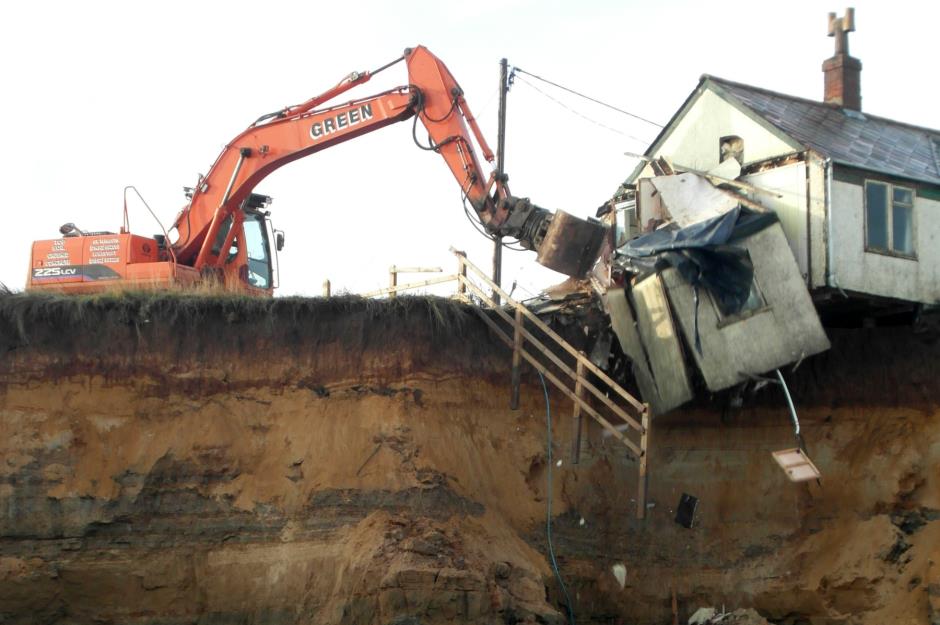
With one side of the building left dangling over the cliffs, the local council were forced to order the demolition of the building before the rest of the bungalow fell into the sea. The 71-year-old resident declined the offer of compensation from Norfolk County Council and continued living in a caravan until the bulldozers arrived. The demolition was complete by the end of 2013.
Sponsored Content
Happisburgh, Norfolk
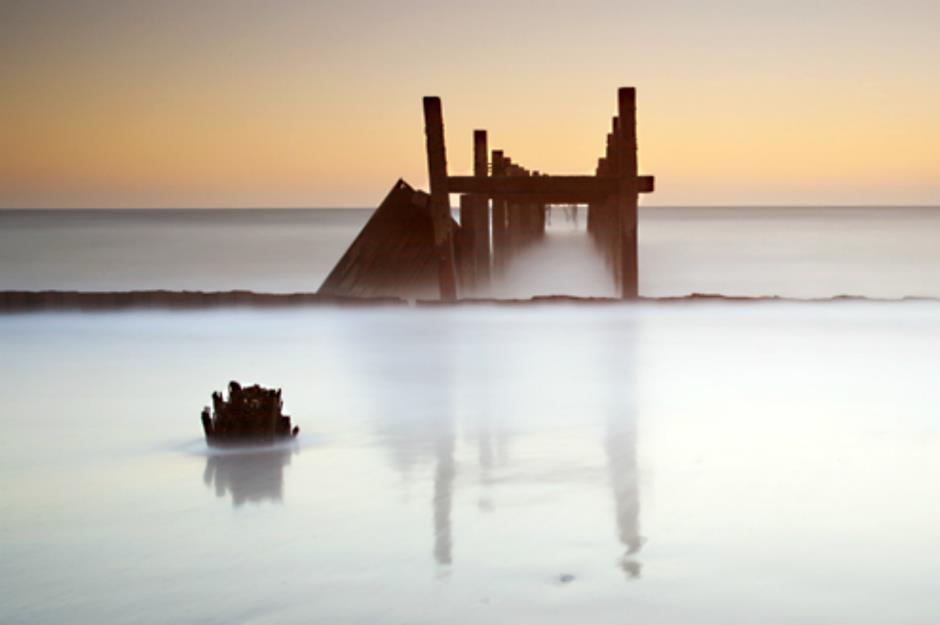
Here’s another property from the east coast of the UK that’s succumbed to the North Sea. Only the upper parts of the building remain visible above the water in what looks like an eerie scene from an indie horror film.
Isla Vista, California
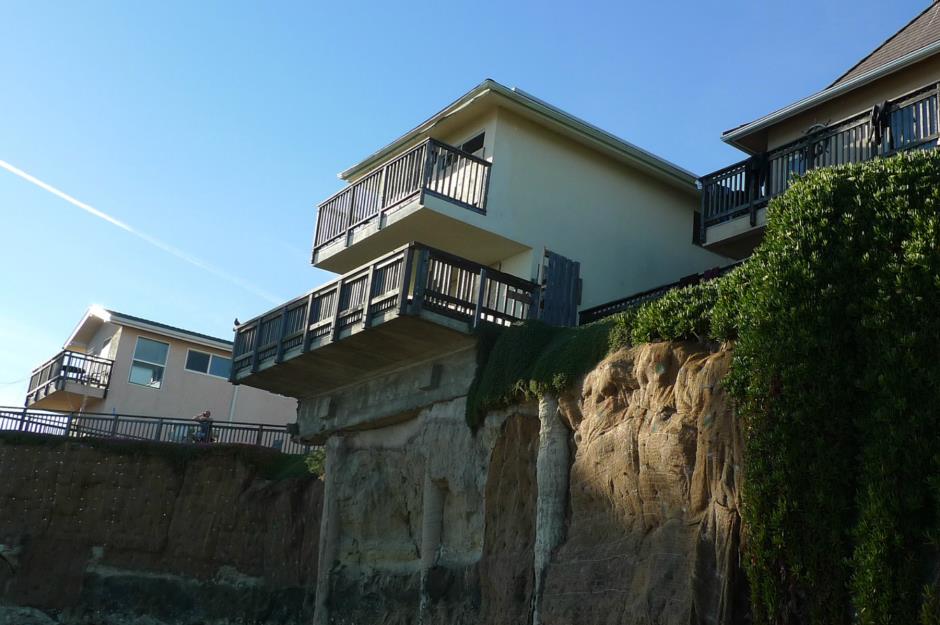
Erosion is measured by the inch in this expensive part of California, where the price per square foot increases quicker than the rate of the coastline’s disintegration. Here in Goleta near Santa Barbara, the apartments have been undercut with concrete pilings to support the balconies and their attached buildings from the unabated erosion. More of the cliffs are wearing away each year, exposing the foundations of the homes. Despite their precarious positions, these homes are still desirable.
Odessa, Ukraine
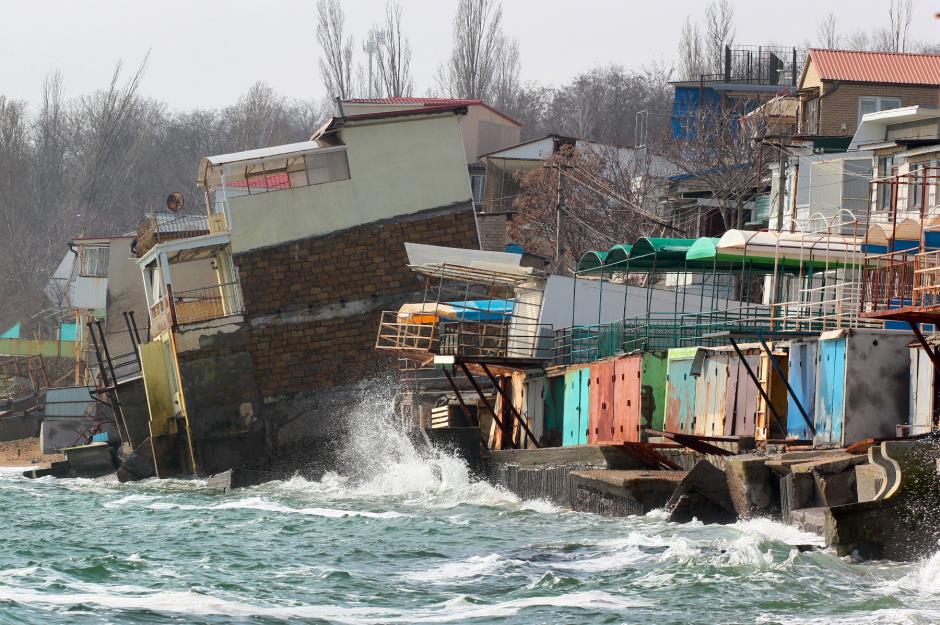
One house after another has fallen into the Black Sea in this part of Odessa, in Ukraine. This time it’s only partly due to extreme weather – the main culprit here is weak foundations as many of them are built on moisture-soaked clay.
Sponsored Content
Holland Island, Maryland
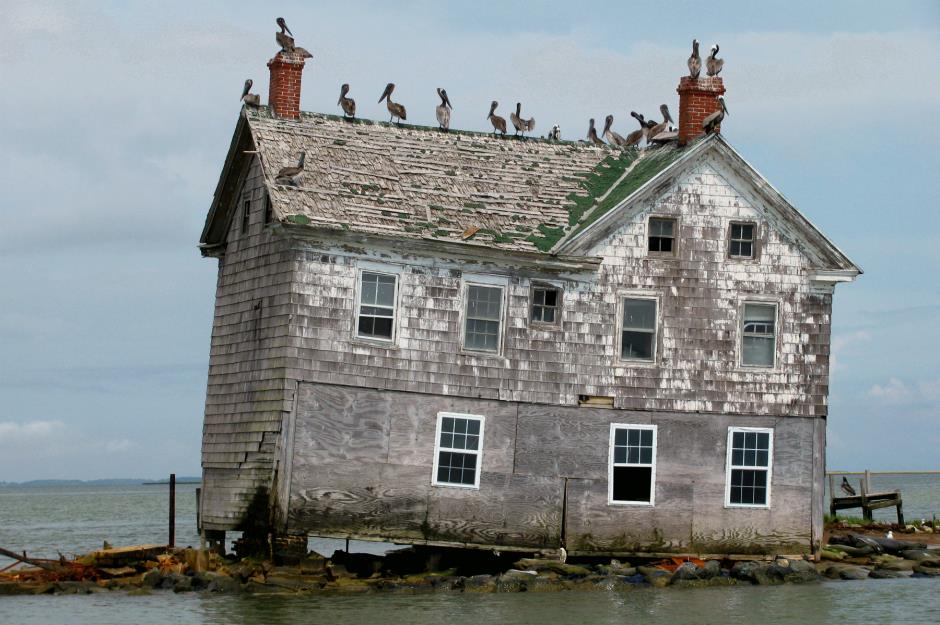
Built in 1888, this was the last remaining house on Holland Island, a rapidly eroding piece of marshland in Cheapsake Bay off the coast of Maryland that was once the most populated community in the area.
Holland Island, Maryland
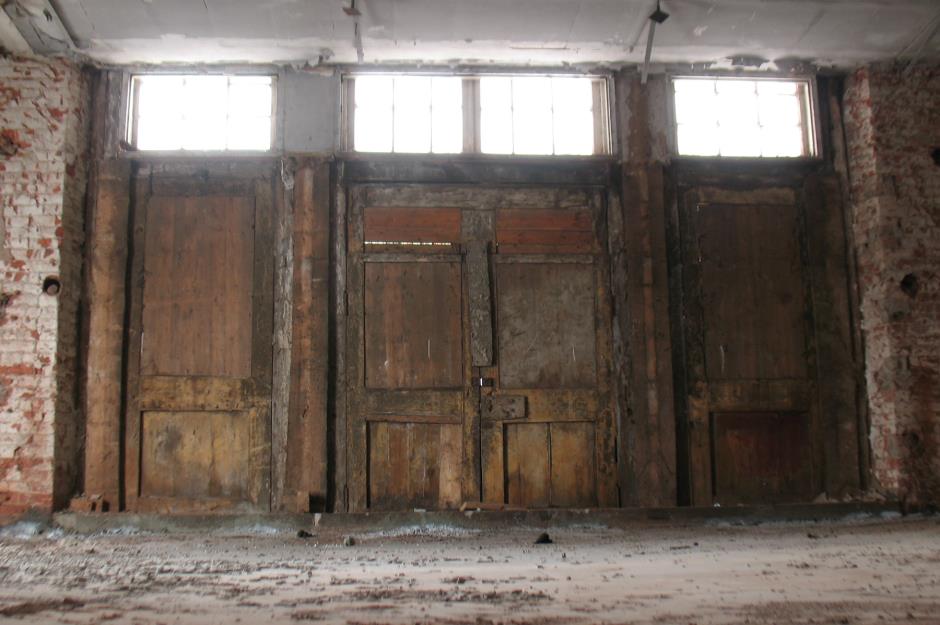
Back in 1910 the island had just over 360 residents, many of whom worked in the bustling local fishing industry, but most of these left in 1918 after a tropical storm damaged several buildings. This shot shows how much of the woodwork has remained intact despite the general deterioration of the building.
Holland Island, Maryland
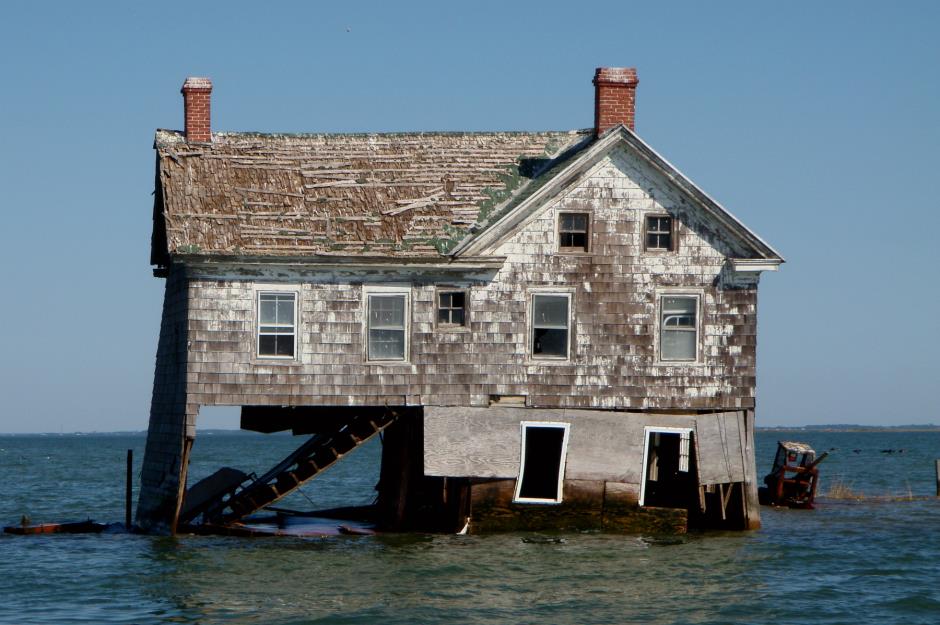
All of the buildings on Holland Island sat abandoned and exposed to the erosion for more than 80 years. Even the efforts of a local conservationist couldn’t save the last house standing and the saltwater slowly hollowed out its lower floors before the whole thing fell into the Atlantic Ocean in December 2010.
Sponsored Content
Cape Palliser, New Zealand
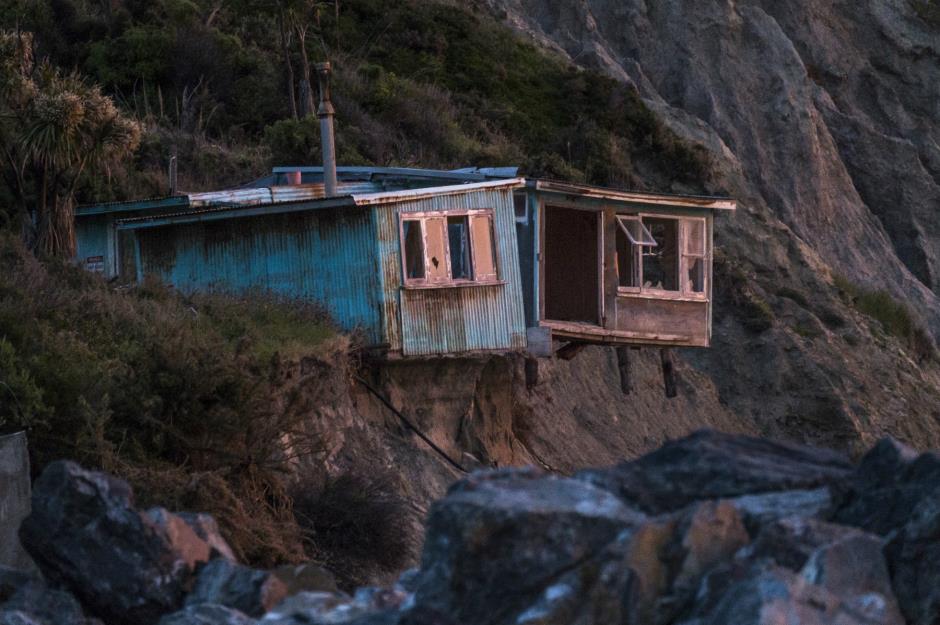
These two shacks on the North Island of New Zealand were left clinging to the rocks in November 2015 after the waves reclaimed much of the land around them. They fell into the ocean just a few months after this photograph was taken.
Pacifica, California
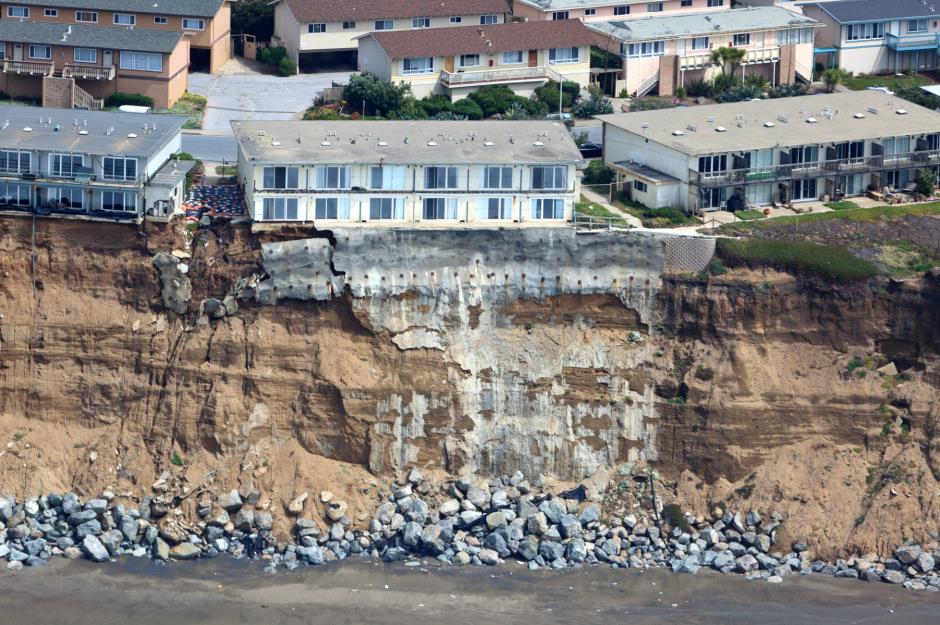
The luxury of having breathtaking sea views came with a big price for people living in this coast-hugging apartment block in Pacifica, California.
Pacifica, California
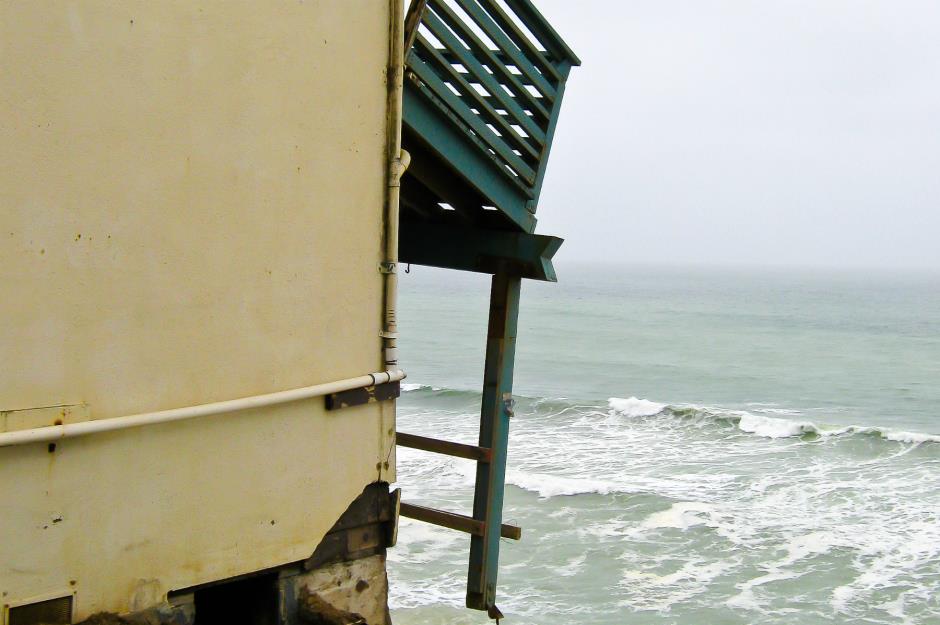
Parts of the building fell into the Pacific Ocean and many of the balconies were left teetering in mid air when erosion struck.
Sponsored Content
Pacifica, California
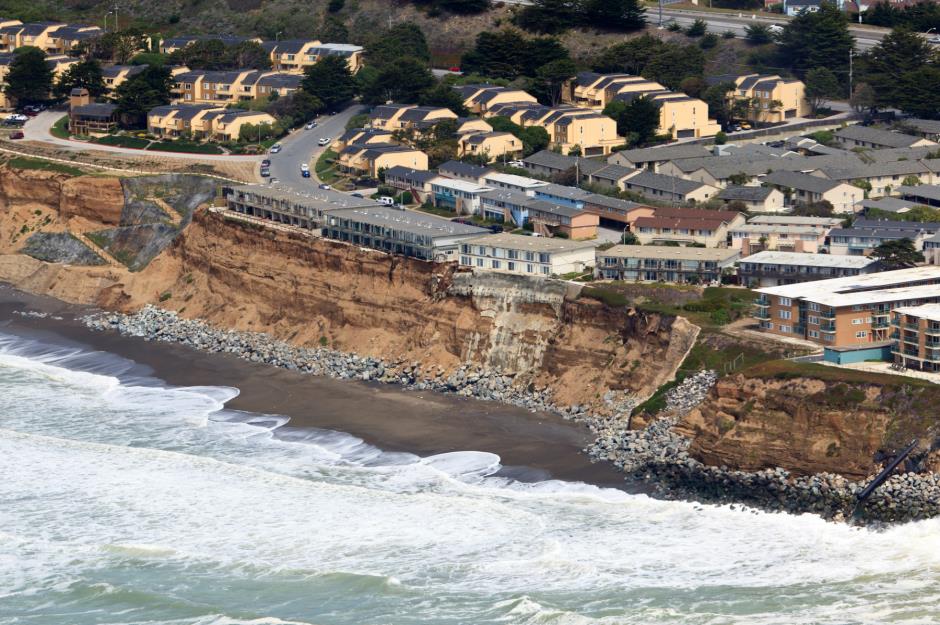
The catastrophe left many of the homes uninhabitable and they’ve since been demolished.
Pacifica, California
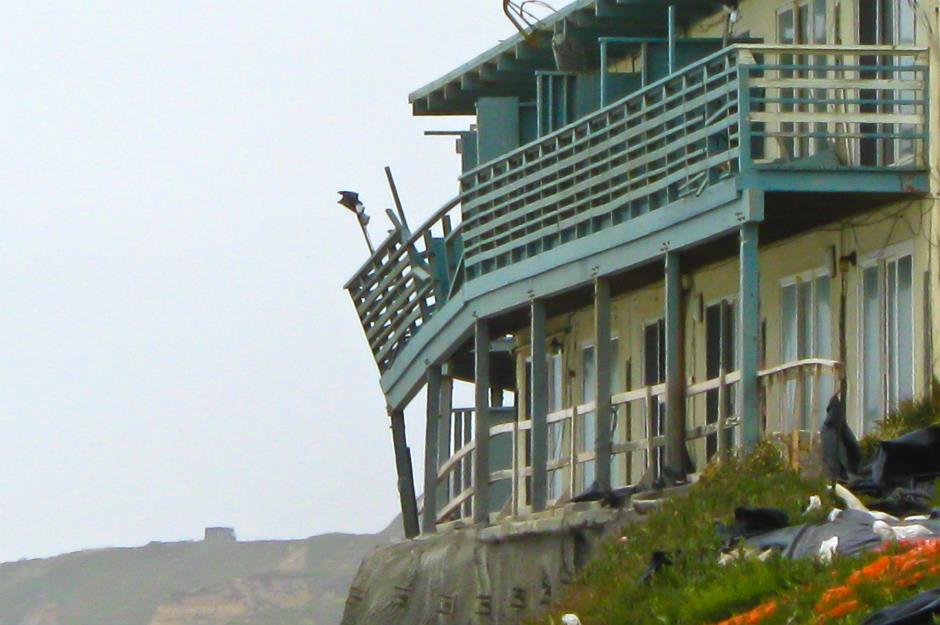
The landslide was the result of a series of brutal storms that battered the North California coastline just south of San Francisco in June 2010.
Skipsea, Yorkshire
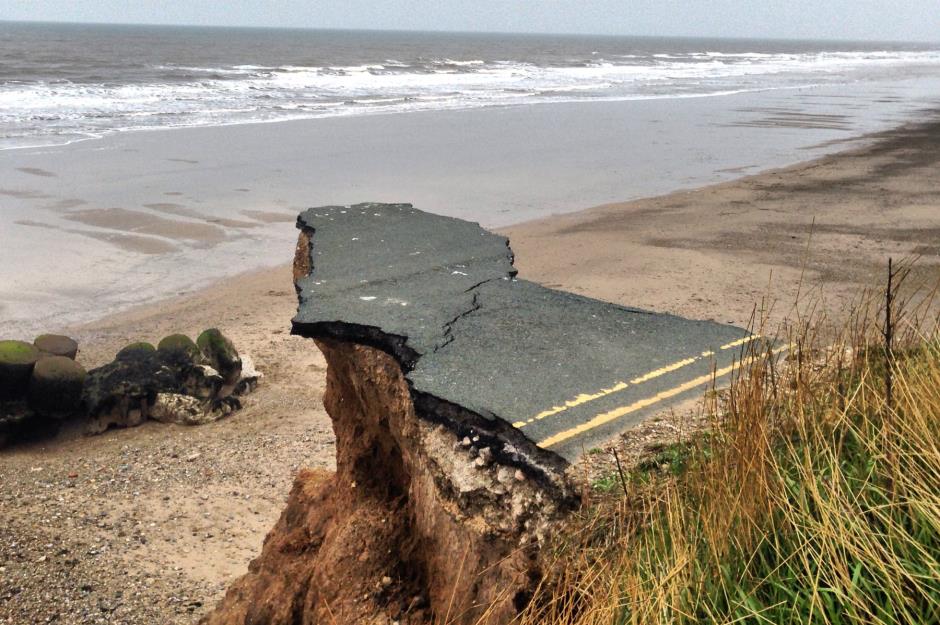
This slab of tarmac is all that’s left of one street in Skipsea, Yorkshire. The last remaining residents moved out in 2017.
Sponsored Content
Vilano Beach, Florida
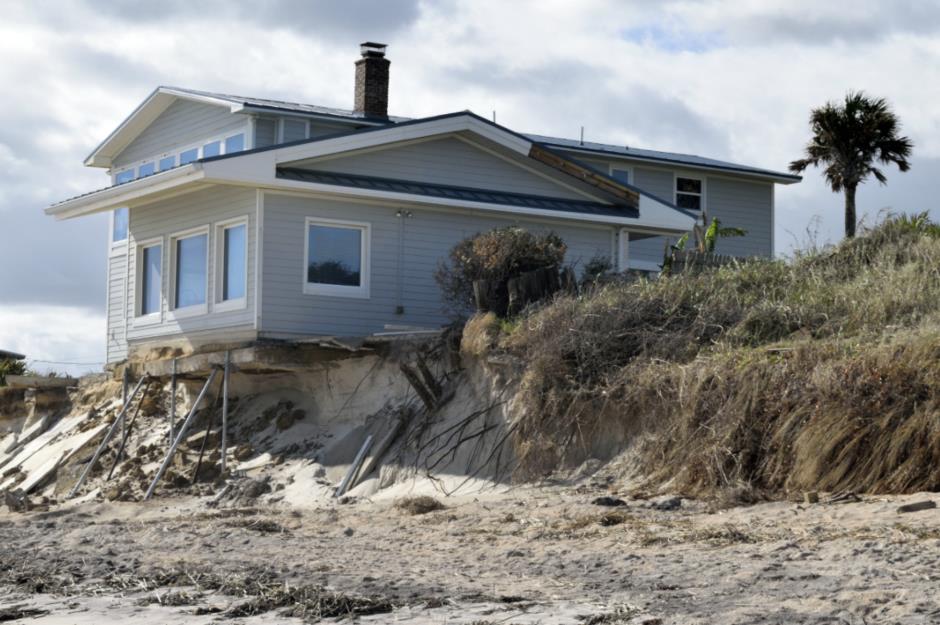
This beach house ended up a lot closer to the sea when Hurricane Matthew caused huge amounts of erosion in October 2016.
Vilano Beach, Florida
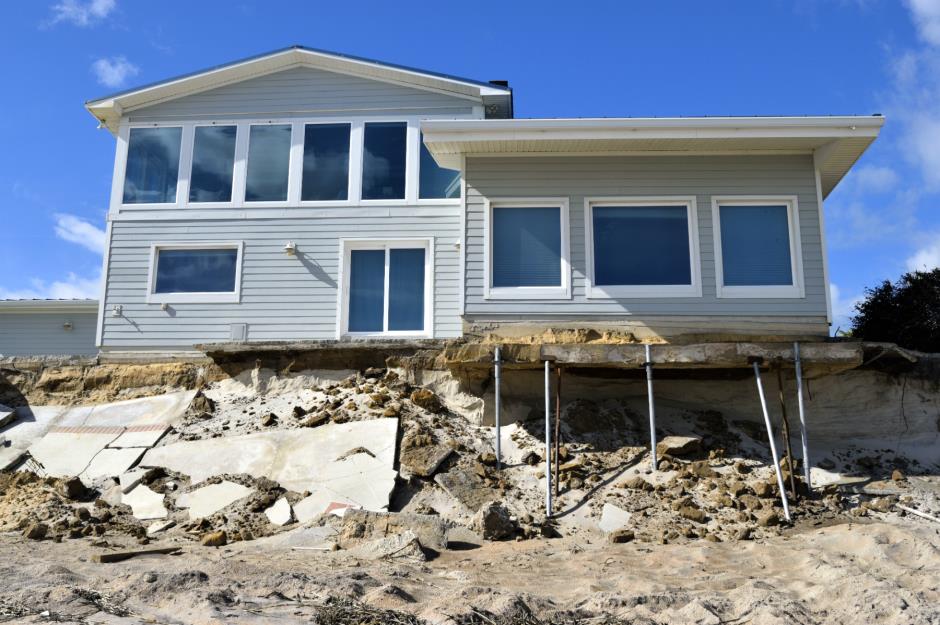
Much of the building now lies marooned in the sands of the barrier island peninsula just north of St Augustine in Florida.
Vilano Beach, Florida
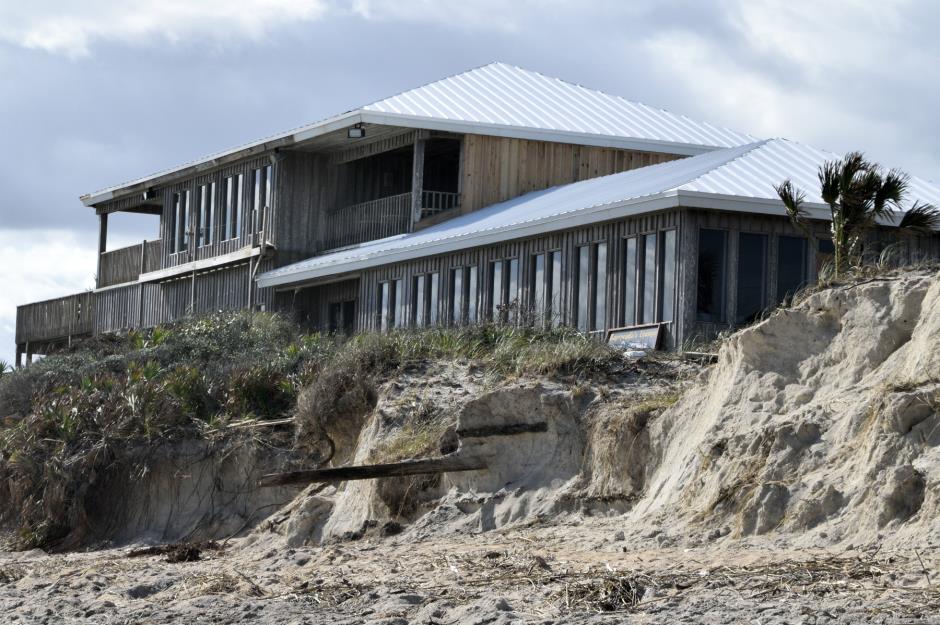
This plush beachfront home was also left in disarray as a result of the hurricane, which resulted in more than 177 miles of beach being wiped out by the storm surges.
Sponsored Content
Vilano Beach, Florida
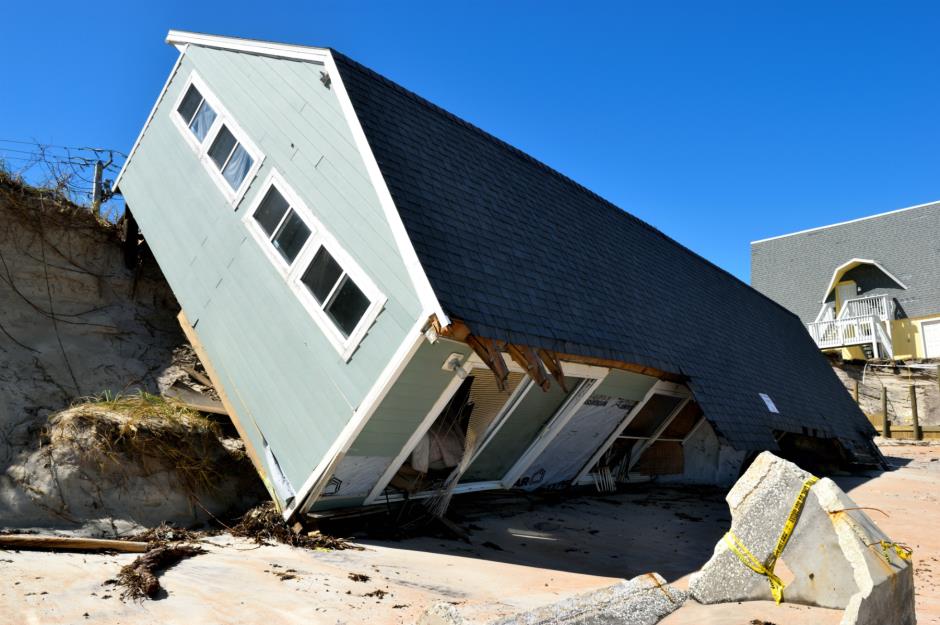
The damage caused by the sheer strength of Hurricane Matthew sent shockwaves across this part of northern Florida with many homes lost to the Atlantic Ocean or wrecked beyond all repair.
Hunting Island State Park, South Carolina
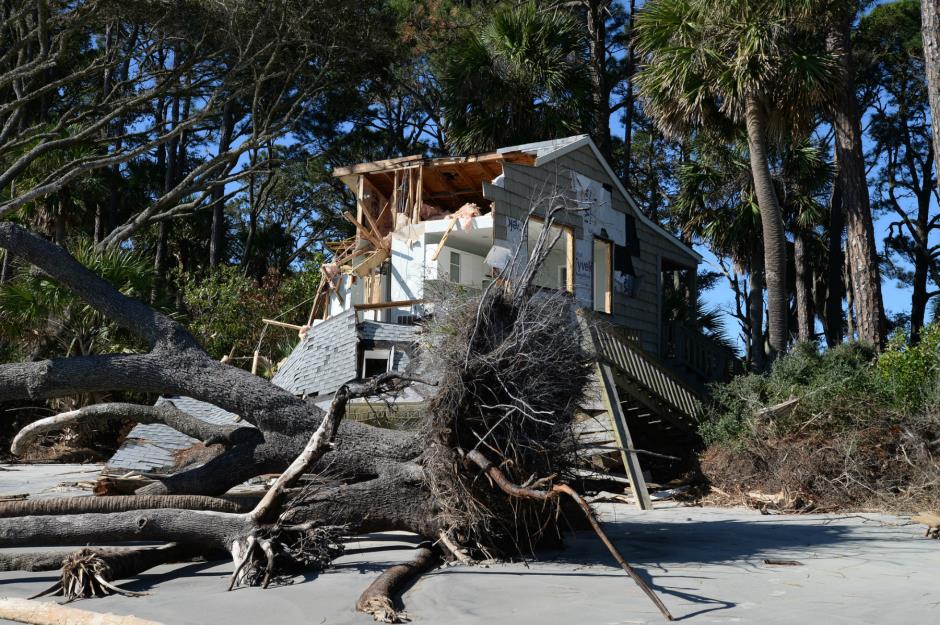
Things went from bad to worse for this once gorgeous property built on a barrier island in of South Carolina, USA. First it was ruined beyond repair by the incoming waters' erosion and then crushed by a large oak tree during a storm in 2015. For many years this cabin was known as 'The Indomitable Lady' due to the fact it was one of the last buildings standing in the area, but the saltwater soon put paid to that.
Washaway Beach, Washington State
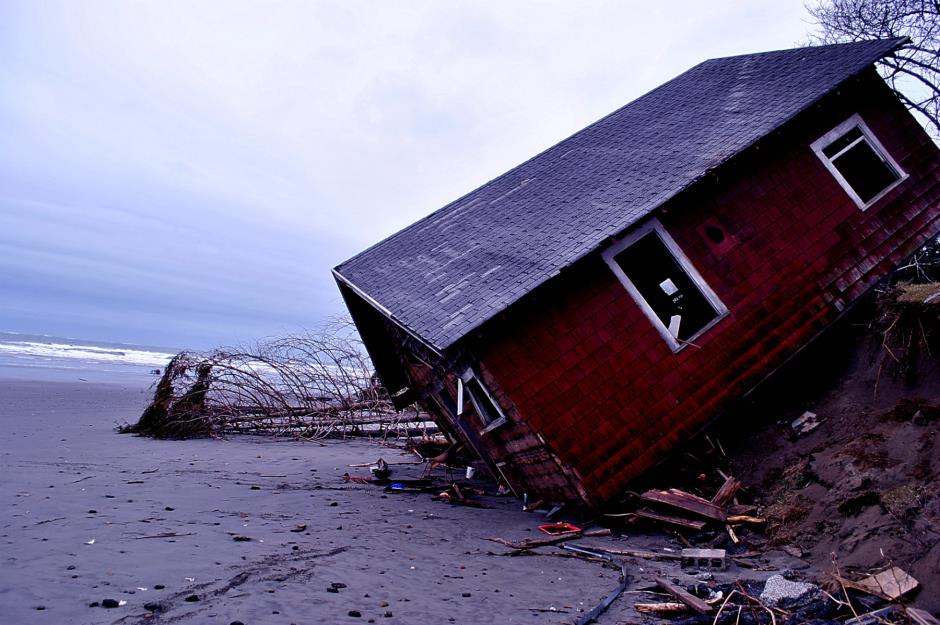
The stretch of coastline where this toppled building lies repeatedly lives up to its name, with all kinds of buildings washed away by the ocean each year. The tiny town of Tokeland in the Pacific Northwest region of North America is so exposed that, if the erosion carries on at the same rate, even the nearby highway will be under water in just a few years.
Sponsored Content
Washaway Beach, Washington State
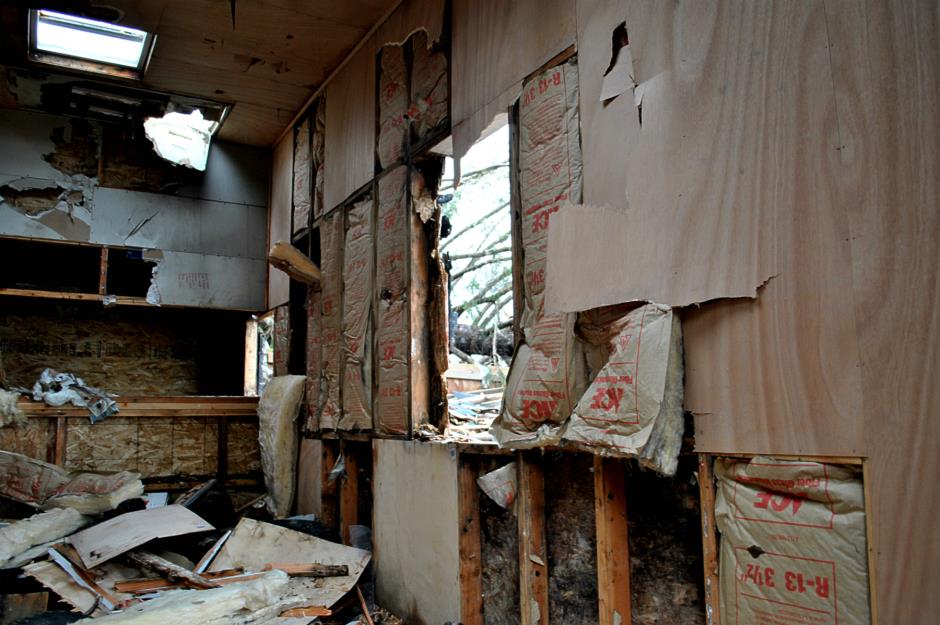
This shot of the interior of the house shows the sheer extent of the damage the Pacific Ocean has wrought.
Washaway Beach, Washington State
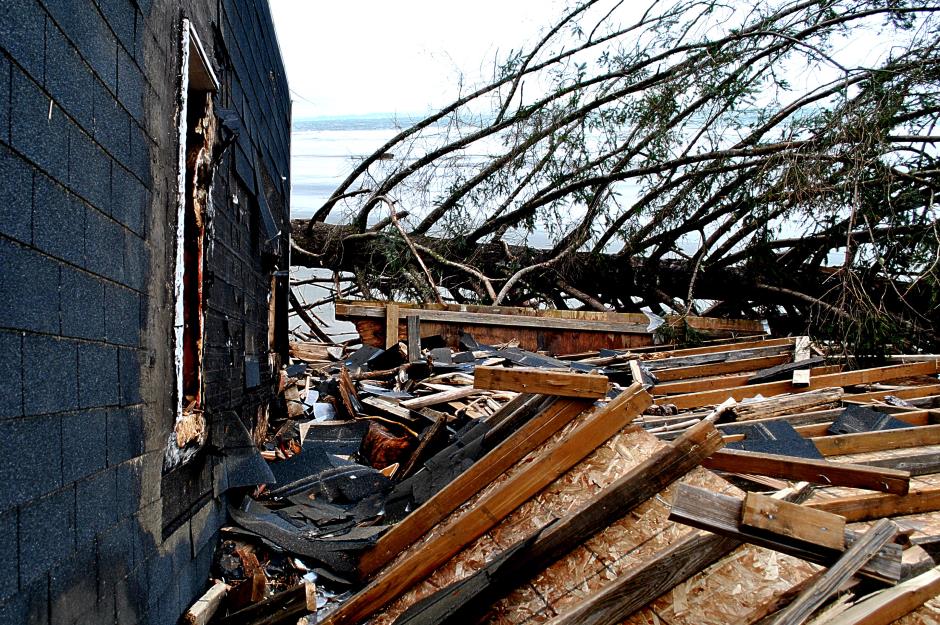
The one-story beachfront home really didn't stand a chance. Even the robust pine trees that are native to Washington State aren’t strong enough to withstand the power of the Pacific.
Nantucket, Massachusetts
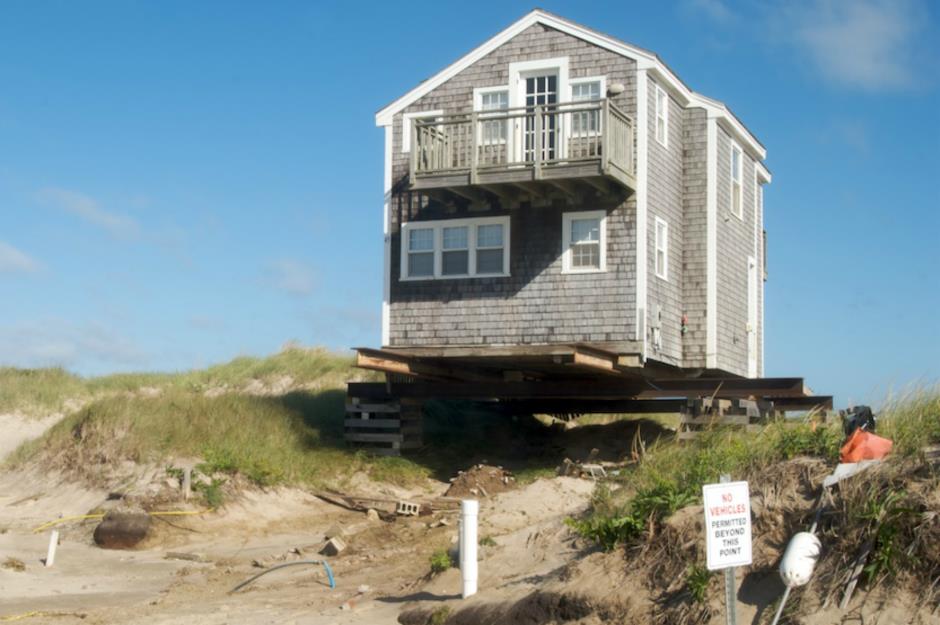
This is why you shouldn't build a house on sand. Despite the owner’s best efforts, the building has been slowly moving towards the edge of the sand dunes in the isolated island of Nantucket, near Cape Cod in Massachusetts. Who knows where this building will end up, but one thing is for certain; the shifting sands mean it's going to be difficult to keep it in one place.
Sponsored Content
Devil's Lake, North Dakota
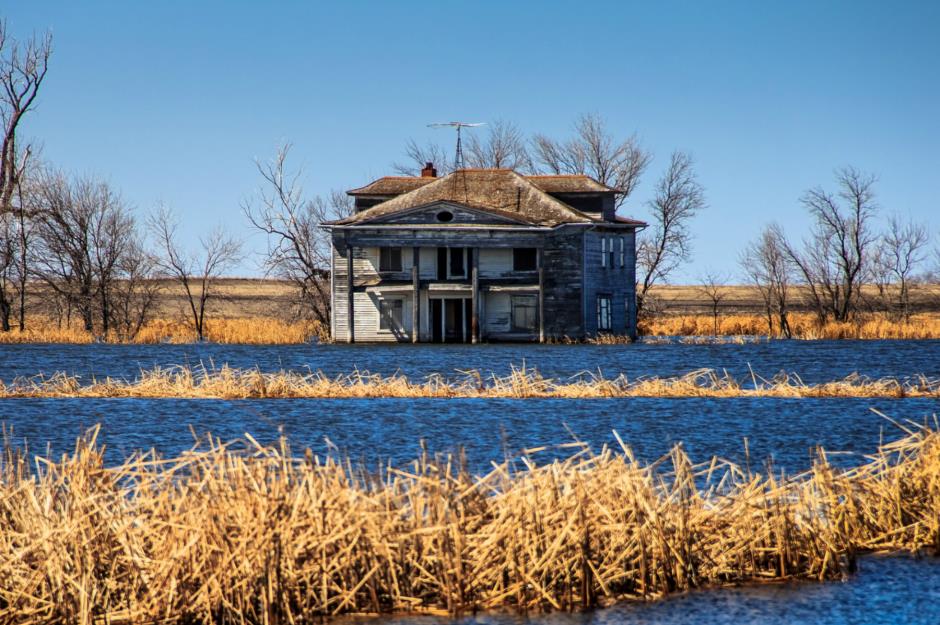
The lakes of North Dakota are littered with abandoned buildings in varying degrees of decay. They have been stranded by the rising levels of the lakes, which have increased for 20 consecutive years due to annual deluges of rain following the long droughts of the 1980s. This house used to sit far back from the water, but now it’s been enveloped by Devil’s Lake, which has risen more than 29ft since 1992.
Port William, Scotland
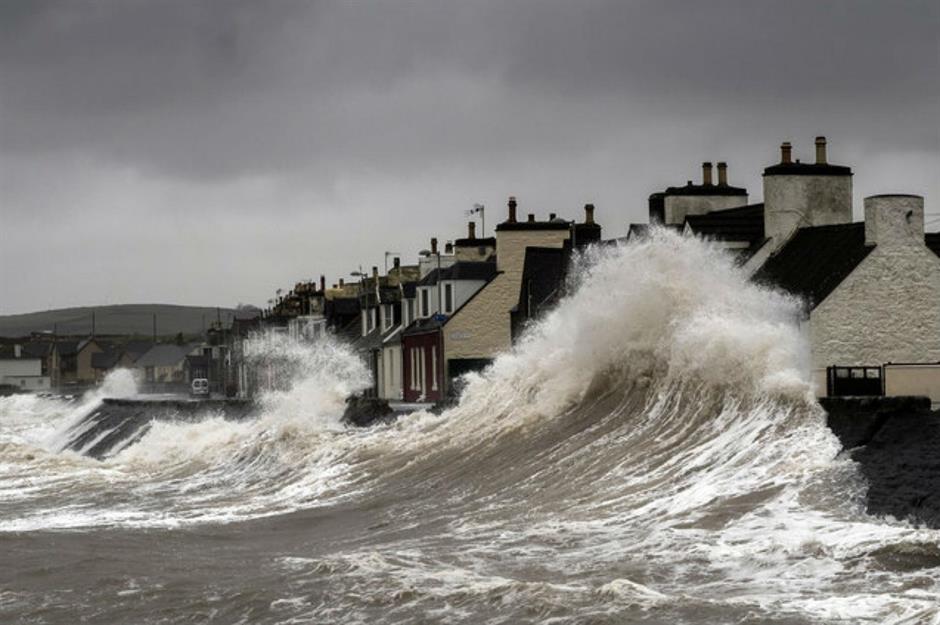
A very high spring tide, a deep Atlantic depression and storm-force southerly winds combined to send huge waves crashing over the front at Port William, battering ocean-front houses in the process. Still hungry for more? Lose yourself in the incredible secrets of 12 abandoned stately homes.
Comments
Be the first to comment
Do you want to comment on this article? You need to be signed in for this feature