Vintage photos of barbecues through the decades
From hog roasts to hot dogs
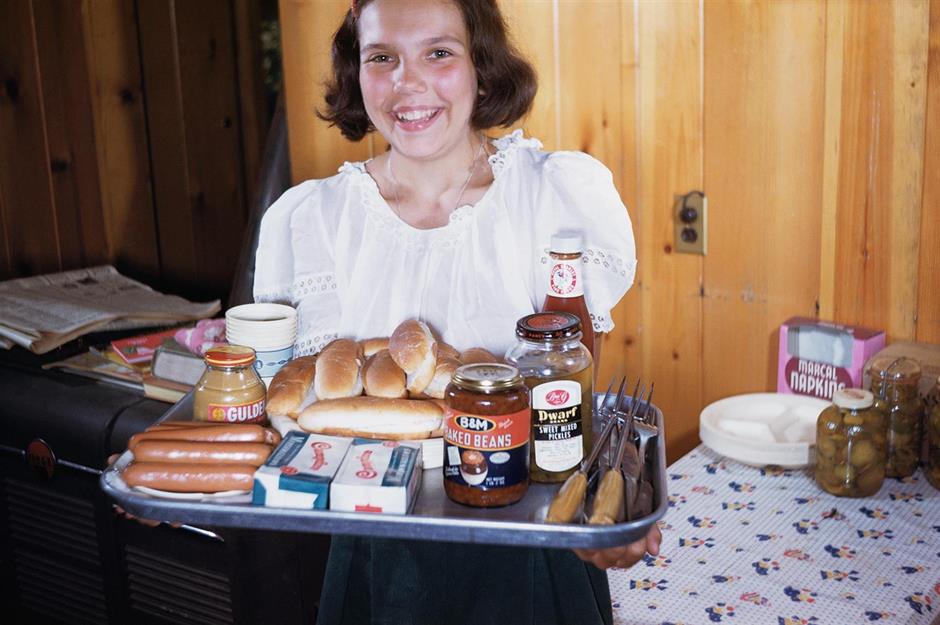
Cooking over fire is one of humanity’s oldest traditions, with cultures across the world developing unique methods – from ancient smoking practices to the distinctive barbecue styles of the United States. Barbecue also carries a rich social history; grills have long been at the heart of political fundraisers, rural fairs and major sporting events. Whether you love a seafood cookout or prefer a classic backyard burger, these archive photos showcase barbecues through the decades, celebrating the grill’s enduring role in our lives.
Click or scroll through our gallery to see how barbecues used to look around the world, from 1922 to the modern day.
1922: the forgotten legacy of barbecue
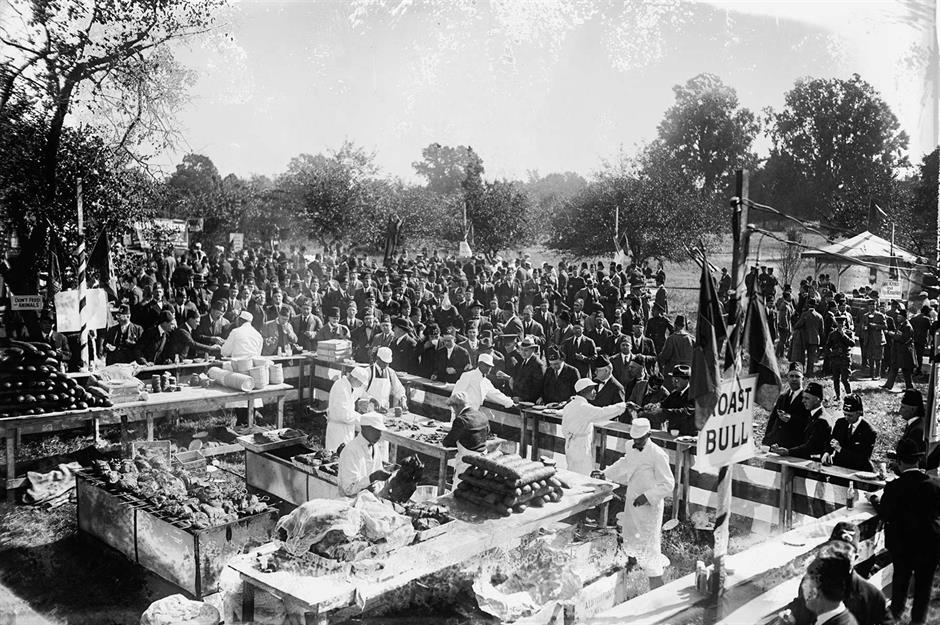
This 1922 photograph captures a grand barbecue hosted by the Shriners, a Masonic fraternity in the United States – but it's the unnamed Black men tending the open fire pits who reveal the deeper roots of American barbecue. In the South, barbecue was largely shaped by enslaved African Americans, who perfected the techniques of pit smoking and slow cooking. However, their skill is rarely acknowledged, and few early photographs survive beyond those documenting white social gatherings like this one.
1928: barbecue meets motorsport
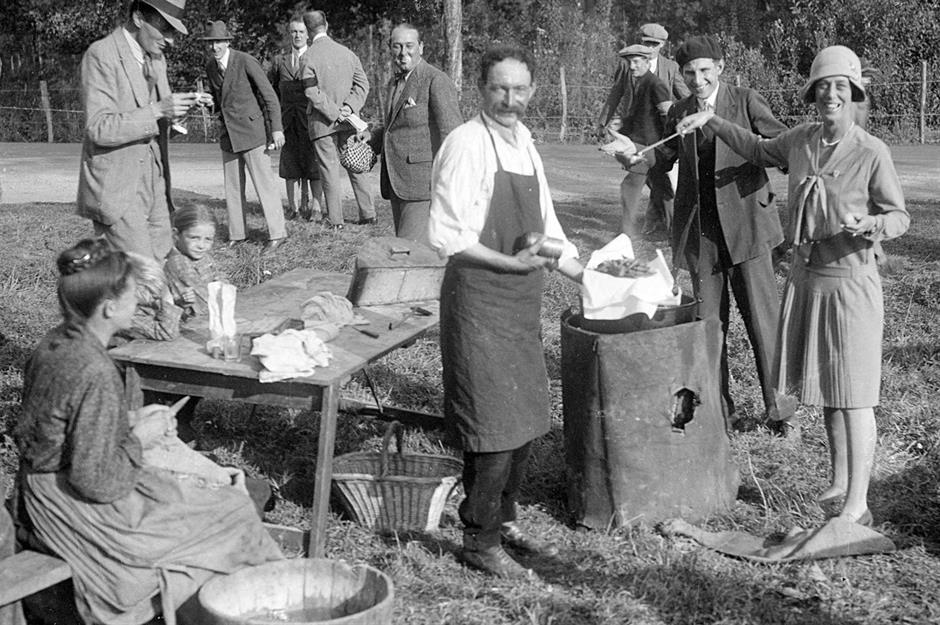
This photograph, taken during Boulogne Motor Week in September 1928, shows a group of men, women and children gathered around a barbecue. Held in northern France, the event was a popular fixture on the interwar racing calendar, attracting drivers and spectators from across Europe. The presence of a grill at the trackside highlights how barbecue had become part of a wider leisure experience, connecting outdoor cooking with sport and social gatherings even a century ago.
Sponsored Content
c. 1930s: segregated barbecue under Jim Crow laws
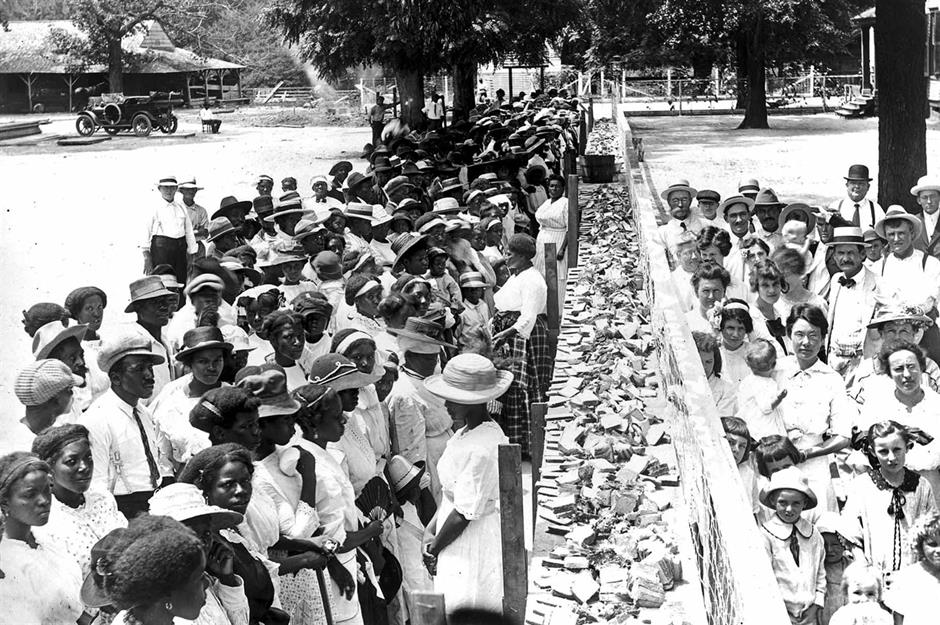
According to the Library of Congress, this photograph – taken in Alabama, USA between 1930 and 1941 – depicts 'F.M. Gay’s annual barbecue held on his plantation'. The event appears racially segregated, with a counter laden with sliced bread separating white and Black guests. Jim Crow laws, which enforced racial segregation in public spaces, remained in effect across Alabama until the Civil Rights Movement began dismantling them in the mid-1960s.
c. 1939: a typical Texas barbecue stand
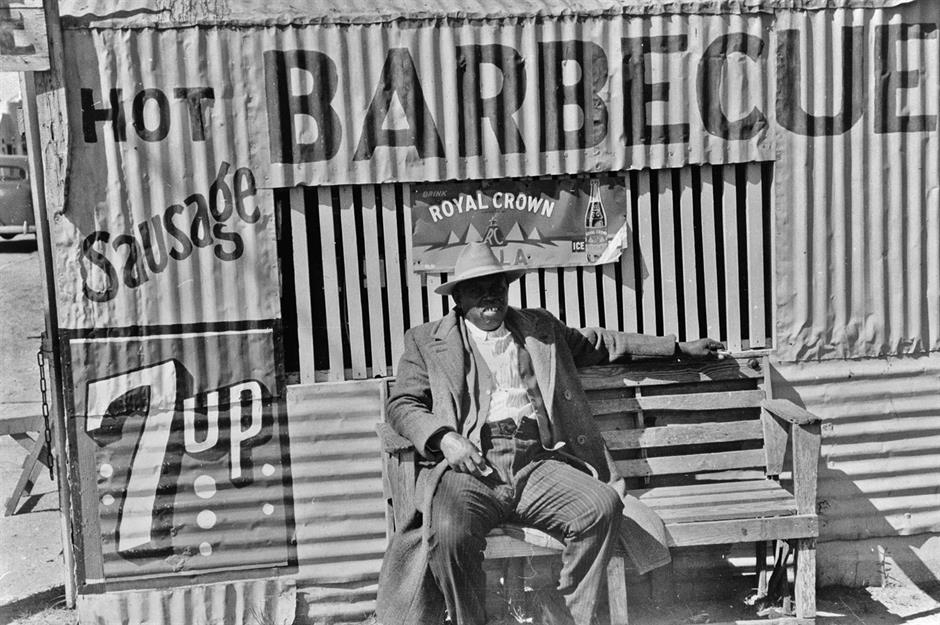
This 1939 photograph shows a man outside a modest barbecue stand in Corpus Christi, Texas, USA. The shack, clad in galvanised metal, features hand-painted signs advertising hot sausages and 7-Up. While Texas barbecue is best known for its emphasis on beef – particularly brisket, often smoked over oak or mesquite – sausages are equally central to the tradition. Typically made from beef or pork and smoked, they reflect the influence of 19th-century German and Czech immigrants, whose meat-smoking techniques continue to shape Texas barbecue today.
c. 1940: homemade desserts
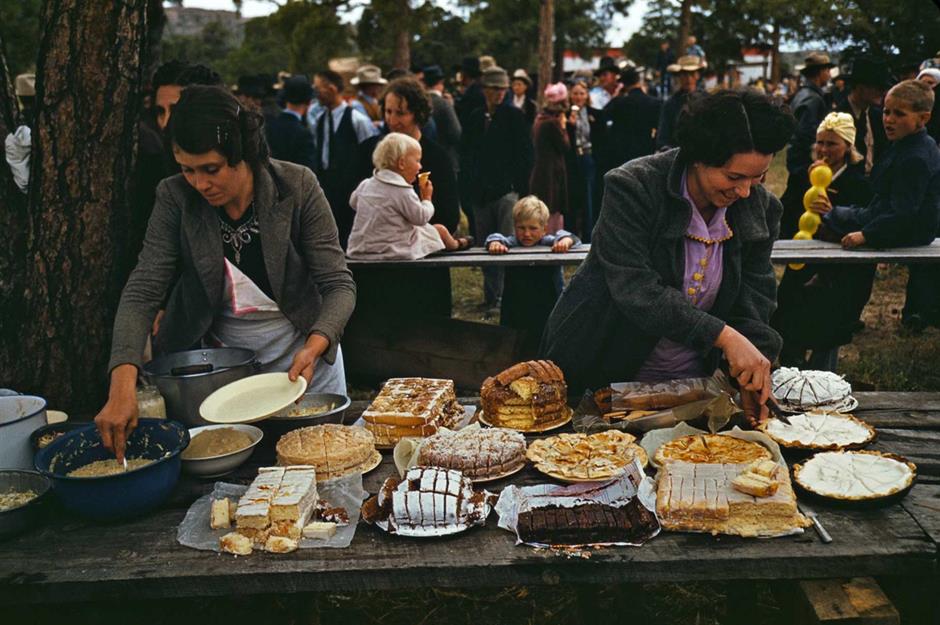
This image, taken around 1940, captures the dessert station at a barbecue dinner during the Pie Town Fair in New Mexico, USA. Women are shown cutting homemade pies and cakes, which were central to community gatherings in this remote settlement. Founded by Texan homesteaders in the 1920s, Pie Town gained its name from a roadside bakery. By the 1940s, its fairs and communal meals had become vital social events, offering comfort and connection during the hardships of the Great Depression and Dust Bowl.
Sponsored Content
1955: a seafood barbecue on the coast
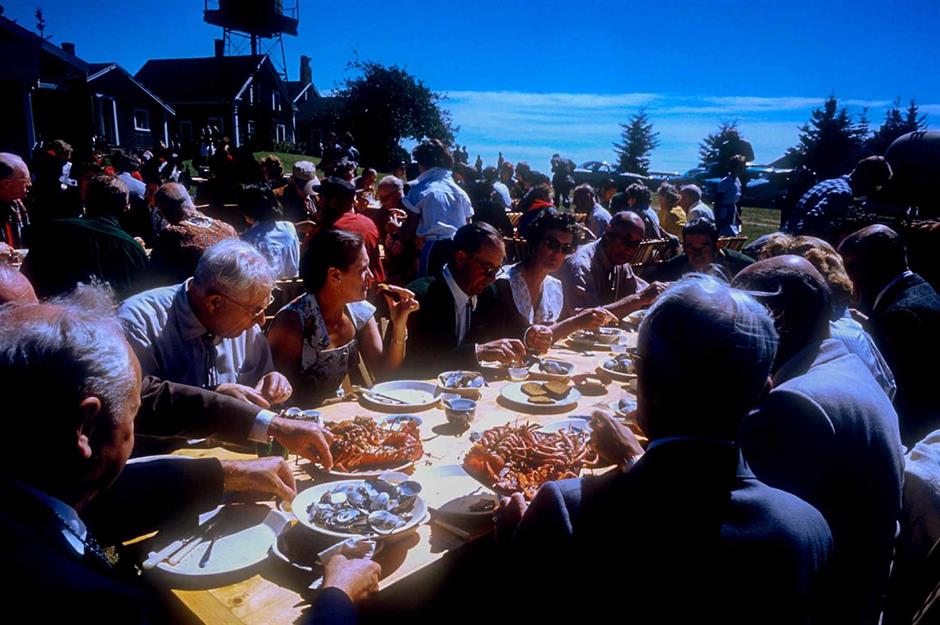
This photograph, taken on 13 September 1955, captures a celebratory seafood feast following the International Tuna Cup fishing tournament in Wedgeport, Nova Scotia, Canada. Dressed in suits and summer dresses, guests dined on platters of lobster, oysters and clams, showcasing the region’s maritime bounty. At the time, Wedgeport was regarded as the tuna capital of the world, attracting international teams eager to land massive bluefin tuna. After a hiatus in 1976 due to declining fish stocks, the event was revived in 2004.
1955: traditional fish cookery
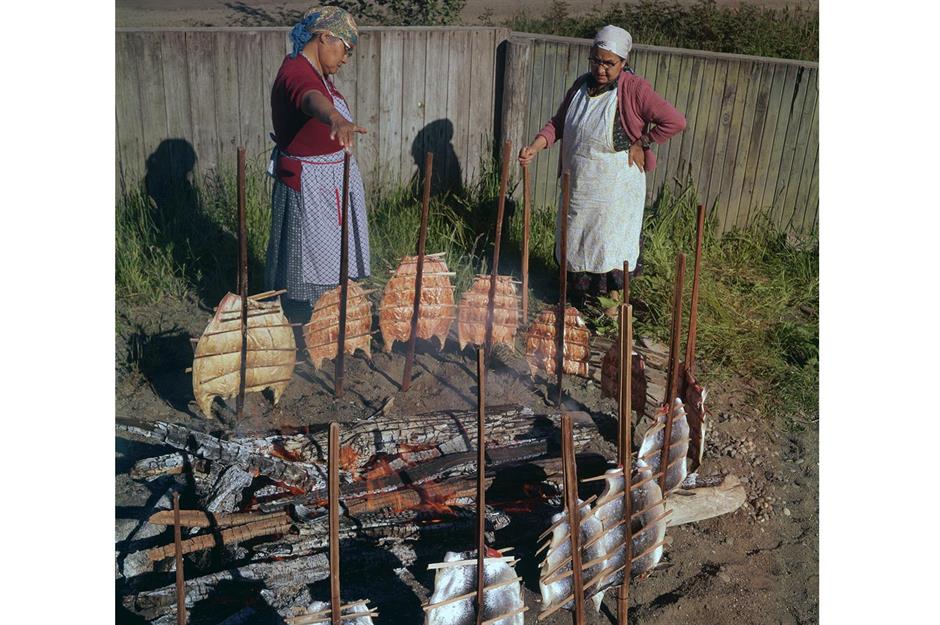
Photographed in 1955 near Neah Bay, Washington, USA, this image shows two Native American women preparing fish – likely salmon – on traditional wooden frames. The fish are butterflied and secured to split sticks, then slow cooked over an open fire. This method, practiced by people living on the coast, such as the Makah, served both for cooking and for preservation. Fire roasting and smoking fish have been central to Indigenous cuisine for generations, intimately connected to seasonal salmon runs and the community knowledge passed down over centuries.
1958: a Southern community barbecue
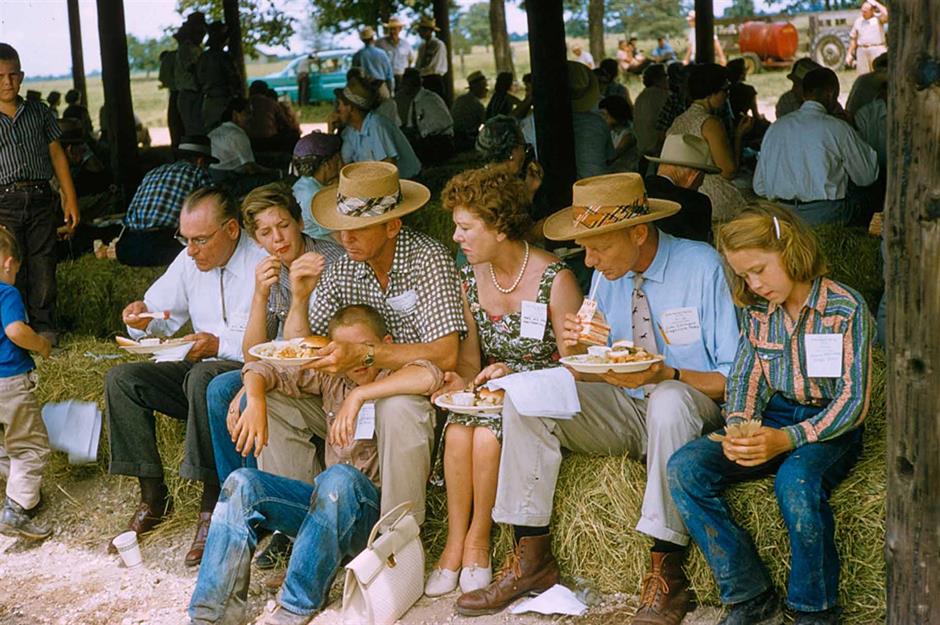
Photographed by Toni Frissell for Sports Illustrated on 10 July 1958, this image captures families enjoying a barbecue at a rural event in Alabama. Seated on hay bales in the shade, adults and children dig into plates of pork sandwiches and coleslaw, accompanied by milk or iced drinks. The event combined traditional Southern barbecue with rodeo-style steer riding, making it a popular family outing. Scenes like this illustrate how barbecue remained a central part of rural social life across the American South in the postwar years.
Sponsored Content
c. 1960: asado al asador
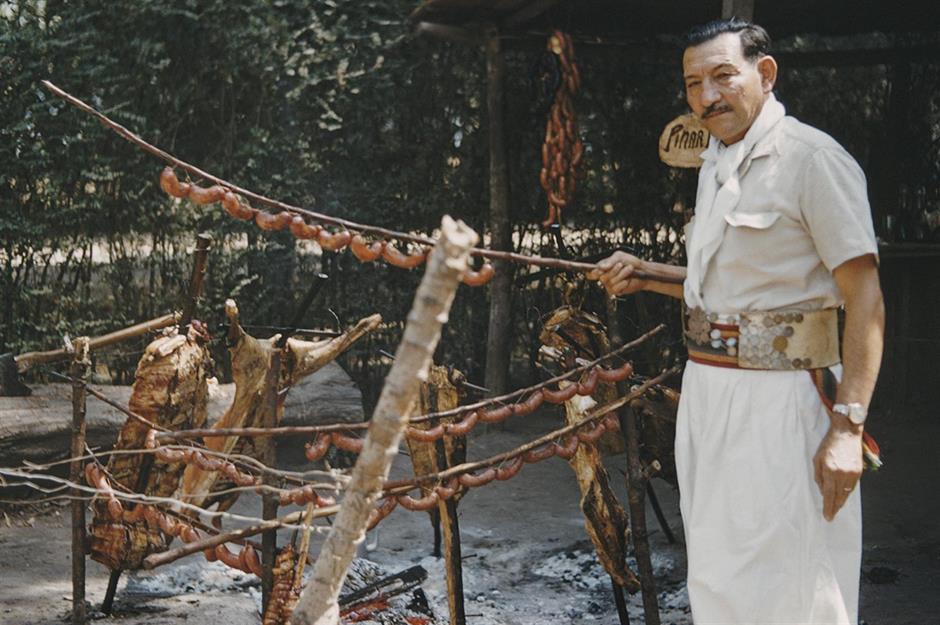
Photographed in April 1960, this image shows a man tending sausages and a whole butterflied lamb over an open fire in Argentina. Known as asado al asador or cordero al asador, this slow-cooking method uses a metal cross to suspend the meat beside hot coals. Asado is central to Argentine identity, rooted in the traditions of the gauchos – nomadic horsemen who cooked meat on the vast plains of the Pampas. More than just a meal, it remains a social ritual shared among family and friends across South America.
c. 1960: a classic suburban backyard barbecue
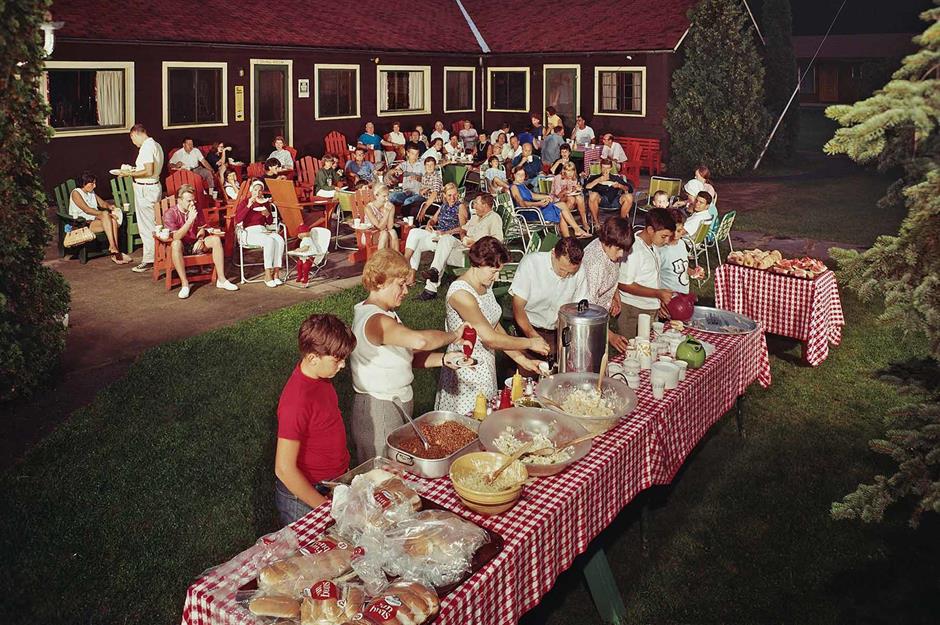
This image captures a quintessential 1960s backyard barbecue, complete with checked tablecloths. Guests line up for picnic staples like baked beans, coleslaw, buns and soda, while dozens of people relax on folding chairs and Adirondack seats. There's even a dessert table laden with doughnuts and watermelon slices. Postwar prosperity, suburban growth and the mass production of outdoor grills helped make backyard barbecues a staple of mid-century American life. These gatherings reflected the era’s focus on community, leisure and the rising popularity of convenience foods.
1975: music and sausages
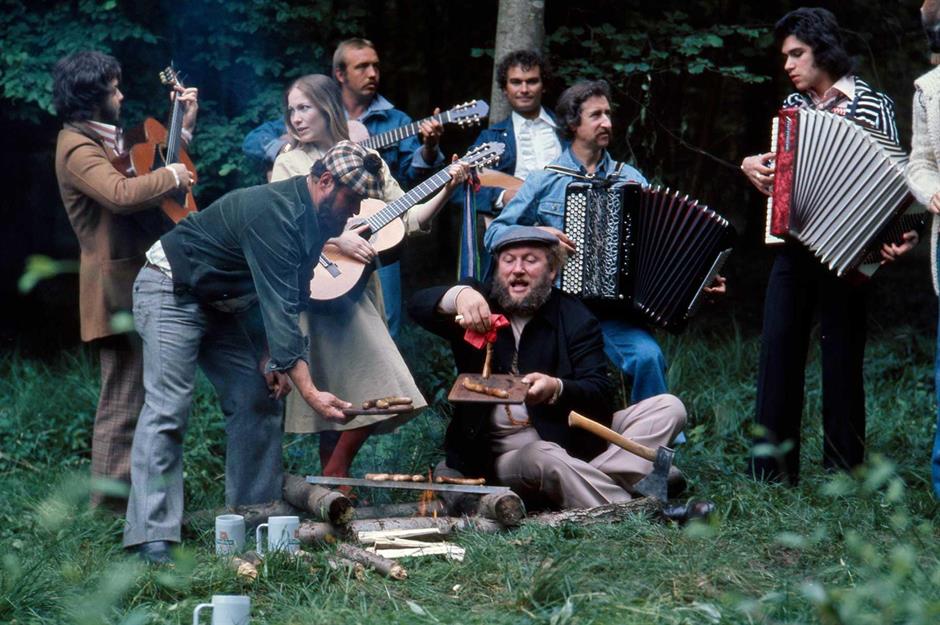
This 1975 photograph captures German bass vocalist Ivan Rebroff enjoying a rustic forest barbecue with friends, accompanied by guitars, accordions and sizzling sausages. The scene reflects Germany’s enduring passion for outdoor dining – particularly the tradition of grilling over open flames. Known locally as grillen, these gatherings often feature classic sausages such as Bratwurst and Rostbratwurst, cooked simply over glowing logs or coals.
Sponsored Content
1977: Gladys Dorsey’s barbecue joint
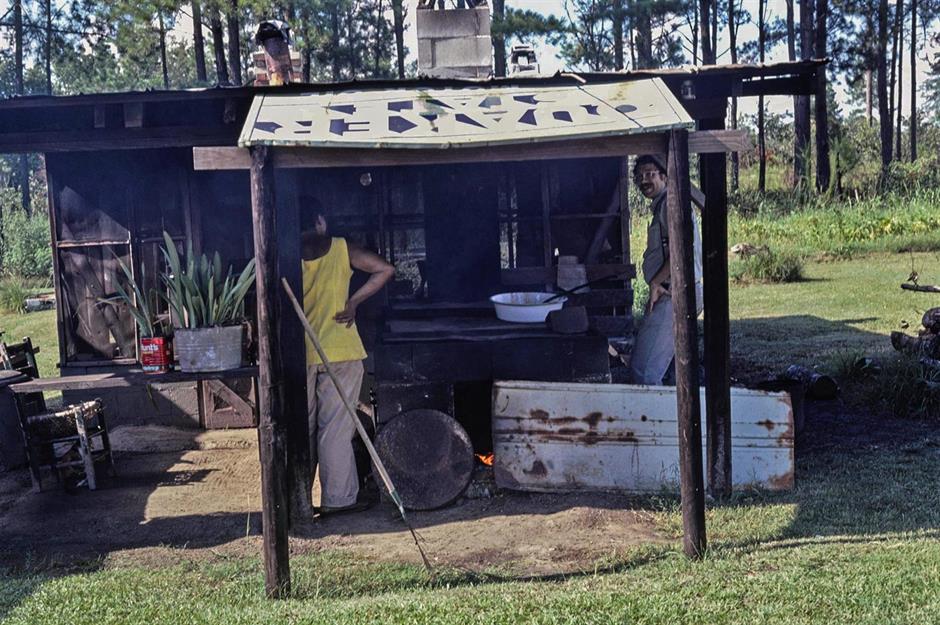
This 1977 photograph depicts a modest roadside eatery in Ty Ty, Georgia, USA, run by pitmaster Gladys Dorsey, who at the time had been barbecuing for 12 years. Reflecting on her earliest attempts, she recalled: “The first time I cooked it was just black and raw on the inside. About a hundred pounds of it!” Dorsey’s cooking embodies the Georgia barbecue tradition, centred on pork shoulder cooked low and slow over wood, paired with a thin vinegar- or mustard-based sauce – flavours shaped by Carolinian influence.
1977: mopping the meat for maximum flavour
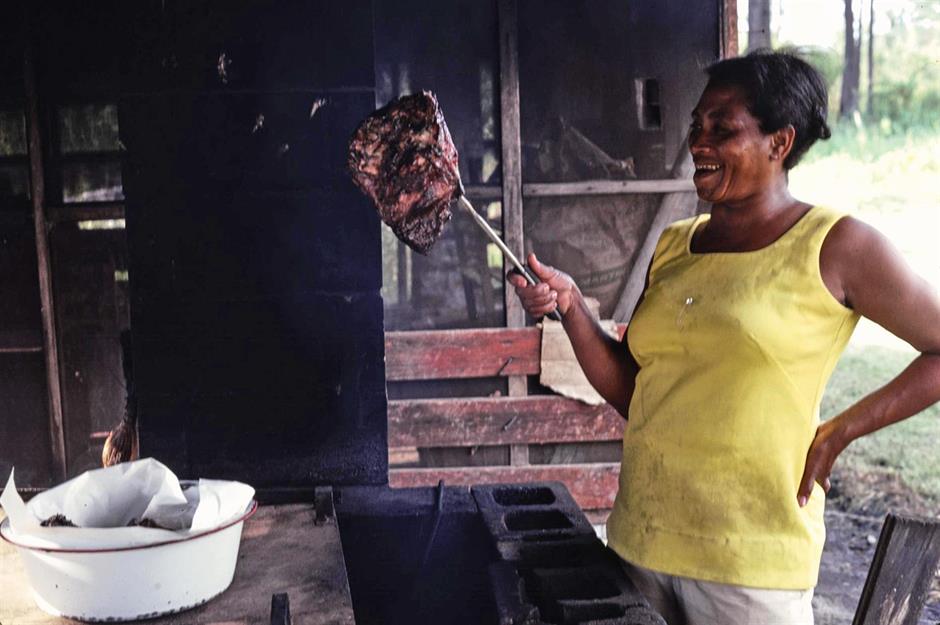
In this image, Gladys Dorsey demonstrates a defining technique of Southern barbecue: mopping. She lifts pork shoulder from the pit and bastes it with a cloth mop soaked in sauce, building the flavour-packed bark that pitmasters prize. Cooking twice a week for her small restaurant, Dorsey refined her method over the years, favouring oak for its steady burn. By the late 1970s, however, she noted that green oak – long valued for its dense, smoky embers – was becoming increasingly difficult to source locally.
1977: a Georgia barbecue plate
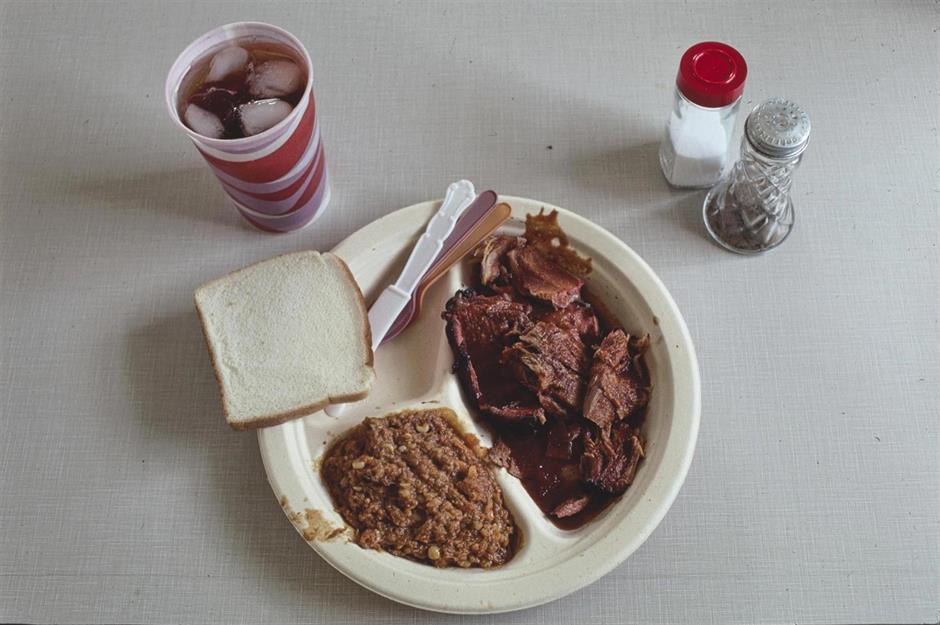
The result of Dorsey’s craft is a generous plate of oak-smoked pork shoulder, served alongside Brunswick stew and slices of white bread. A Georgia favourite with much-debated origins, the stew typically combines tomatoes, corn, lima beans and shredded meat – often leftover pork or chicken – to create a rich, tangy accompaniment that stretches ingredients and soaks up sauces. The plain white bread, a staple of Southern barbecue, functions both as a utensil and a side dish. Together, these elements embody a no-frills, deeply regional expression of Georgia barbecue.
Sponsored Content
1978: steaks and speed at the Indy 500
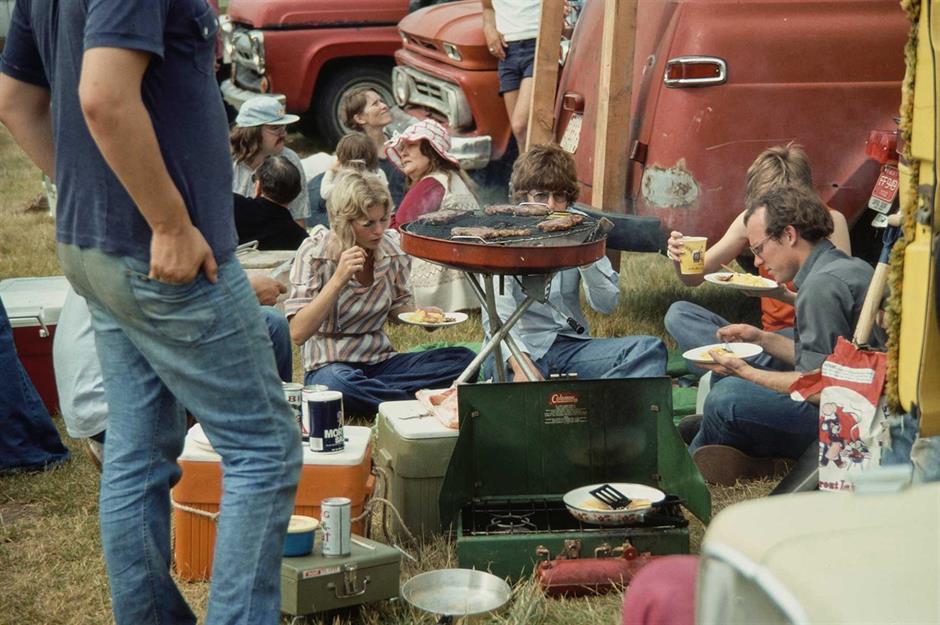
Taken on 28 May 1978, this photograph shows hungry spectators at the USA's 62nd Indianapolis 500 automobile race grilling beef steaks over a barbecue. Tailgating and informal cookouts have long been part of the Indy 500 tradition, with fans arriving early to stake out spots and fire up grills before and during the race. These impromptu feasts capture the event’s festive, all-day atmosphere and its enduring place in American sports culture.
1985: Colorado’s most famous pitmaster
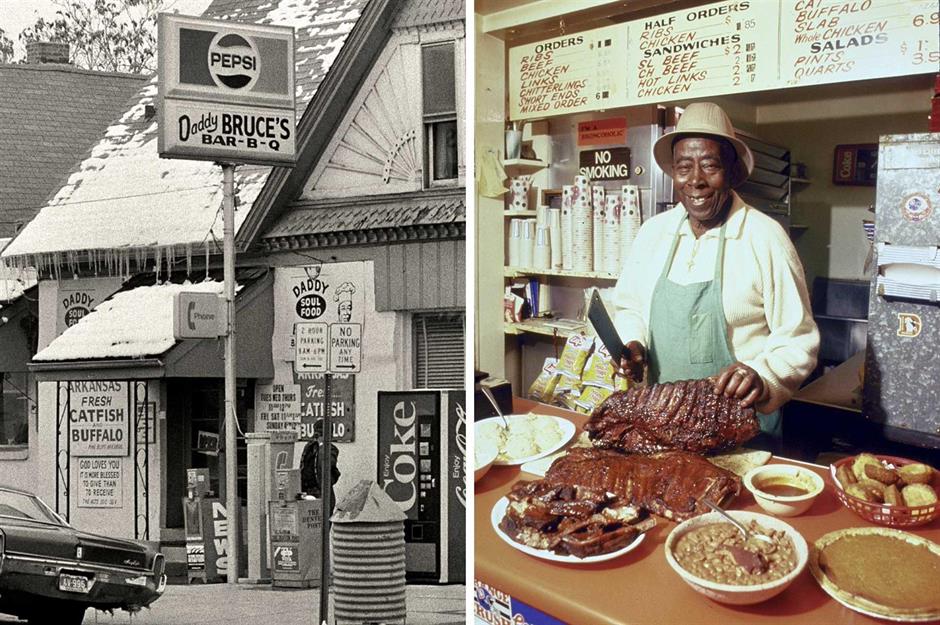
Pictured on the right in 1985, Bruce 'Daddy Bruce' Randolph stands behind the counter of his celebrated Denver barbecue restaurant, cleaver in hand as he prepares ribs. Renowned not only for his mastery at the pit but also for his generosity, Randolph established an annual Thanksgiving food distribution initiative, which fed thousands for free. The photograph on the left shows his original restaurant near 34th Avenue and Gilpin Street. A beloved local figure until his passing in 1994, Daddy Bruce left an enduring legacy in both Colorado barbecue and community service.
c. 1986: a taste of home on the grill
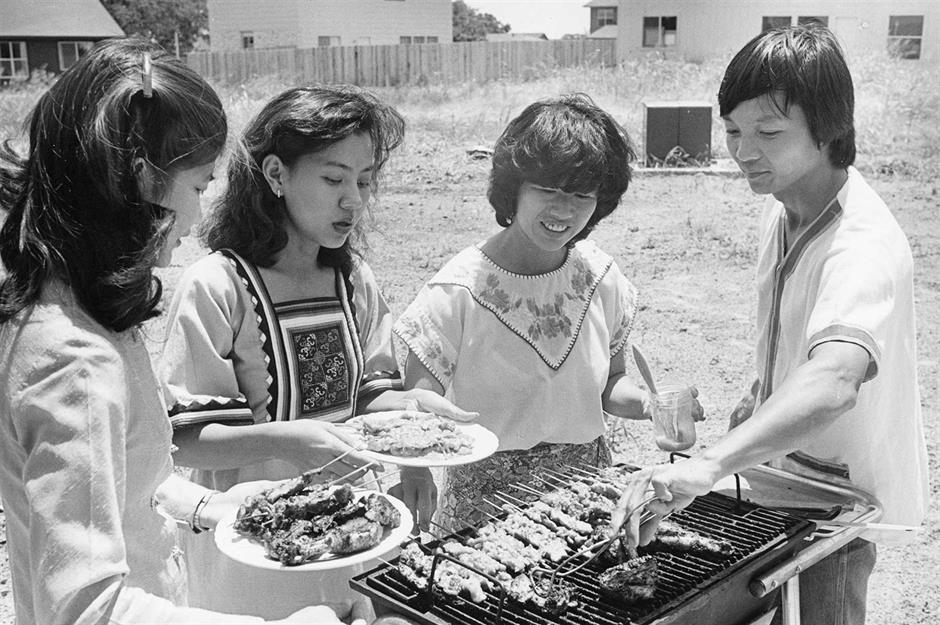
Photographed in Austin, Texas, USA around 1986, this image shows Thai immigrants grilling chicken skewers – likely gai yang, a beloved Thai street food. Barbecue in Thailand is often referred to as ping or yang, meaning 'grilled over flame'. Typically marinated in a mix of garlic, fish sauce, coriander root and white pepper, the skewers are cooked low and slow over charcoal. For many immigrants, dishes like this offered comfort and connection to home, preserving flavour traditions through shared outdoor meals in a new land.
Sponsored Content
1994: a barbecue showdown
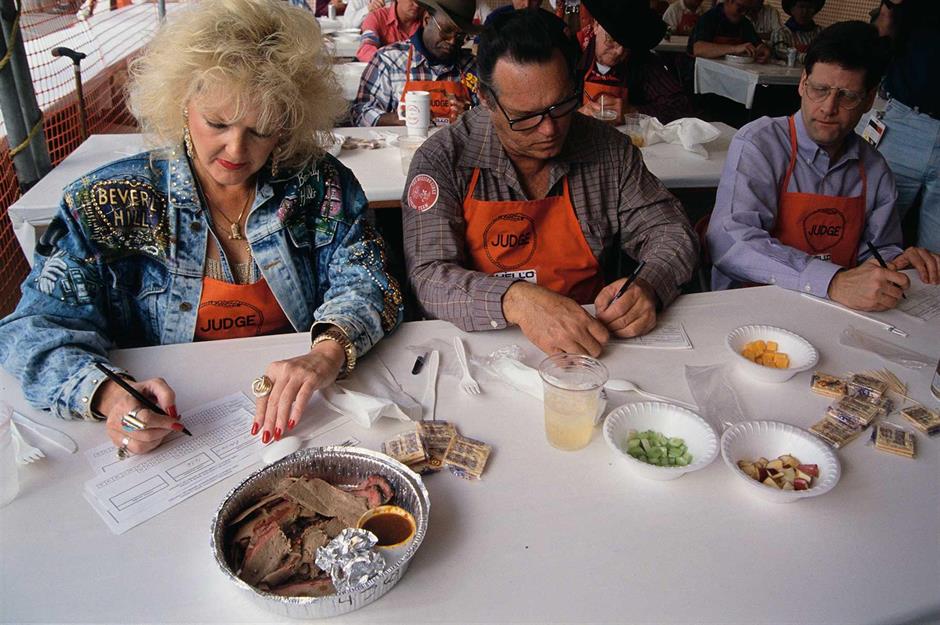
Photographed on 18 February 1994, this image shows judges evaluating brisket entries at the World’s Championship Bar-B-Que Contest, part of the USA's Houston Livestock Show and Rodeo. Dressed in official aprons, they score each sample for appearance, tenderness and taste. Drawing hundreds of competitive teams every year, the contest has become a cornerstone of Texas barbecue culture. To keep their palates sharp, judges are provided with tasting kits that include celery, cheese cubes and apple slices.
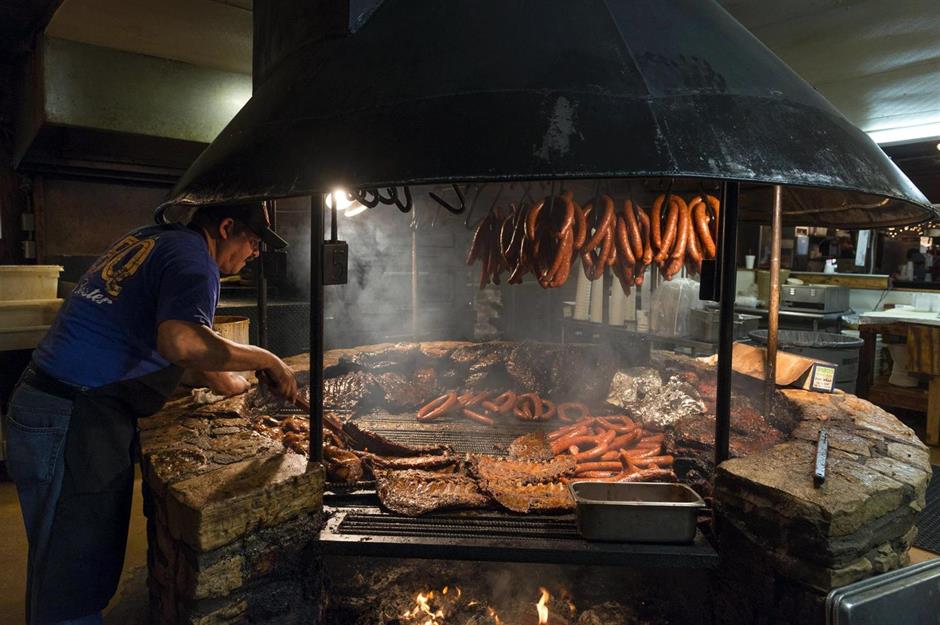
2014: the barbecue pit at the original Salt Lick BBQ
This open pit belongs to the original Salt Lick BBQ, founded in 1967 by Thurman and Hisako Roberts on the Texas ranch where Thurman was born. Constructed from locally quarried limestone, the restaurant began as a part-time venture before quickly expanding to daily service. Its distinctive sweet sauce, influenced by Hisako’s Hawaiian heritage, set it apart from traditional Texas styles. Today, the Salt Lick endures as a celebrated institution, with additional locations across the state.