Ranked: the world's most delicious street food dishes
How many of these delicious street foods have you tried?
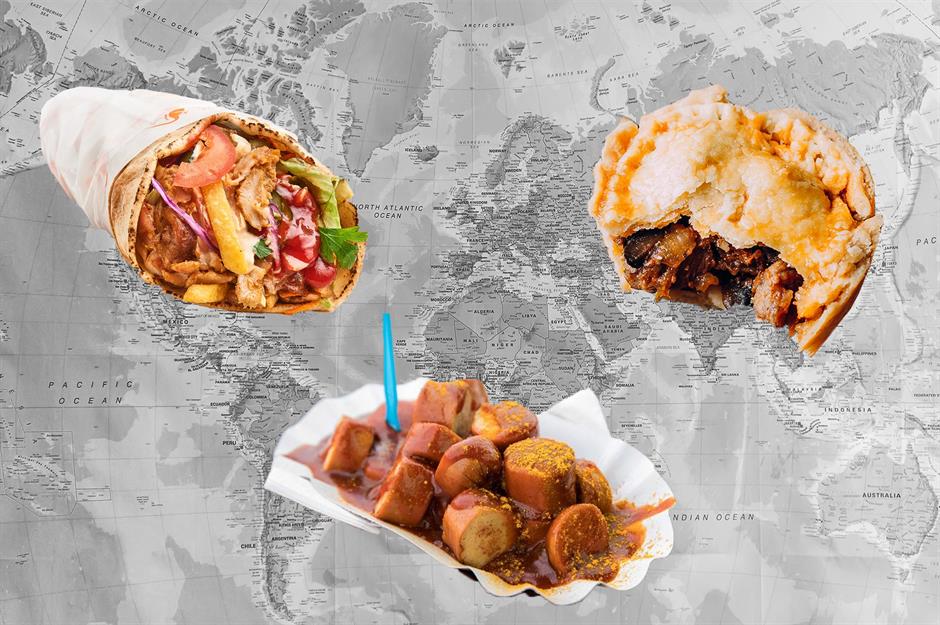
Trying new food is one of the best things about travelling, and the best way to get a taste of a place is through its street food. Available from stands, trucks, carts and markets, these easily portable dishes offer a glimpse into a destination's history, culture and culinary heritage. Here’s our pick of the world’s most delicious street foods, including cultural icons such as currywurst and tacos, and culinary gems such as walkie talkies and fischbrötchen.
Click or scroll through our gallery to discover the world's best street food dishes – counting down to the tastiest of all.
We’ve based our ranking on the enduring popularity of each street food in its place of origin and beyond, and on the opinions of our well-travelled (and well-fed) team. The list is unavoidably subjective.
52: Hot jam doughnut, Australia
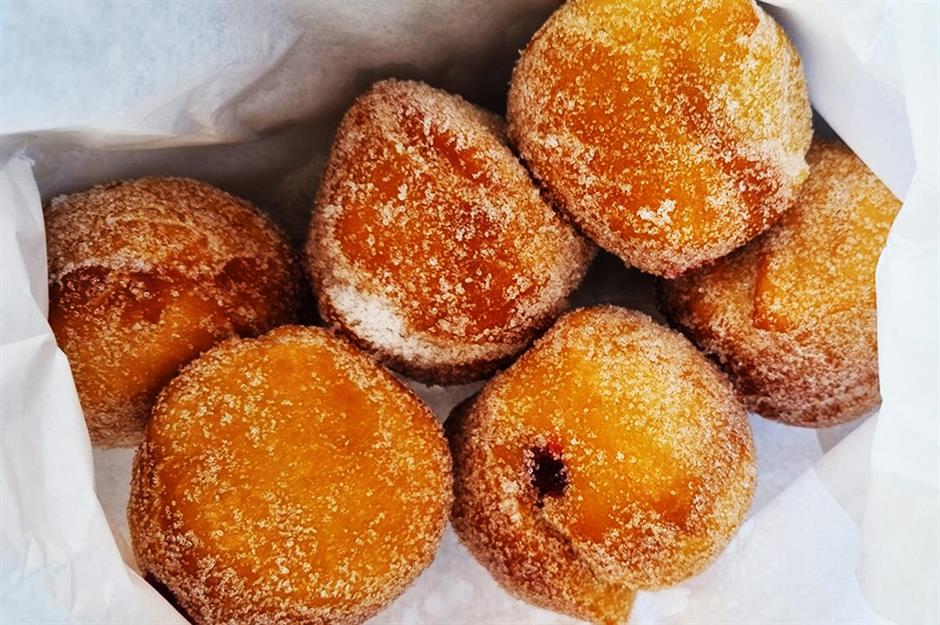
Many cultures have their version of a jam or jelly doughnut; however, in Victoria, Australia, they do things a little differently. The speciality here is the hot jam doughnut, whose dough is made with more yeast than most other types. After the dough has proved and been filled with jam, it's deep fried and served at once. The jam and the doughnut should be scalding hot when you bite into it – otherwise you're not experiencing the real deal. It's possibly the only region in Australia, or even the world, that serves doughnuts this way.
51: Pierogi, Poland
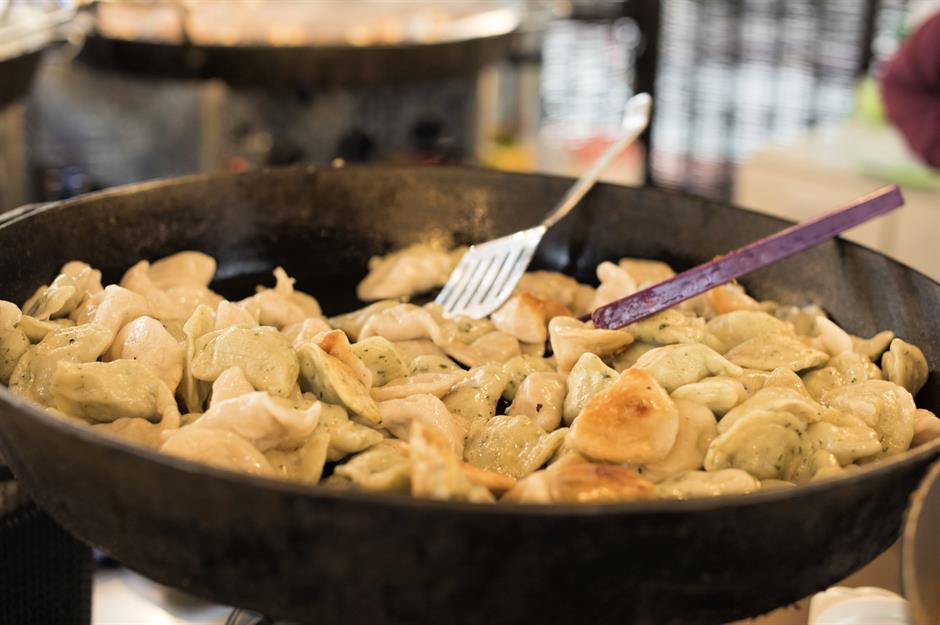
Pierogi is Polish for 'dumpling' – so it's no surprise that pierogi are, in fact, filled dumplings! What is surprising, though, is that people can stuff their dumplings with just about anything they like and still call them pierogi. Classic fillings include potatoes and cheese and beef and sauerkraut, but you could just as easily use berries or chocolate for a sweet twist.
Sponsored Content
50: Pissaladière, France
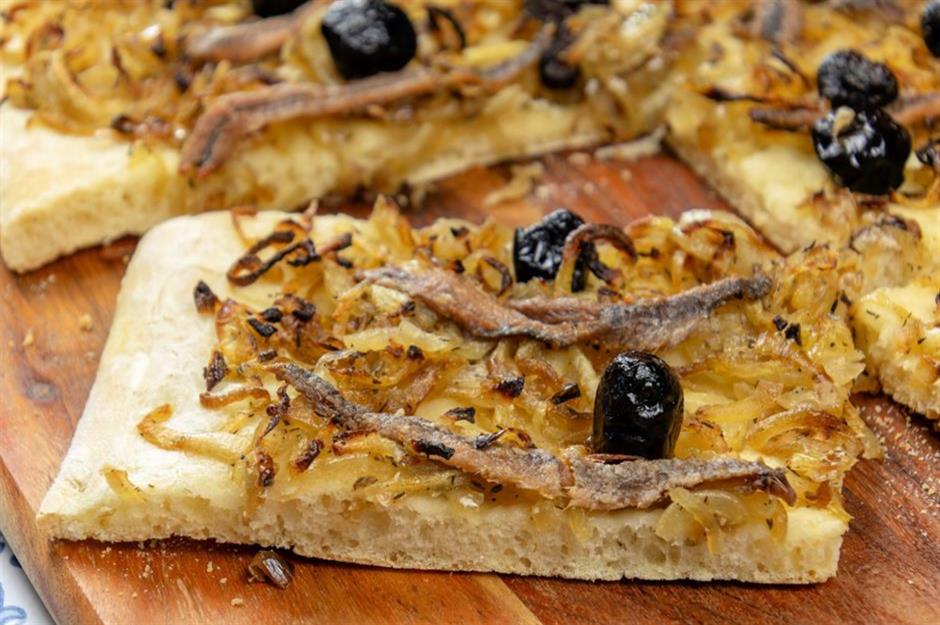
Often compared to pizza or focaccia, pissaladière is a unique dish worthy of its own place in food culture. Importantly, the base of pissaladière is thicker than a traditional pizza base – and you won't find tomato or cheese anywhere near the tasty flatbread. Instead, the most common toppings are anchovies, black olives and melty caramelised onions. Food historians have traced the origins of pissaladière all the way back to 14th-century Nice.
49: Empanada, various locations
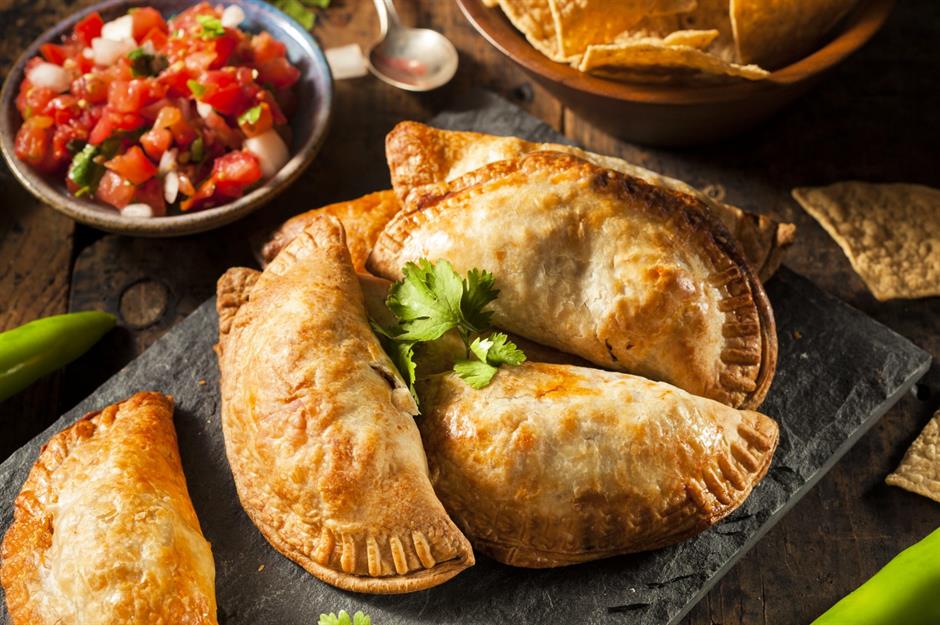
It's hard to say for sure that the empanada definitely originated in Spain, because the portable turnover is associated with cuisines from all over the world – including Argentina and the Philippines. But it's generally believed that the empanada's roots stretch back to 7th-century Galicia in northwest Spain. Since then, they've become popular in many places, and rightly so; after all, who can resist a baked or fried pastry that's filled to bursting with meat, cheese or vegetables?
48: Pupusa, El Salvador
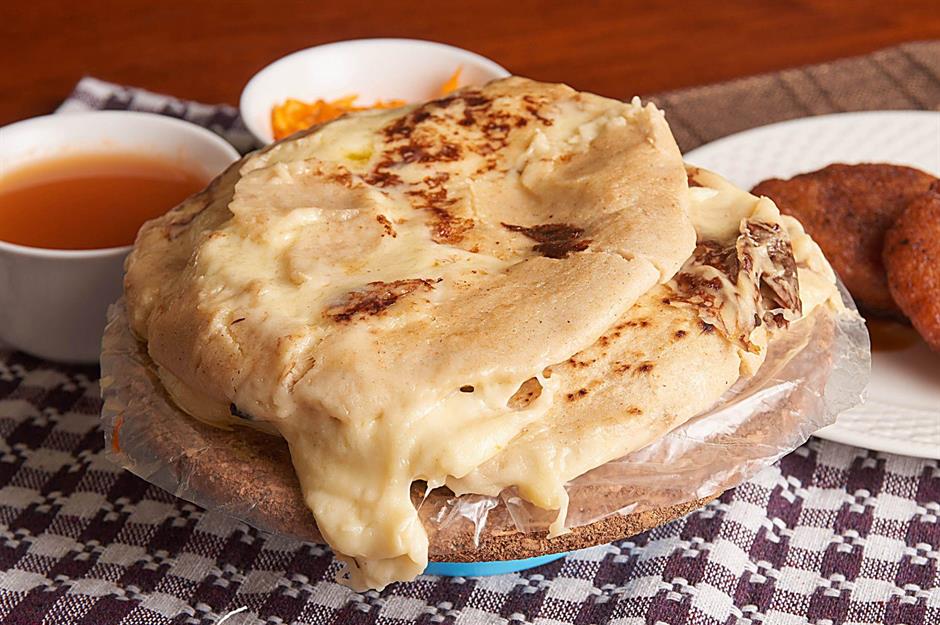
The national dish of El Salvador, the pupusa has its very own day dedicated to it. Take one bite, and you'll understand why. Made from cornmeal or rice flour, this thick griddle cake or flatbread is stuffed with cheese or refried beans – and it's served with a fermented cabbage slaw with a serious kick. It's said to have been invented by the Pipil tribe more than two millennia ago, though it didn't become popular nationally until the early 20th century.
Sponsored Content
47: Làngos, Hungary
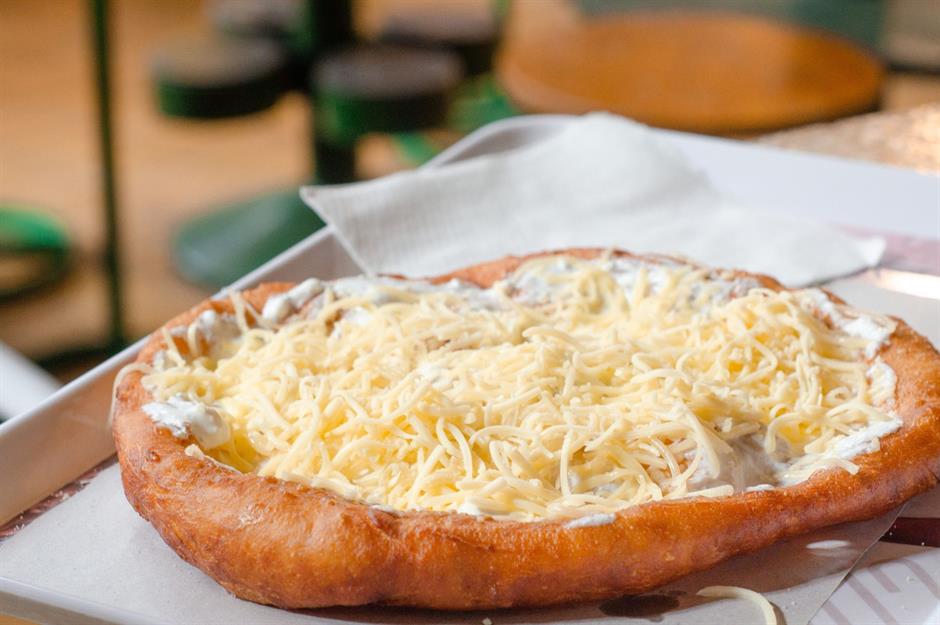
Served by street food vendors across Hungary, làngos is a type of fluffy, deep-fried bread that's often rubbed with garlic and salt and topped with anything from sour cream and grated cheese to ham, sausages and yogurt. The savoury bread was traditionally made in a clay oven. It's said to have risen in popularity during the Hungarian Revolution in 1956, as people sought out comforting sustenance.
46: Jerk chicken, Jamaica
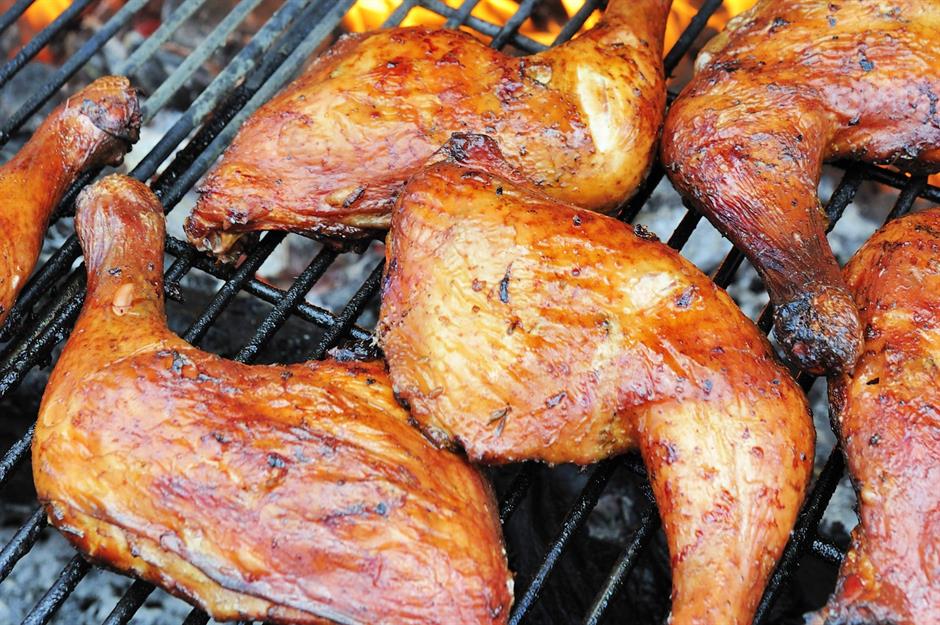
Jerk has been a Jamaican tradition for generations, passed down by Indigenous communities – and it came to the attention of everybody else from the 17th century onwards. Chicken is marinated or rubbed in jerk spices (usually containing allspice and chillies), then grilled until juicy and hot. Famously fiery, it's a street food favourite throughout the island, and it's enjoyed in many countries all over the world.
45: Käsekrainer, Austria
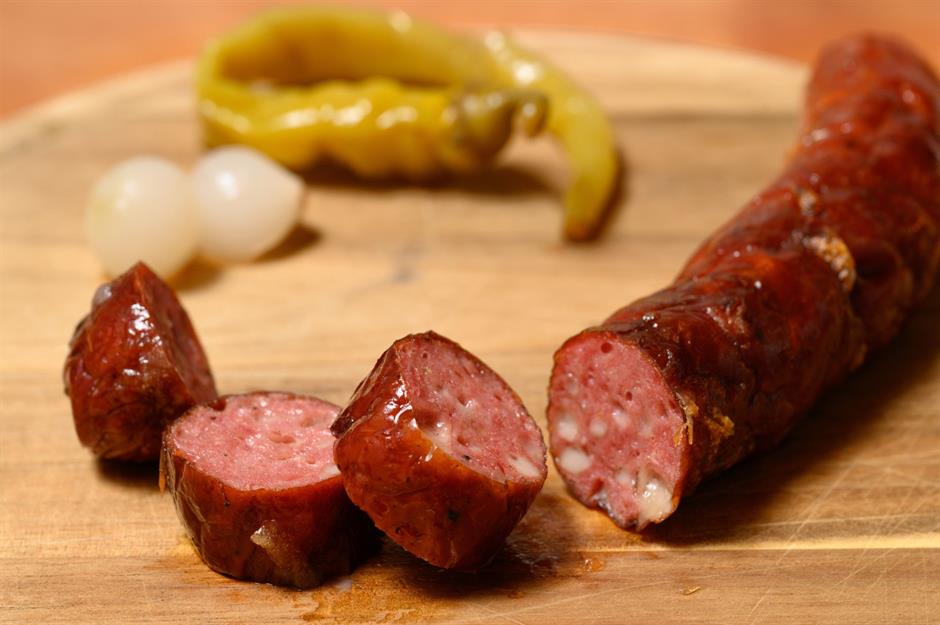
This lightly smoked pork sausage – laced with cubes of cheese – is traditionally served with a bread roll and a helping of mustard or fresh horseradish. Now a popular street food snack across the country, käsekrainer is said to have been invented by two butchers from Upper Austria in the late 1960s. It can also be roasted or grilled.
Sponsored Content
44: Blini, Eastern Europe
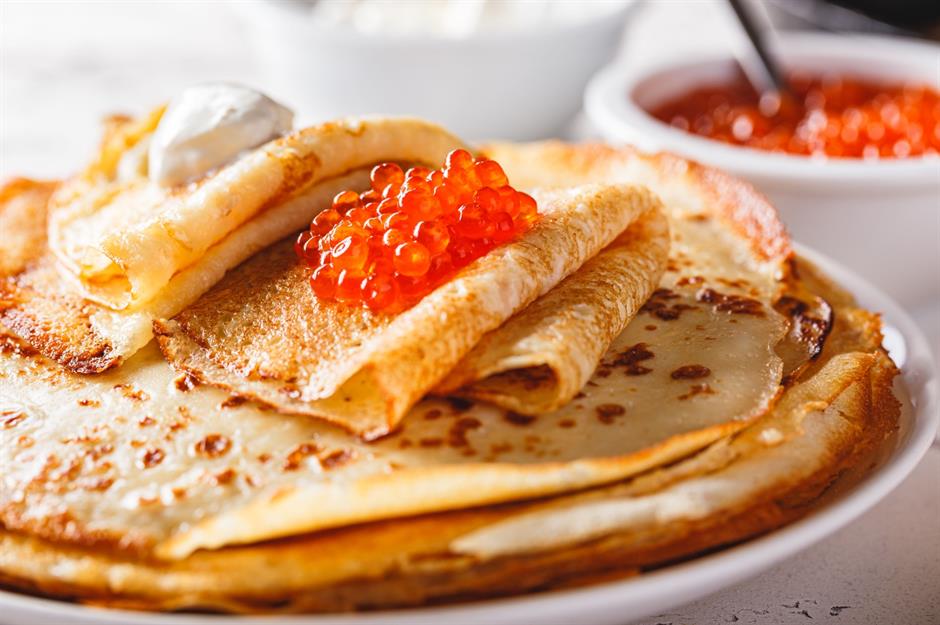
This traditional pancake was first made in pre-Christian times as a symbol of the sun. It was particularly popular at the end of winter, eaten to usher in the return of good weather. The batter of flour, eggs, milk, yeast and salt is cooked quickly, resulting in a big, thin pancake – which can be topped with various additions such as cheese, meat, fruit, jam and caviar (the most well-known option). In the West, mini versions have become popular as a posh party snack. In Eastern Europe, though, they're large and sold from street food stands.
43: Donair, Canada
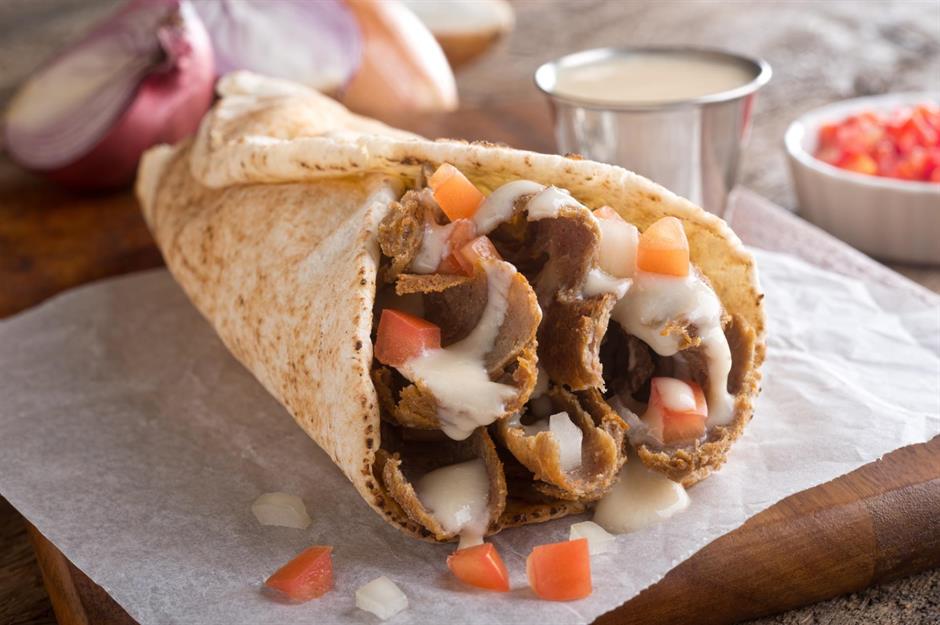
The donair is the official food of Halifax in Nova Scotia, and it doesn't disappoint – particularly when eaten as a late-night snack. It's said to have been invented in the 1970s by Greek immigrant and restaurateur Peter Gamoulakos as a riff on the classic Greek gyros. He experimented and found a winning combination for Halifax residents: a pitta packed with spit-roasted beef, tomatoes, onions and a sweet and garlicky donair sauce.
42: Pasty, UK
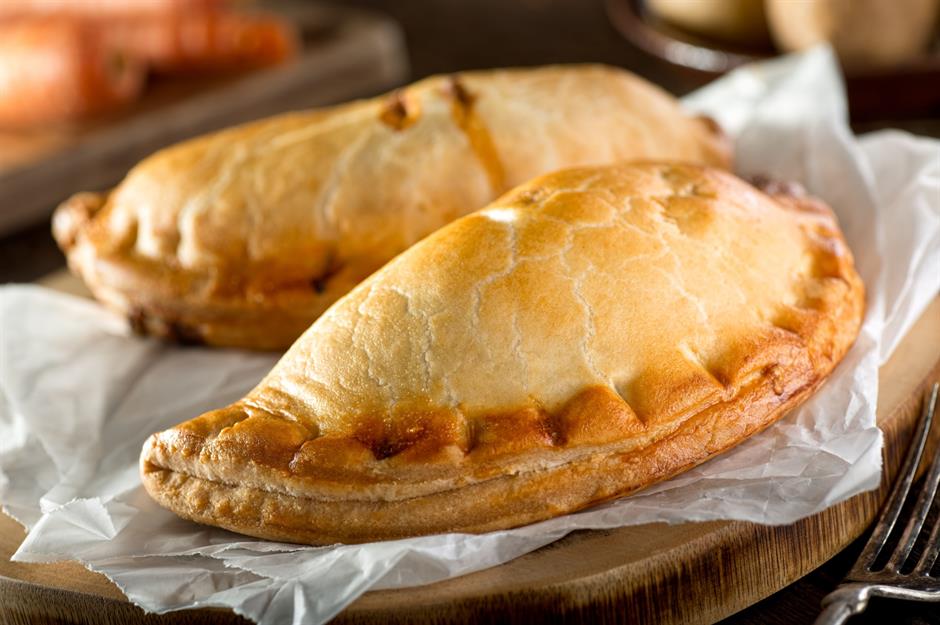
Pasties have murky origins, but today they're a speciality in the most southwesterly point of the UK: Cornwall. They're referenced as far back as the 13th century, and they were especially popular with Cornish tin miners as a complete meal that could be carried easily and eaten without cutlery. The D-shaped crimped pastry is traditionally filled with a mixture of beef, potato, swede and onion, but countless variations now exist across the county.
Sponsored Content
41: Walkie talkies, South Africa
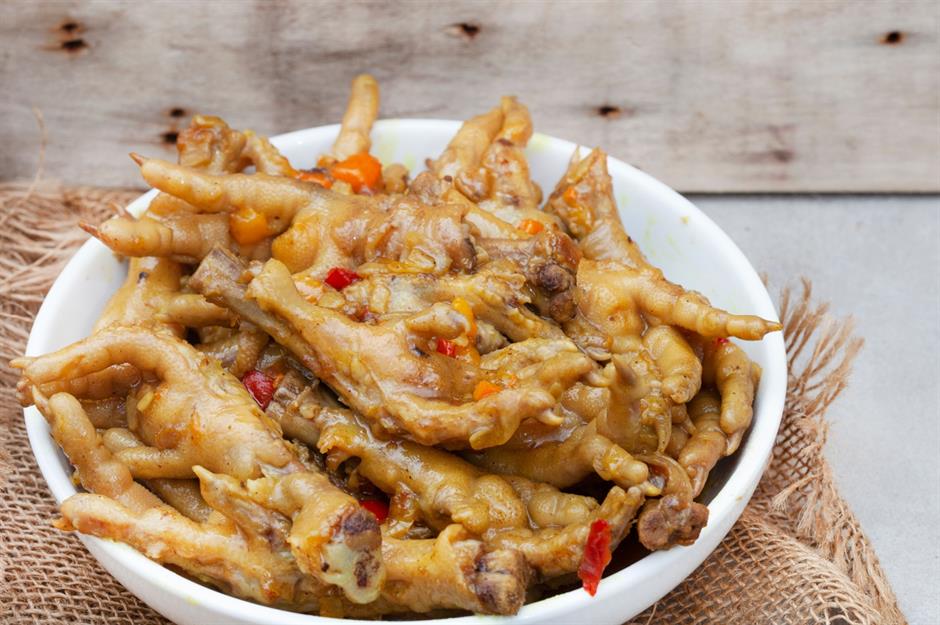
People eat chicken feet in many different countries, including China, Mexico and Korea. In South Africa, though, chicken feet (walkies) and heads (talkies) are often eaten together to create 'walkie talkies'. They're boiled, seasoned heavily and grilled. To eat them, you scrape the super-crispy skin and meat off with your teeth, then chew the remainder.
40: Polish Boy, USA

The hot dog, in all its many variations, is a street food classic, but Ohio's Polish Boy takes things a few steps (and ingredients) further. This Cleveland creation consists of a bun filled with kielbasa sausage and fries, all smothered in BBQ sauce and coleslaw. Today, you can find all sorts of alternative toppings at street carts (and restaurants) around the city, as well as across the entire state.
39: Quesadilla, Mexico
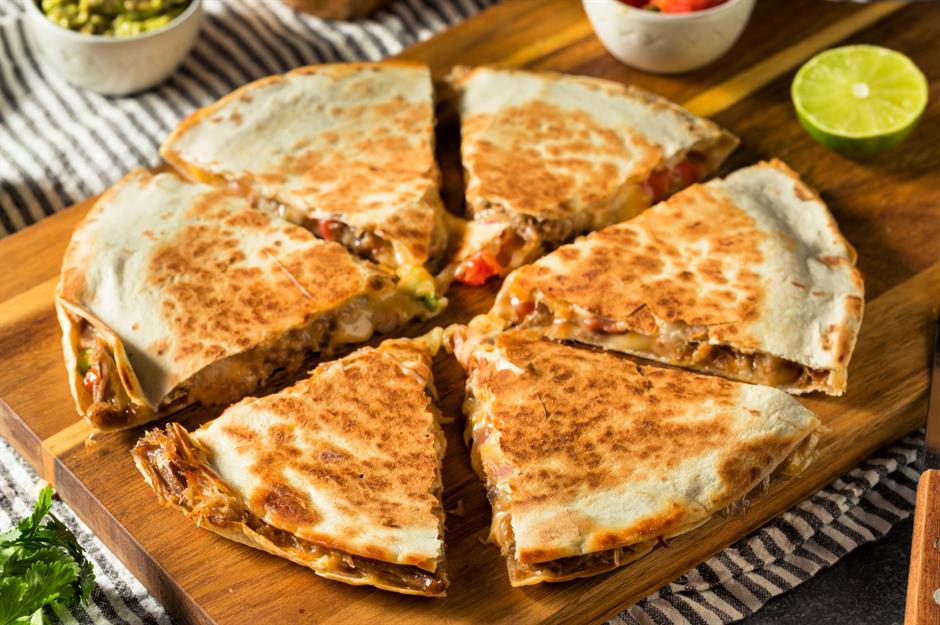
Few dishes are more comforting than quesadillas, which is probably why people have been eating them for hundreds of years. Thought to have been invented in the 1500s after the Spanish arrived in Mexico, quesadillas are a beautiful combination of cheese and tortillas (other optional fillings range from black beans to slow-cooked pork). Traditionally, the fillings are piled into a tortilla, then placed in a hot pan until the tortilla is slightly crispy, and the cheese is deliciously melty.
Sponsored Content
38: Doubles, Trinidad and Tobago
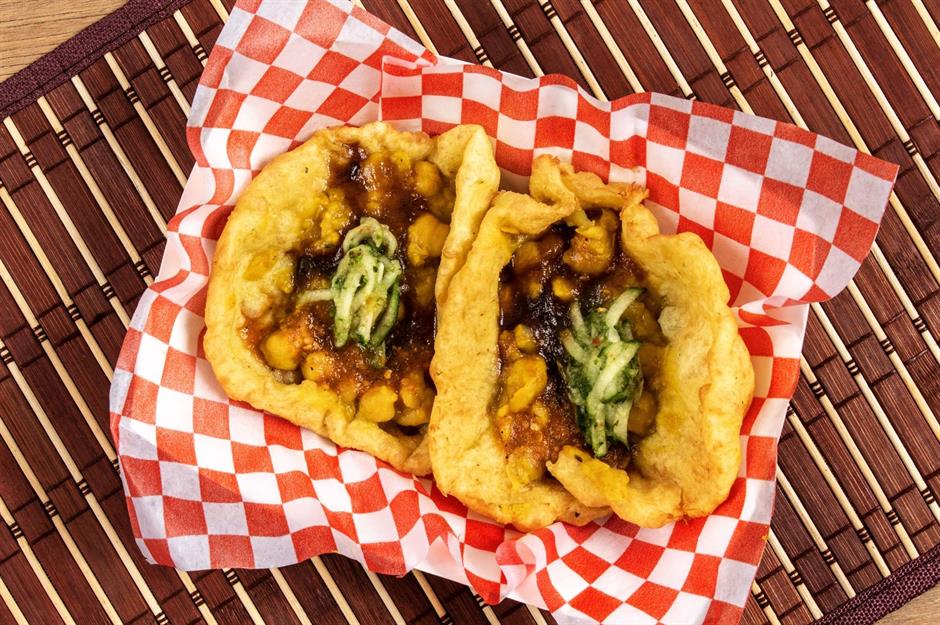
One of Trinidad and Tobago’s most popular street foods, doubles is a dish made up of two pieces of fried flatbread (baras), traditionally topped with curried chickpeas and chutney. Enjoyed for breakfast from street vendors and restaurants, its origins can be traced back to 1936, when Emamool and Raheman Rusulan Deen started selling the delicacy from their stall in Princes Town.
37: Jiaozi, China
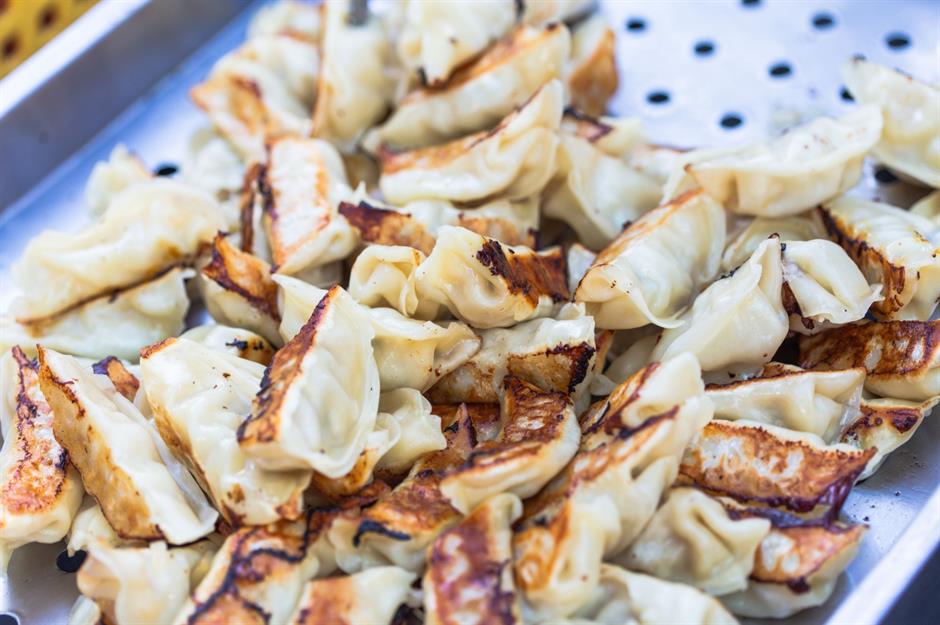
These Chinese dumplings – often called gyoza in other countries – are thin pieces of dough filled with ground meat and vegetables like spring onions and Chinese cabbage. Each tasty package is sealed by pressing the edges of the dough together, and the resulting dumplings are boiled, steamed or fried. They're traditionally served alongside a black vinegar and sesame oil dip.
36: Takoyaki, Japan
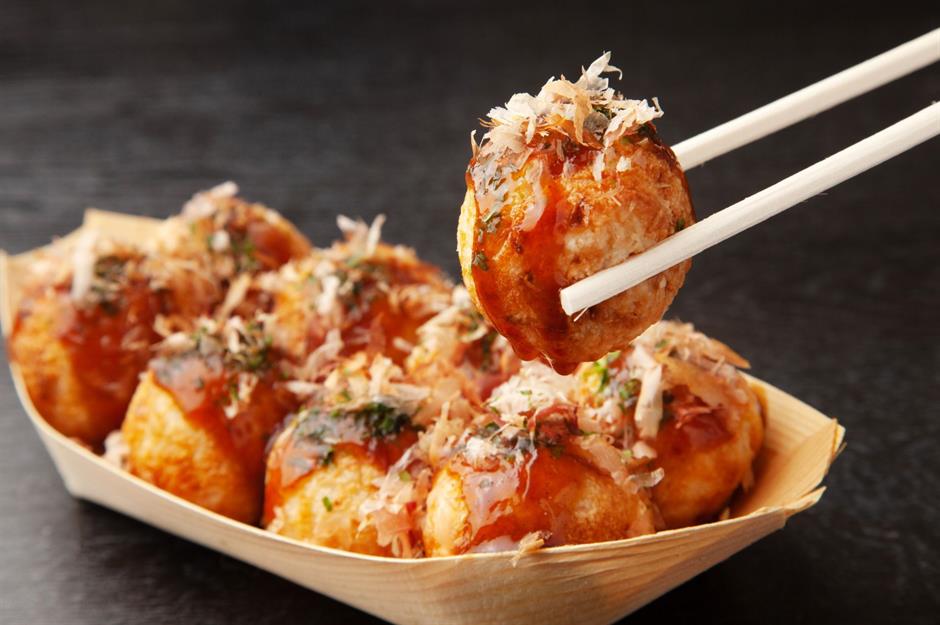
These spherical snacks have been a part of Japanese street food culture for almost a century. Made from a wheat flour batter and cooked in searingly hot moulded pans, you’ll usually find them stuffed with minced octopus, pickled ginger and onion. It’s believed that vendor Tomekichi Endo created this delicious savoury treat in Osaka in 1935. Nowadays, you'll find them all across Japan.
Sponsored Content
35: Sate kambing, Indonesia
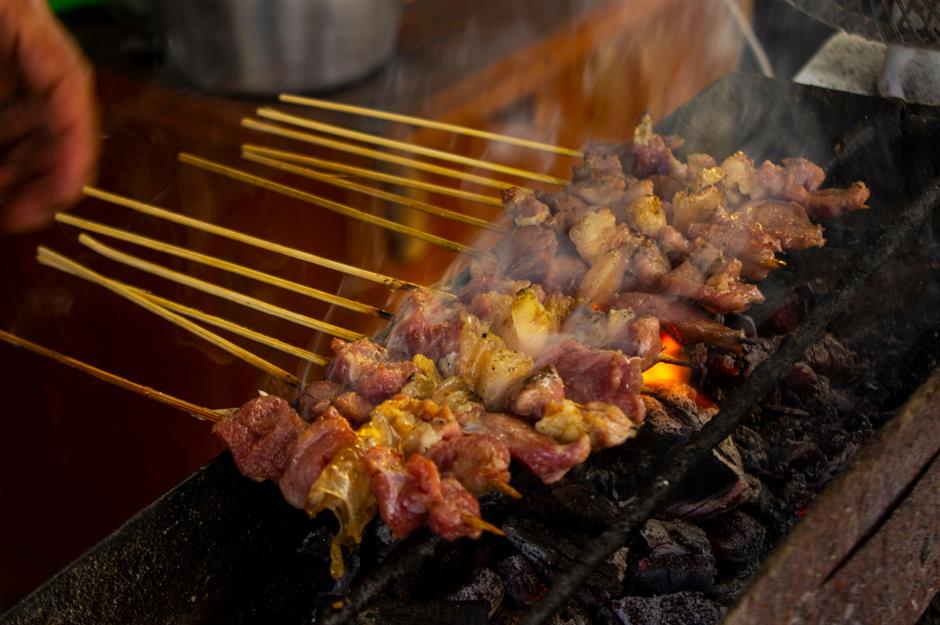
Sate kambing, or mutton satay, is a staple of Indonesian cuisine. It's made by marinating chunks of goat meat in a mix of puréed pineapple juice, sweet soy sauce, ground shallot and galangal. The marinated cuts of meat are threaded onto a skewer, grilled and served with peanut sauce or kecap manis – a thick black soy sauce.
34: Scotch egg, UK
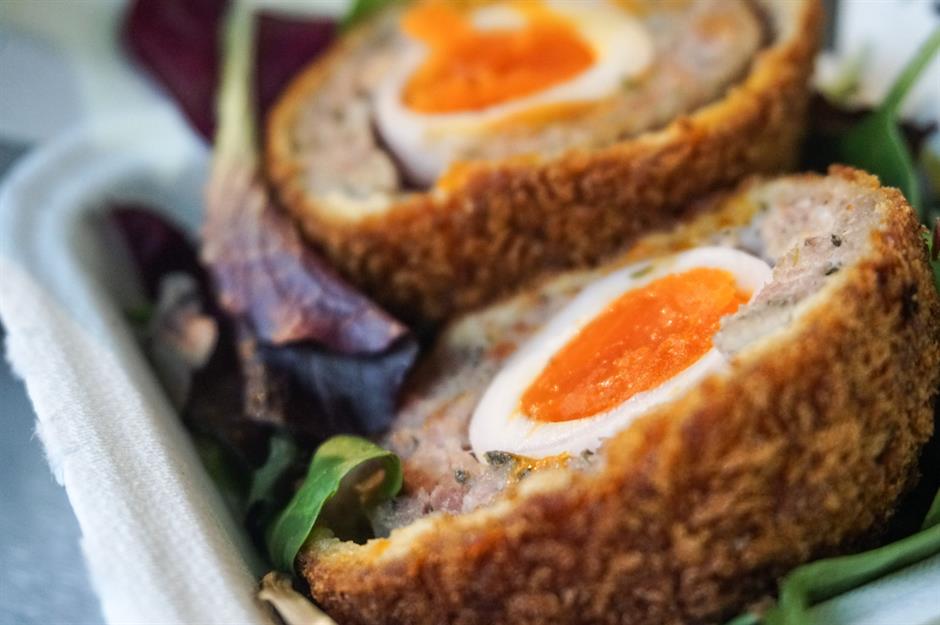
To make a Scotch egg, take a boiled egg, wrap it in sausagemeat, coat it in breadcrumbs, then deep fry it. The backstory of this British street food snack is murky, but it's believed that it was invented in the 19th century, possibly inspired by similar dishes from around the world. Today, they're eaten hot or cold and are a popular picnic food. You'll find them at many food markets across the UK.
33: Pani câ mèusa, Italy
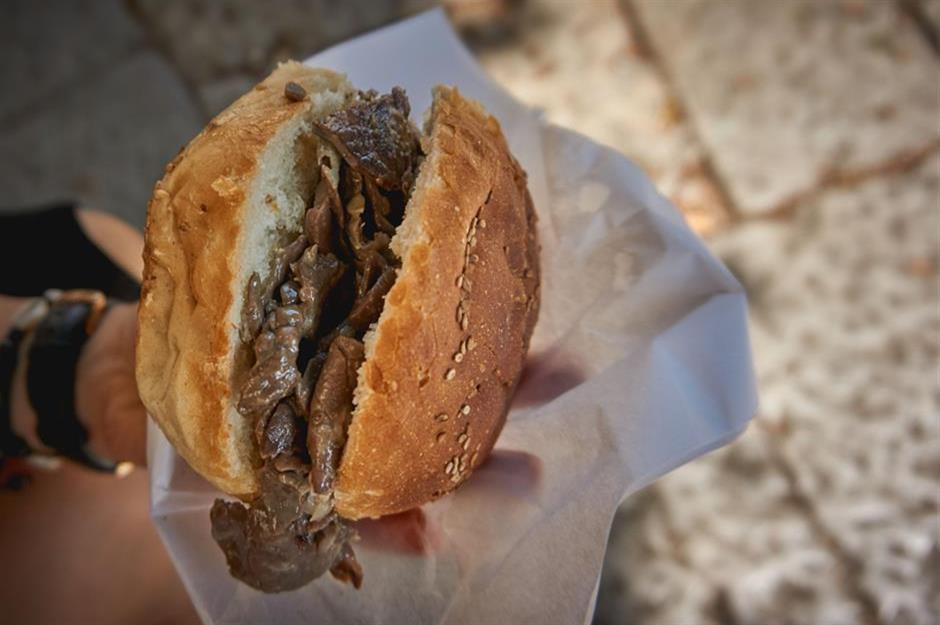
A spleen sandwich might not sound like the tastiest snack around, but just wait until you try this popular Sicilian street food. The pani câ mèusa was created in the 15th century by Jewish butchers in the city of Palermo. They took a soft, sesame-topped vastedda bun and stuffed it with fried slices of veal lung and spleen. This humble meat sandwich is brought to life with a squeeze of lemon – and it's sometimes topped with ricotta, too.
Sponsored Content
32: Dagwood dog, Australia
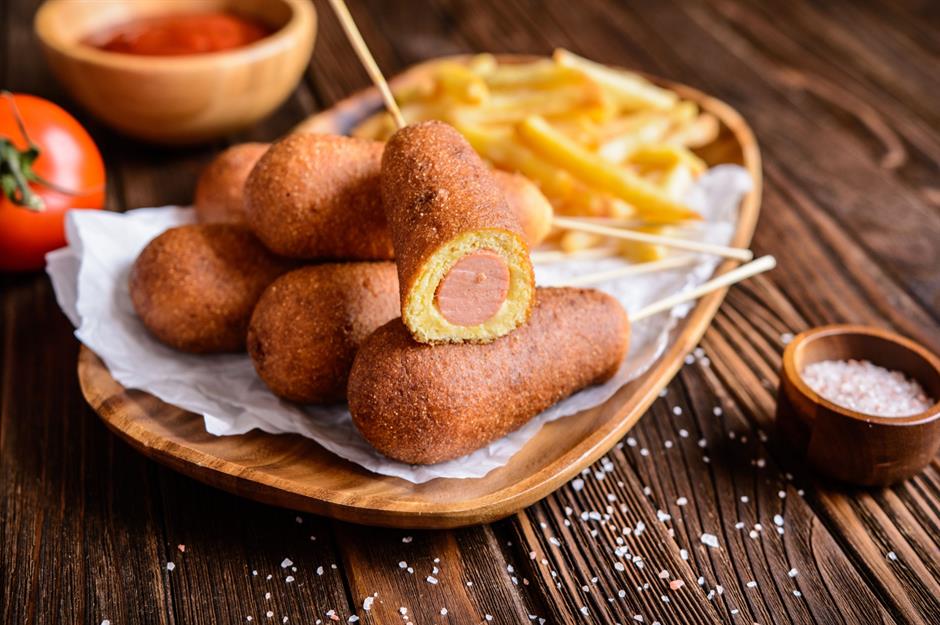
At any festival or food market in Australia, your chances of finding a Dagwood dog are pretty high. This savoury street food, inspired by the American corn dog and named after a comic strip character, consists of a fried, batter-coated hot dog on a stick. It makes for an easy (and very satisfying) snack on the go. Depending on which area you're in, it might also be called a dippy dog or a Pluto pup.
31: Fischbrötchen, Germany
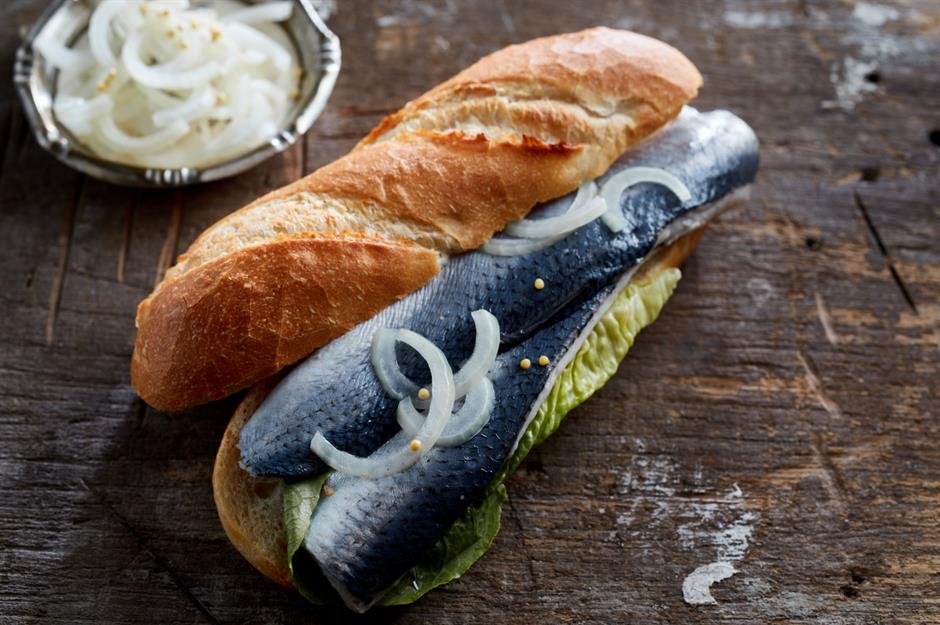
This fish sandwich is popular across northern Germany, a region that's renowned for its abundance of fresh seafood. Each sandwich may vary a little, but the basic idea remains the same: a long bread roll is filled with fish and a few other accompaniments, such as onion, pickles, remoulade and horseradish sauce. Herring, sprat and mackerel are often used in fischbrötchen.
30: Pretzel, various locations
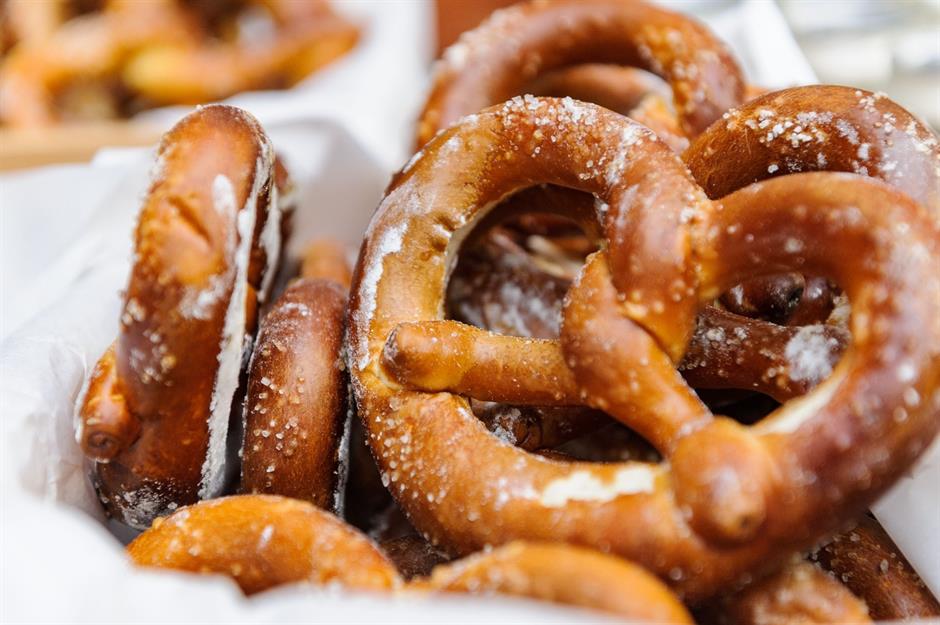
Nobody is certain where the pretzel comes from, but most accounts credit European monks for its creation. The snack has deep roots in Germany; it became part of the country's culinary culture in the 12th century. German and German-speaking immigrants brought the treat to North America in the 18th century, and pretzels have been a New York City staple ever since. In the US, pretzels are sold hot and fresh from street carts. Slightly crisp on the outside and tender on the inside, they're boiled, baked and topped with a generous scattering of salt.
Sponsored Content
29: Arancini, Italy
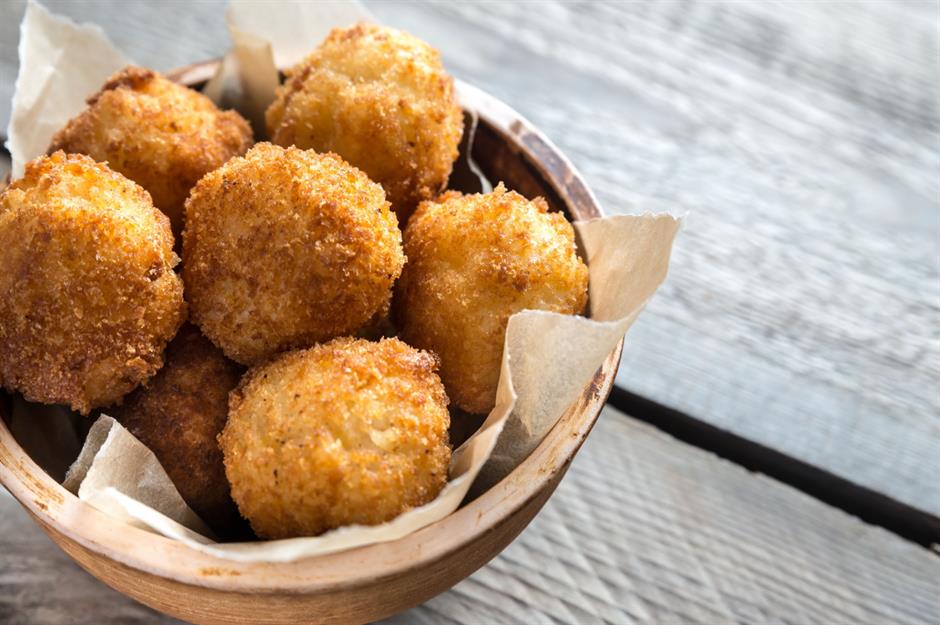
A Sicilian delicacy, these Italian rice balls are stuffed with all manner of fillings, rolled in breadcrumbs, then deep fried. Popular fillings include ragù, mozzarella, caciocavallo cheese and peas. It's believed arancini were invented in 10th-century Sicily, when the island was under Kalbid rule. They're celebrated on 13 December in Palermo, when the city is packed with carts selling various takes on the beloved Italian classic.
28: Elote, Mexico
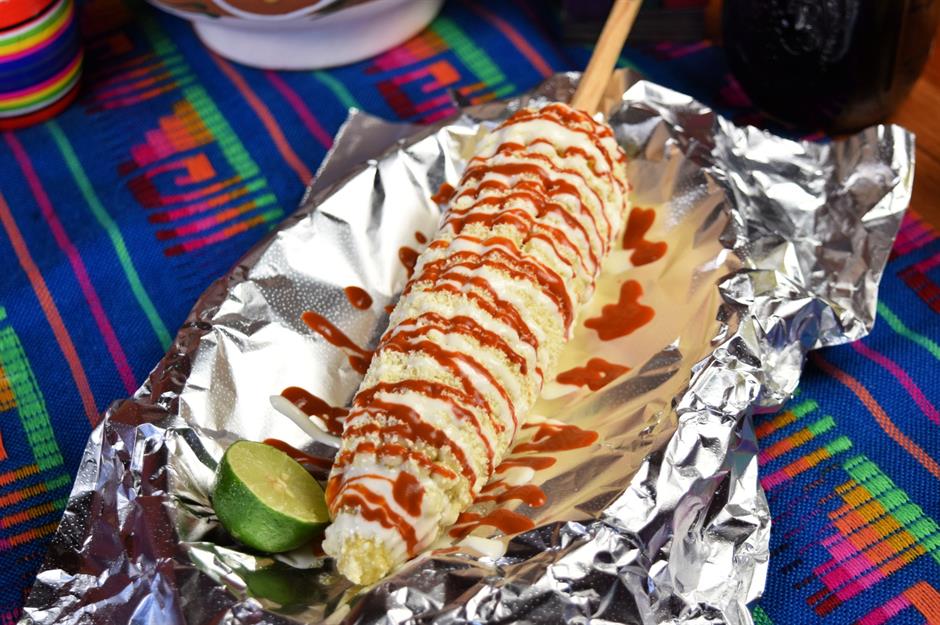
The simple but oh-so-delicious elote has been enjoyed in Mexico since pre-Columbian times. Served hot, elotes (or Mexican street corn) are made by smothering corn on the cob with mayonnaise and lime, then topping with crumbly Cotija cheese and chilli powder. The best way to eat an elote is by holding it by the stalk and diving right in after it's been grilled until slightly charred by a street food vendor.
27: Bunny chow, South Africa
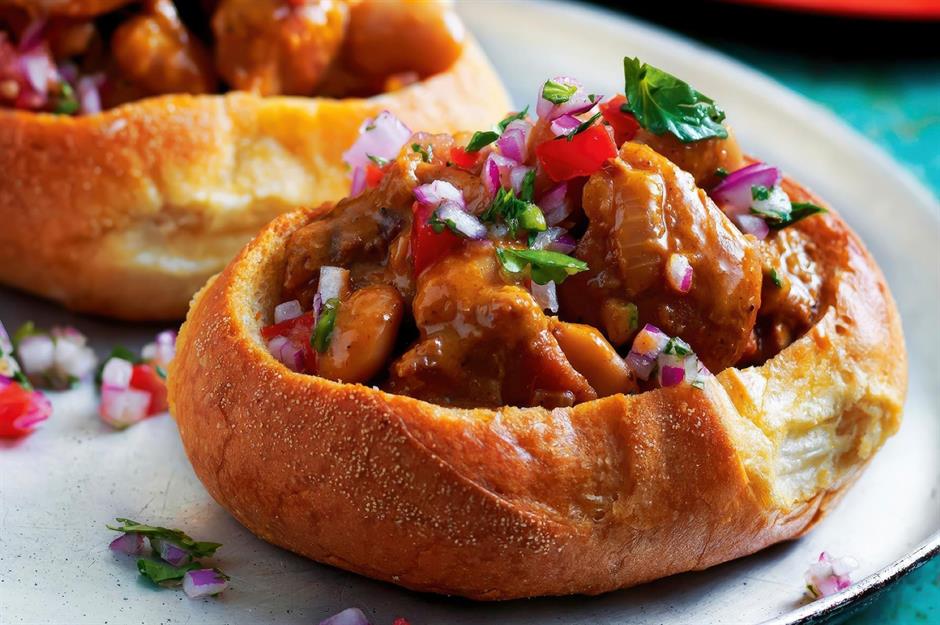
This South African dish consists of a hollowed-out roll, or a quarter of a loaf of bread, filled with vegetable, chicken or lamb curry. Bunny chow was popularised in Durban in the 1940s after being developed by the city's Indian immigrant workers – the bread bowl was their ingenious idea for a portable lunch. So beloved is the dish that a 'Bunny Chow Barometer' is held on the south bank of the Umgeni River each year, with competitors battling to be crowned top bunny chow maker.
Sponsored Content
26: Fish and chips, UK
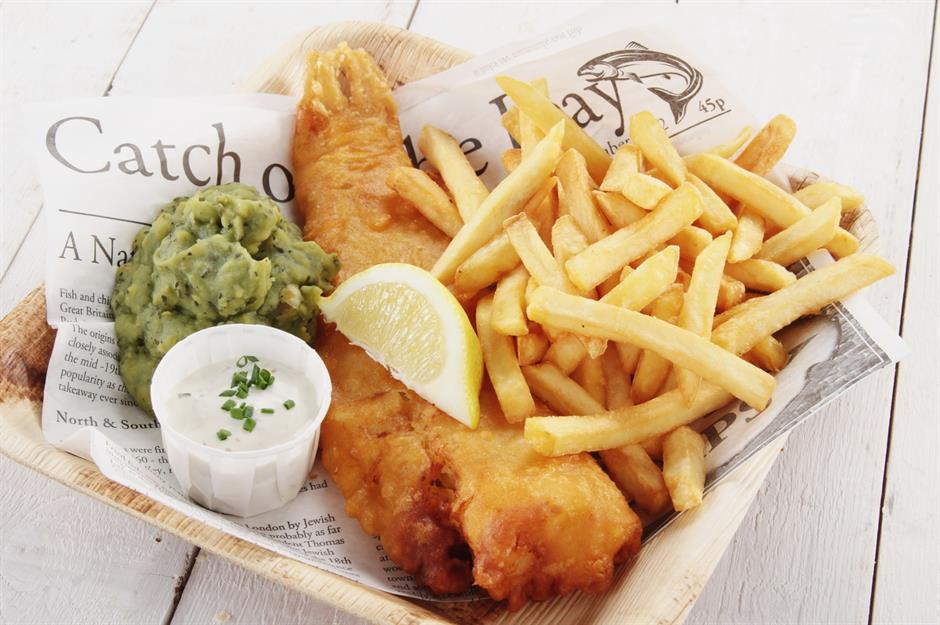
Fish and chips is pure British comfort food, consisting of battered white fish (typically cod or haddock) served with a portion of chips, traditionally fried in beef fat (dripping). It also tends to be seasoned liberally with salt and vinegar, while a portion of mushy peas and/or tartare sauce on the side is a must for many. The dish is served in lots of British restaurants but, for the best experience, order it from a chip shop, where it'll be served wrapped in paper or in an open container, ready to eat outside – preferably by the sea.
25: Philly cheesesteak, USA
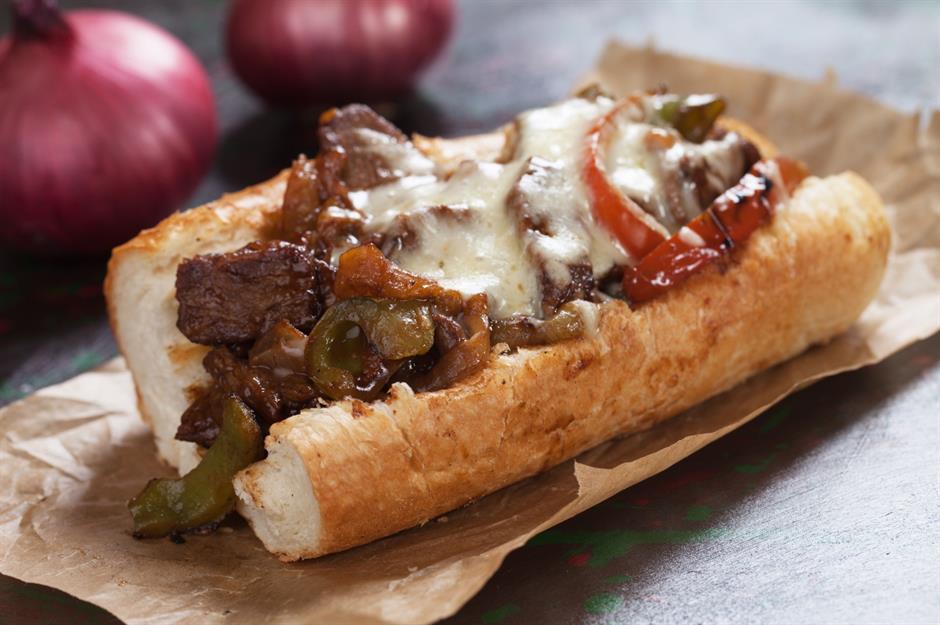
The Philly cheesesteak hails (of course) from Philadelphia, but this taste sensation has been transported far and wide since its conception in the early 20th century. The dish consists of a crusty hoagie roll, split and filled with thin slices of beefsteak (usually rib-eye or top round) and covered in oozing melted cheese. Sometimes sautéed onions and peppers, grilled mushrooms, hot sauce or ketchup are added.
24: Meat pie, Australia and New Zealand
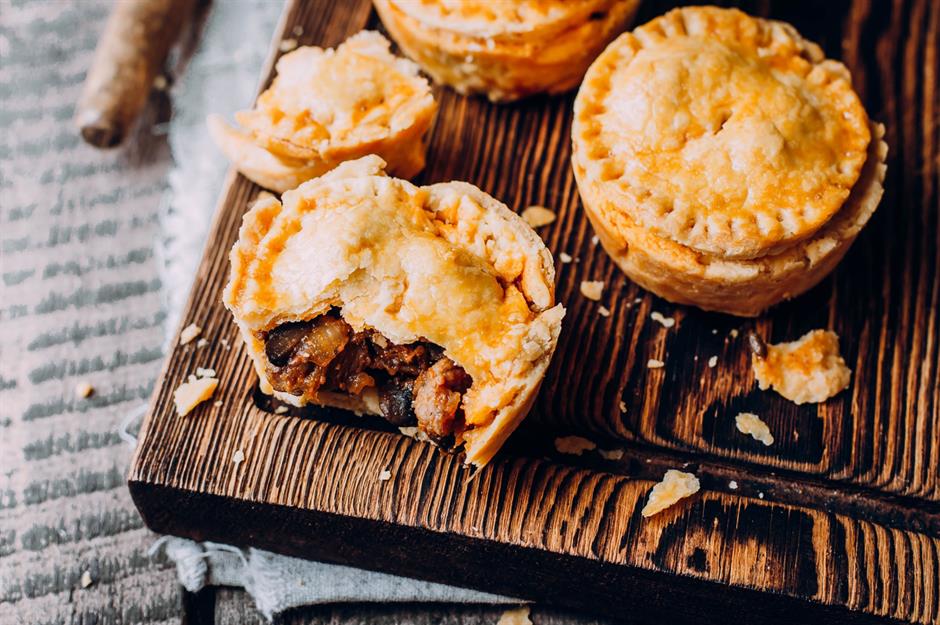
A hand-sized pie filled with minced or diced meat and gravy (and often topped with a dollop of ketchup), the meat pie sits somewhere between a snack and a full meal. It's been reported that the average Australian eats 12 meat pies a year, while the average New Zealander consumes 15. Both countries claim the meat pie as something of an unofficial national dish, and the annual Great Aussie Pie Competition is always hotly contested.
Sponsored Content
23: Bánh mì, Vietnam
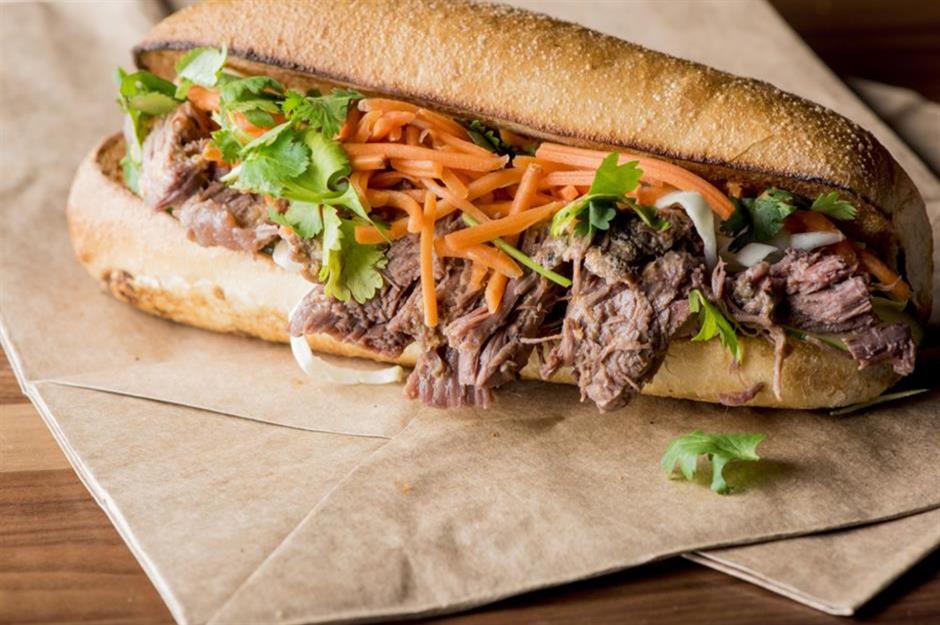
The baguette was introduced to Vietnam by the French in the mid-19th century – and by the 1950s, the bánh mì had become a firm favourite in Saigon. Each bánh mì starts with a crisp-on-the-outside, airy-on-the-inside baguette, which is sliced and loaded with fillings, including meat (usually pork), coriander leaves, pickled carrot and shredded radish. It's all finished with mayonnaise or oyster sauce.
22: Falafel, Middle East
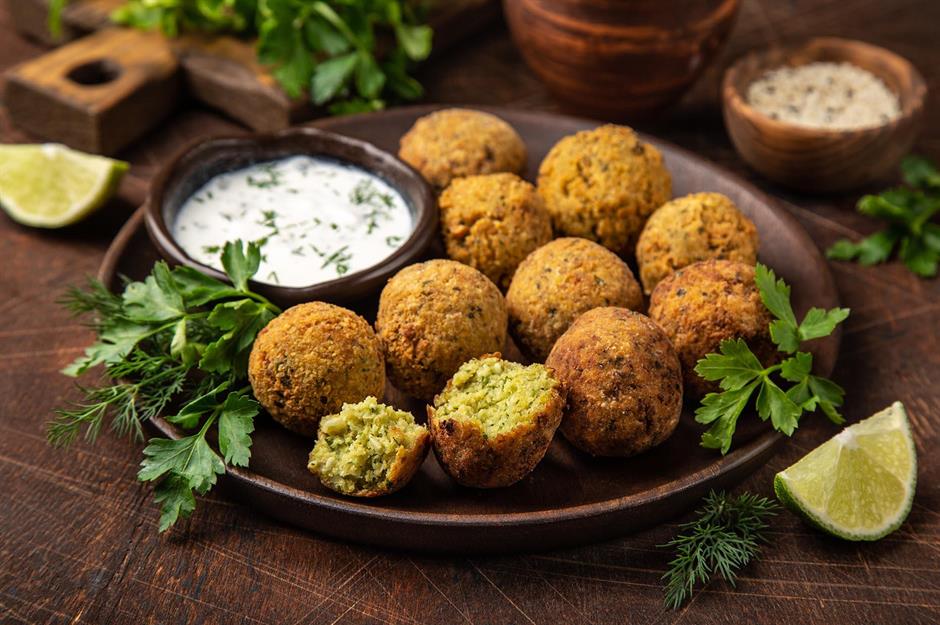
Today, falafel – deep-fried balls of highly flavoured ground chickpeas – are eaten around the world, yet nobody can agree on where they first came from. Popular across the Middle East, and one of Israel's national dishes, it's thought that falafel most likely evolved in Egypt. Today, they're most often enjoyed tucked into a flatbread with salad and topped with hummus or another tahini-based sauce.
21: Arepa, Venezuela and Colombia
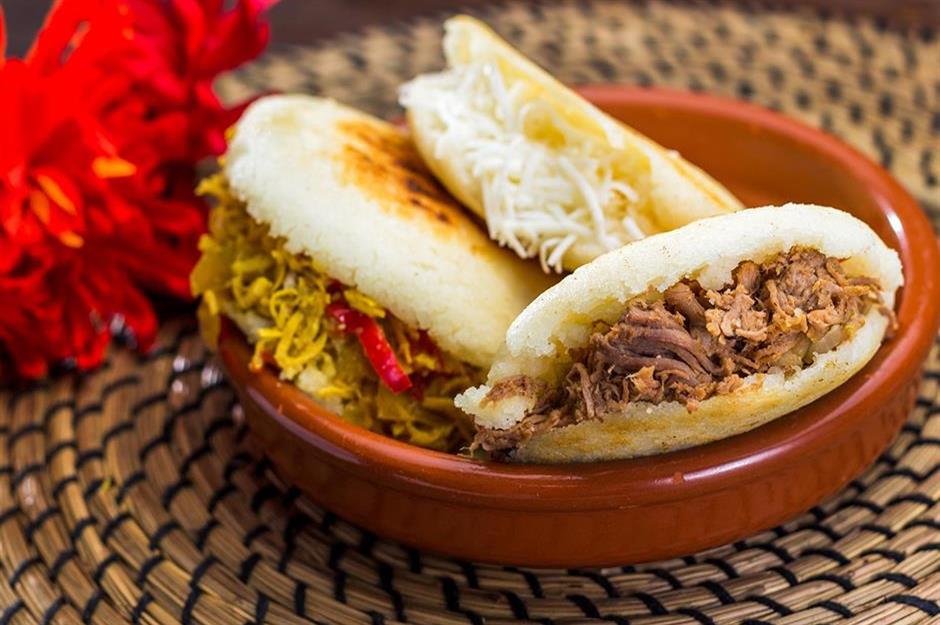
An arepa is a type of bun made from ground maize that's been eaten across areas of South America since pre-Columbian times. These days, it's an everyday staple in Colombia and Venezuela. The flat, round, unleavened patty – which can be steamed, boiled, fried or baked – is stuffed with all sorts of delicacies, with popular options including cheese and butter, fried eggs, beans, meat and fish.
Sponsored Content
20: Tartiflette, France
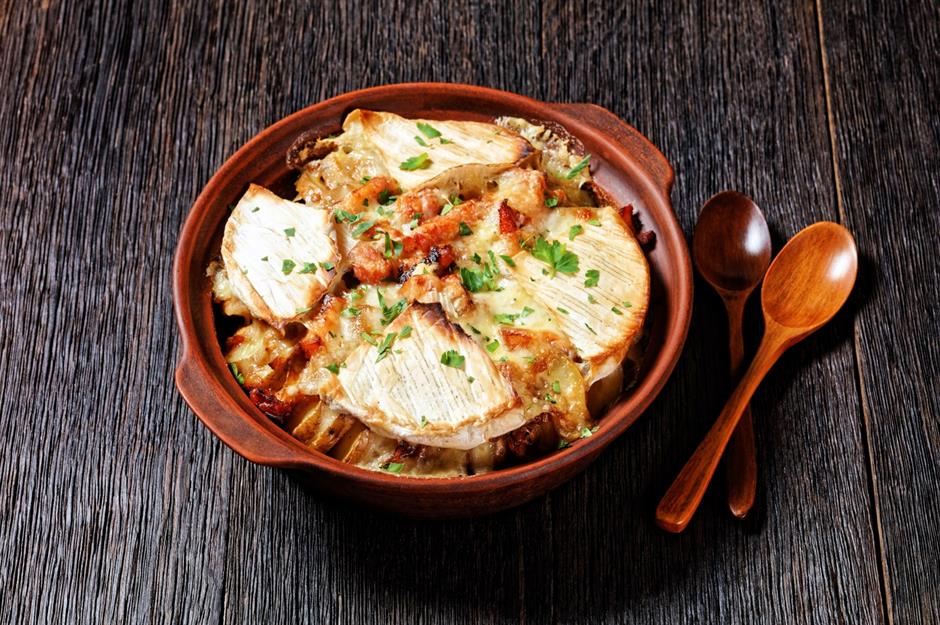
Tartiflette is a surprisingly modern invention; it only achieved mass popularity in the 1980s after it cropped up as an après-ski dish at ski resorts. That's certainly a suitable location for a street food dish that originated in the Savoy region of the French Alps. Best served piping hot, tartiflette is a to-die-for combination of potatoes, Reblochon cheese, bacon lardons and onions.
19. Pastel de nata, Portugal
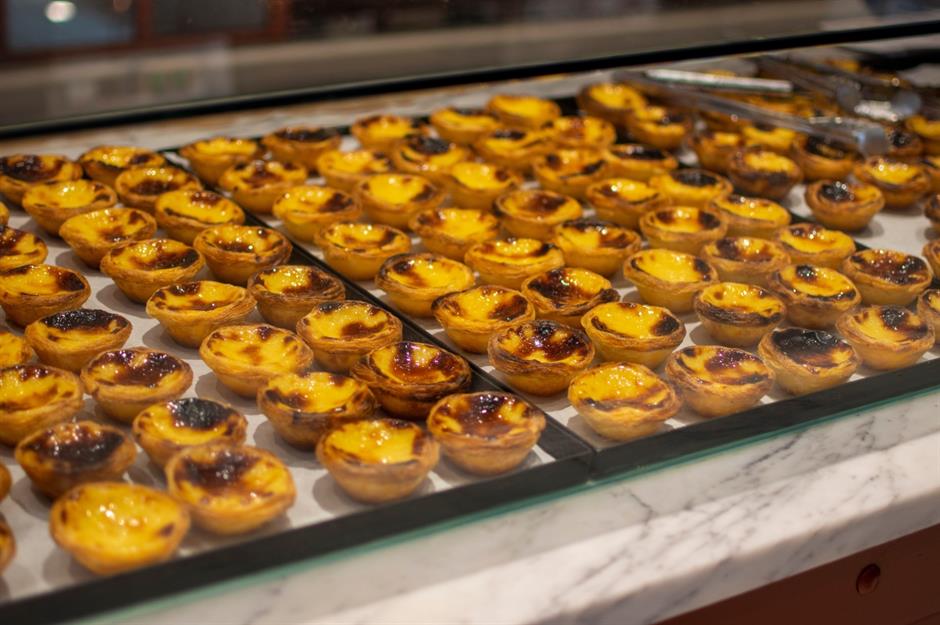
For a real taste of authenticity, there’s only one place to get a Portuguese egg custard tart – and that's at Fábrica de Pastéis de Belém in Lisbon. These delicious tarts were first baked by the monks at the Jerónimos Monastery in the civil parish of Saint Mary of Bethlehem, Lisbon. When the monastery closed in 1834, the recipe was sold to a local sugar refinery, which opened the bakery (and still owns it to this day).
18: Poutine, Canada
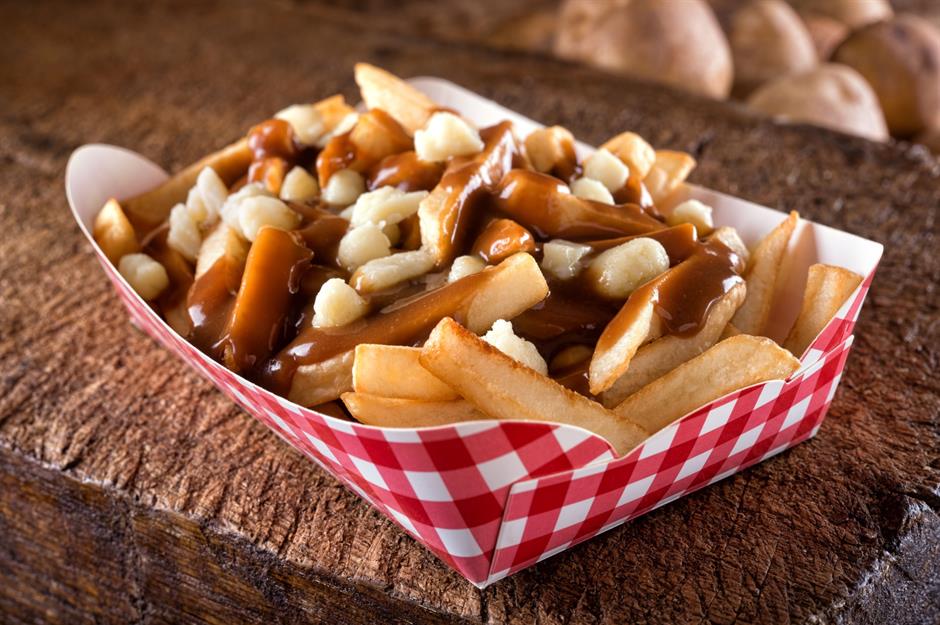
Take a serving of French fries, smother them in a hearty meat gravy, top them with cheese curds, and you’ve got yourself poutine. Said to have emerged in Quebec in the 1950s, poutine's exact origin story is unknown, yet it’s undoubtedly achieved icon status throughout Canada. Today, it's often referred to as Canada's national dish, and annual poutine celebrations take place across the country.
Sponsored Content
17: Paella, Spain
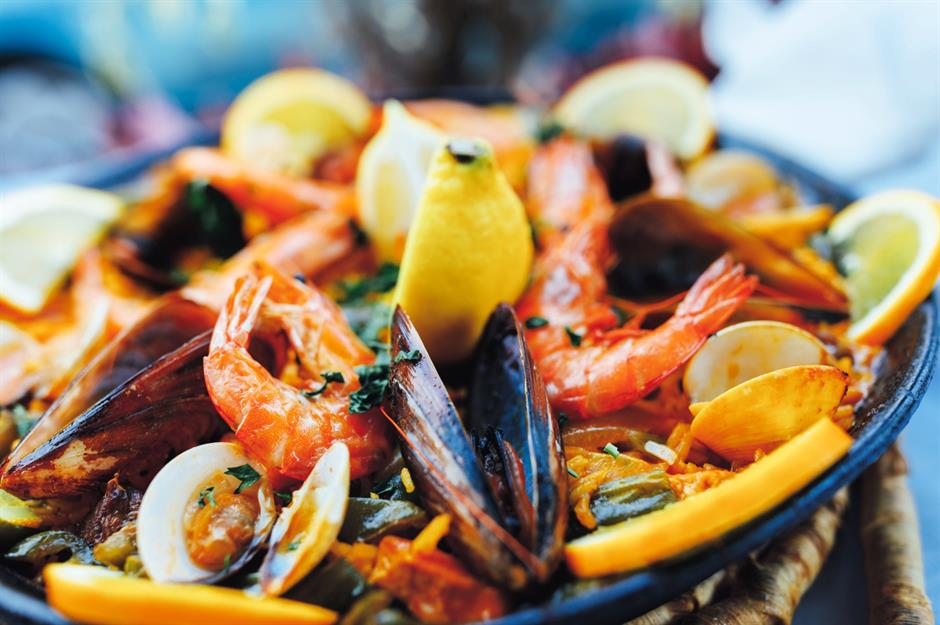
Valencians take their paella very seriously – as Jamie Oliver found out to his surprise in 2016. The British celebrity chef shared a paella recipe that included a chunk of chorizo, and Spaniards lambasted him online for 'ruining' their native dish. To make authentic paella, it all starts with the rice, which should be a short grain variety (specifically bomba or Calasparra) that absorbs liquid without becoming mushy. Traditional Valencian paella includes rabbit, chicken and sometimes snails, while paella de marisco (seafood paella) features seafood like prawns, mussels, clams and squid.
16: Gryos, Greece
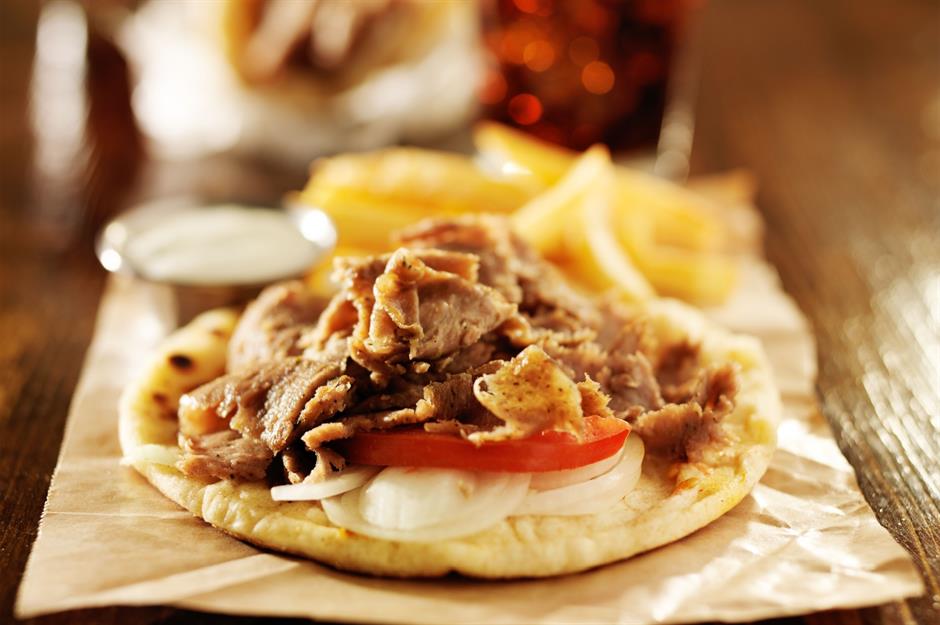
Gyros is a popular Greek street food that's now enjoyed around the world, though it rarely tastes better than when eaten in its place of origin. It consists of a pitta stuffed with meat that's been cooked on a vertical spit. Popular accompaniments include cucumber, lettuce, onion, tomato and tzatziki sauce. The meat portion of gyros dates back to the Ottoman Empire, when a vertical spit was first used to cook meat.
15: Shawarma, Middle East
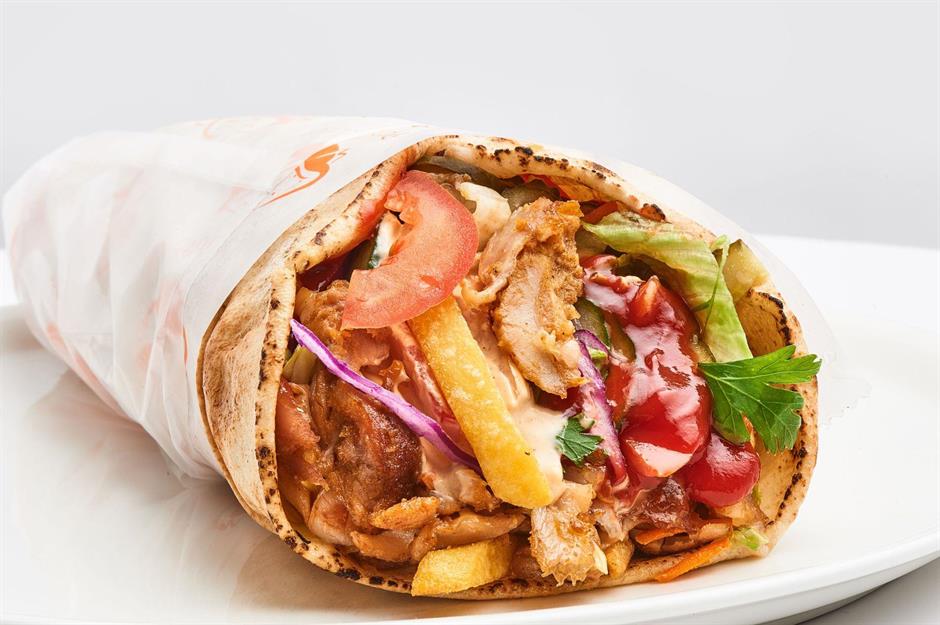
With a heritage dating back to the days of the Ottoman Empire, shawarma has stood the culinary test of time for good reason. Made by wrapping marinated, slow-cooked meat in a warm flatbread along with garnishes like pickled vegetables and tahini, this handheld dish packs a serious flavour punch. Shawarma is an Arabic word meaning 'to rotate' or 'turning' – a reference to how the meat is cooked on a vertical grill.
Sponsored Content
14: Gua bao, Taiwan
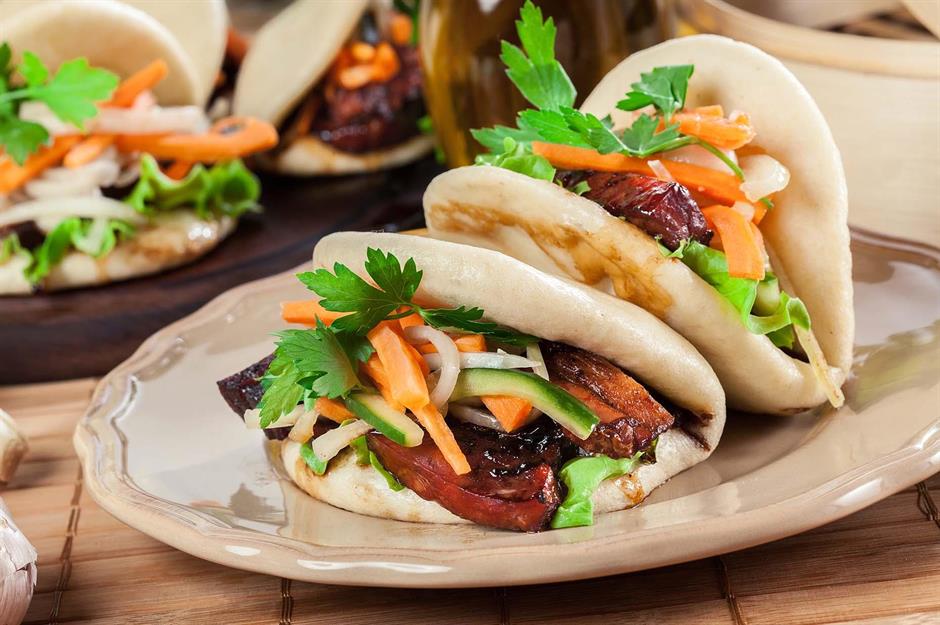
Soft, steamed buns packed with braised pork belly, gua bao are sold by street vendors at Taiwan's famous night markets. The meat is braised in a heady mix of soy sauce, red wine and spice powder. Once cooked, it's stuffed into a lotus leaf bun and topped with pickled mustard greens, coriander and ground peanuts.
13: Tamales, various locations
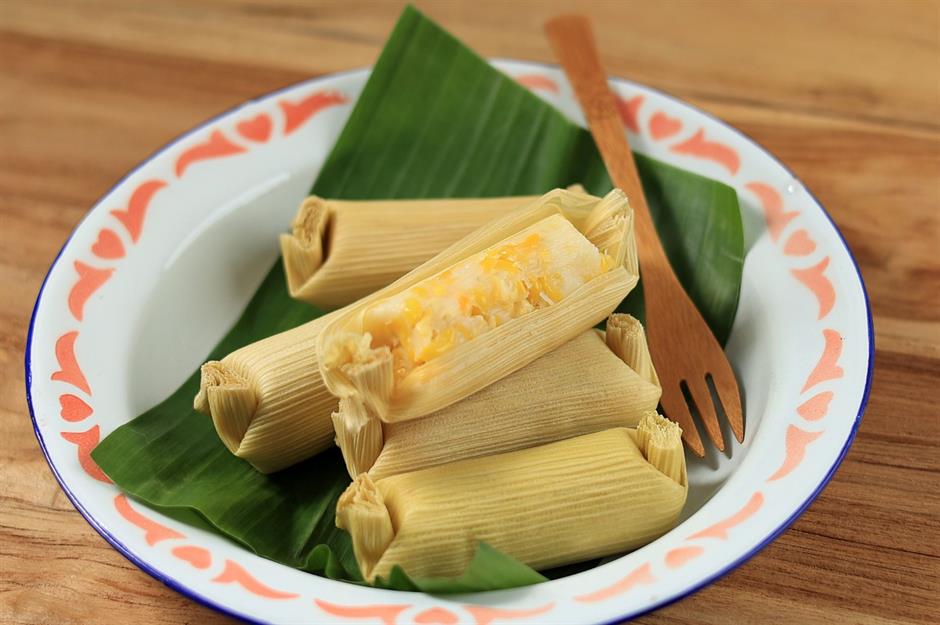
First eaten during Aztec times, tamales are made by combining corn dough (masa) and ingredients such as meat, beans, eggs, root vegetables and seeds, then steaming the mixture in corn husks or banana leaves. Traditional recipes are thought to have originated in Guatemala and Mexico, though the popularity of tamales has spread across Central and South America. Now eaten with or without sauces, the dish is enjoyed as street food, in restaurants or in tasty batches at home.
12: Hoppers, Sri Lanka
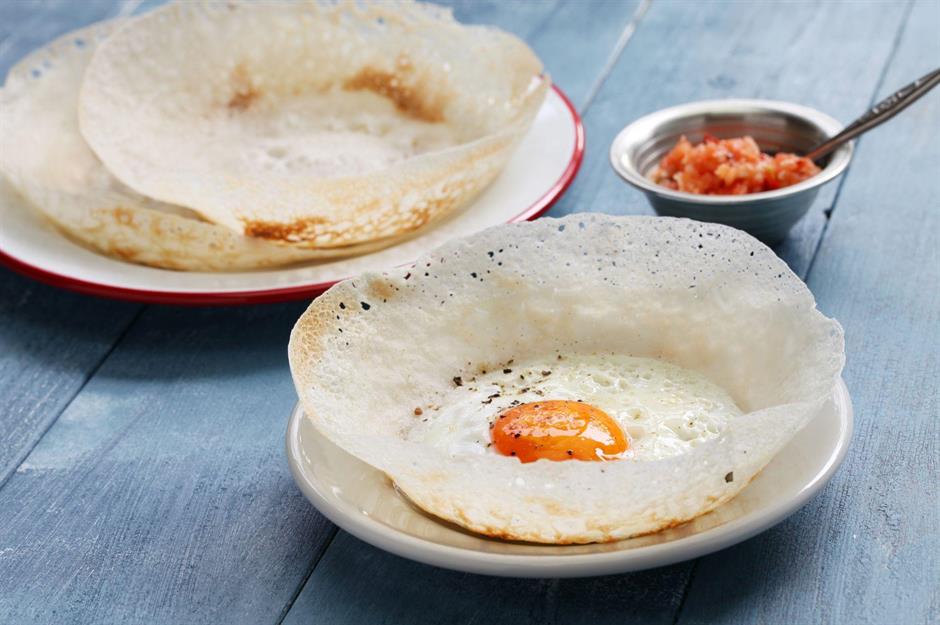
Closely related to Indian dosas, these paper-thin pancakes are made from fermented rice batter and coconut milk. They’re cooked quickly in a very deep pan, which is what gives them their unusual shape. Hoppers are served for breakfast and dinner, and sweet and savoury options are available; however, they’re most commonly enjoyed with an egg nestled inside, making for a robust snack.
Sponsored Content
11. Belgian waffles, Belgium
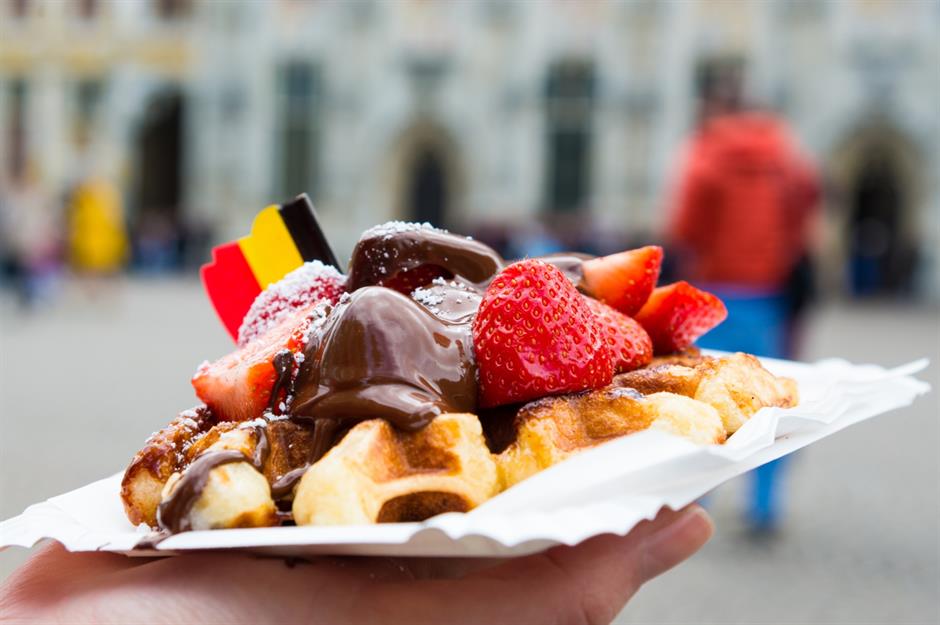
Originally showcased at Expo 58, the 1958 Brussels World's Fair, Belgian waffles are the perfect sweet street food, preferably enjoyed while strolling around Brussels itself. Introduced to the United States by a Belgian named Walter Cleyman at the Century 21 Exposition in Seattle in 1962, these fluffy waffles are often served topped with strawberries, cream and chocolate sauce. Belgian waffles are typically thicker and bigger than regular waffles, and they're made with a richer, brioche-like batter.
10: Dosa, India
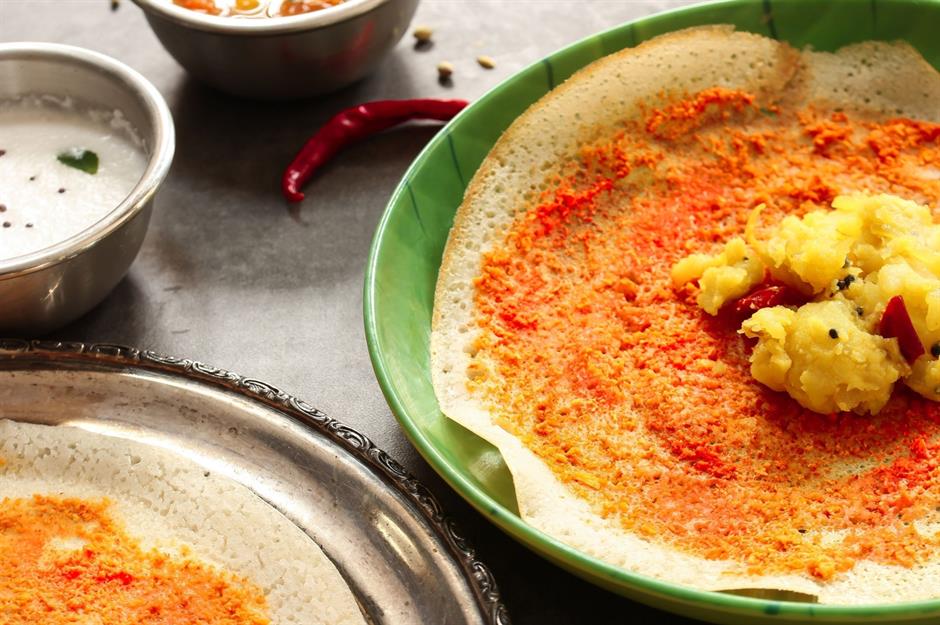
This thin savoury crêpe is an ancient Indian street food snack made from a fermented batter of rice and gram flour. The batter is usually flavoured with a sprinkle of fenugreek seeds, which gives the snack its characteristic golden hue and crisp texture. The dish dates back to at least the 1st century AD, when it was recorded in Tamil literature. Dosas are usually eaten piping hot, either alongside chutney, or topped with aloo bhaji or a lentil and vegetable stew.
9: Jambon-beurre, France
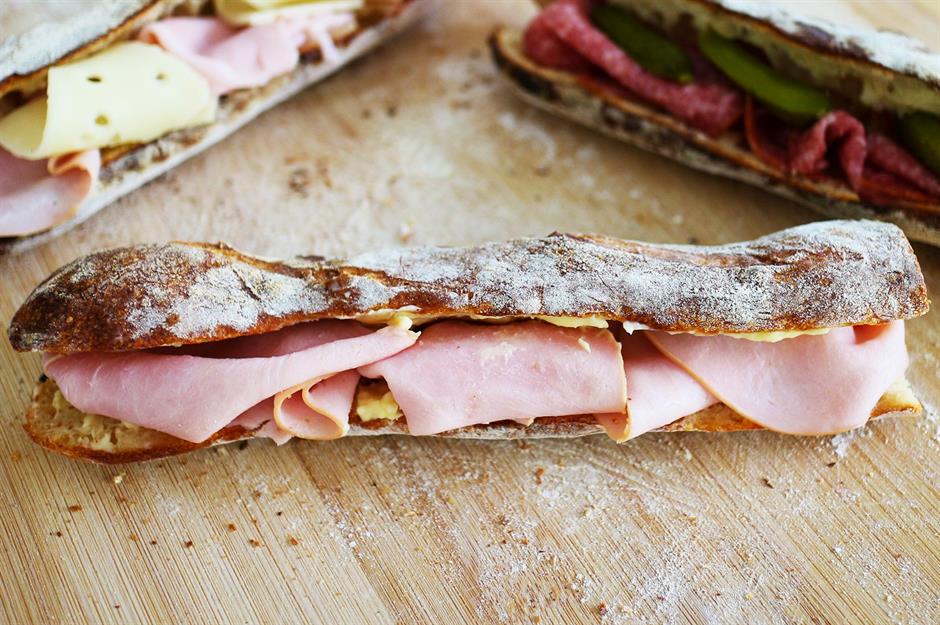
There are just three ingredients in a jambon-beurre sandwich: a baguette, butter and ham. But the secret to the success of a perfect jambon-beurre – and the reason why it's considered the king of sandwiches in Paris – is the quality of those ingredients. Only the best French baguette will do, and the butter must have a high butterfat content. There's none of that thin and watery supermarket ham, either. This Parisian staple needs top-quality sliced ham from a bone-in joint. Heaven.
Sponsored Content
8: Currywurst, Germany
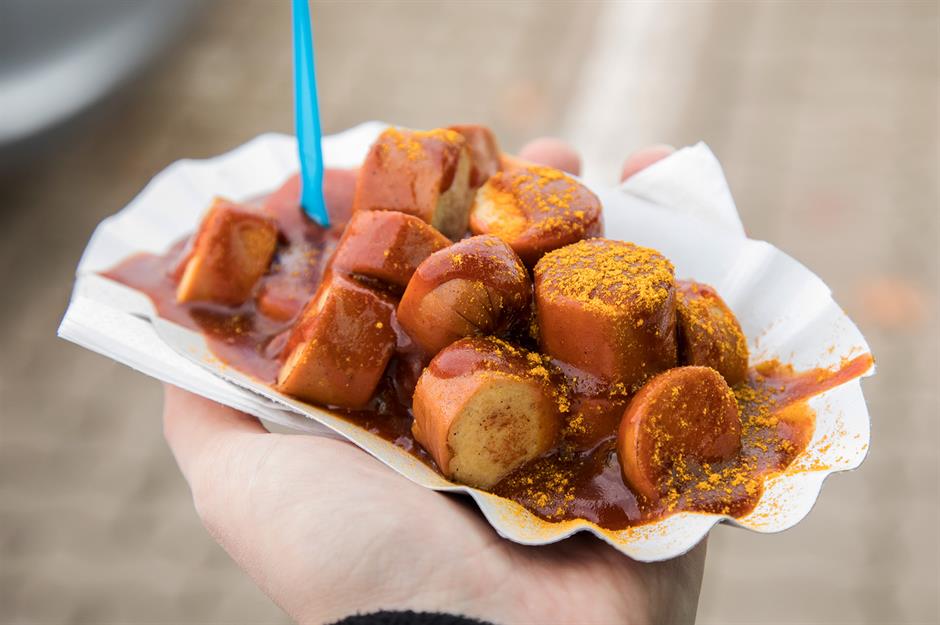
Sold from snack stands, or schnellimbisse, throughout the country – and also often found on diner menus – currywurst is one of Germany's most popular street foods. The dish is said to have been invented by Herta Heuwer in 1949, when she resourcefully mixed tomato sauce with curry powder and poured it over a sausage. Just like that, an icon was born. It's typically sold with a side of chips or on a bread roll.
7: Hot dog, USA

The humble hot dog’s exact origins are hard to track down, but German immigrants brought the general idea to the US in the 1800s. It’s thought the hot dog style we know and love today was first sold in New York City during the 1860s. In the 1890s, the hot dog firmly established itself as a go-to snack at baseball games. Enjoyed worldwide, the classic ketchup and mustard–topped hot dog has gone on to inspire many variations.
6: Vada pav, India
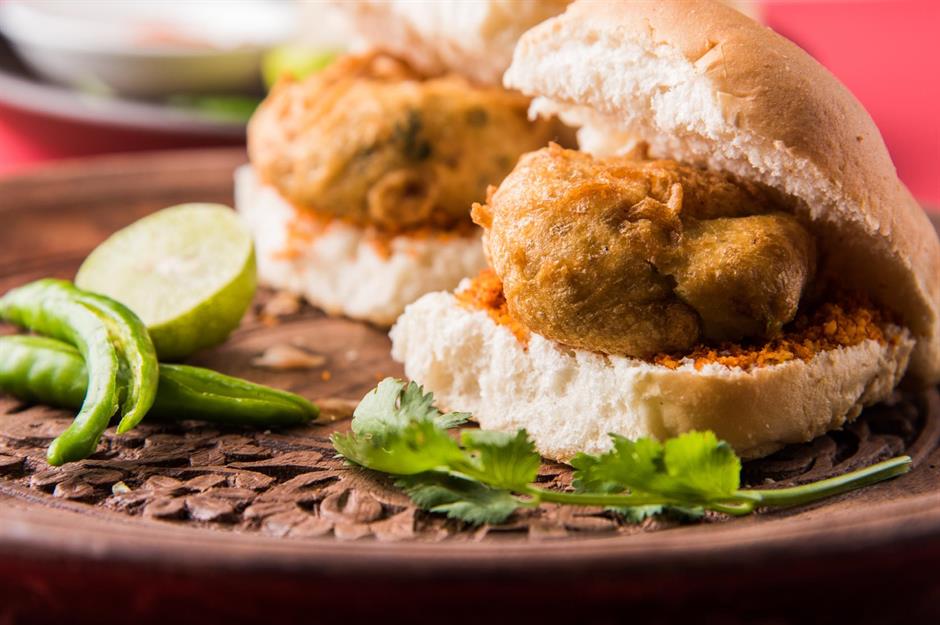
First popularised in Mumbai in the 1960s, this vegetarian sandwich – sometimes called a Bombay burger – is now available from food stalls and markets across India. The dish is made up of potato mashed with chopped green chilli, garlic, mustard seeds and spices such as asafoetida and turmeric. Once shaped into a ball and dipped in gram flour, it's deep fried and served in a bread bun. You can jazz it up with an assortment of chutneys and green chilli.
Sponsored Content
5: Churros, Spain
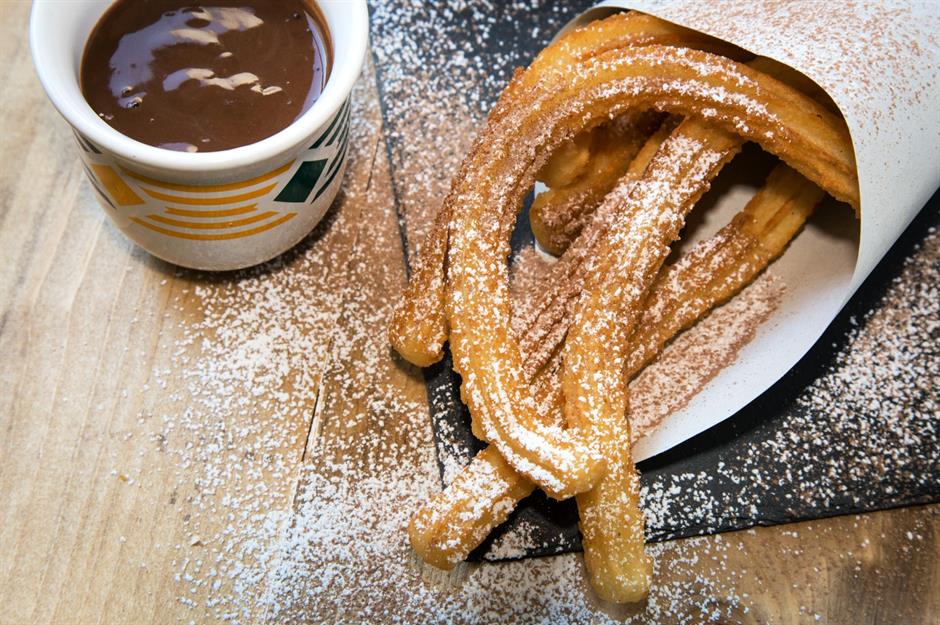
Did the Spanish, Portuguese or Chinese invent the churro? Well, people from each country could give you a convincing origin story. But Spain is the generally accepted home of this delicious fried dough snack, and Madrid is the place to find one of the most famous churro makers in the world. Chocolatería San Ginés opened in 1894 and can apparently churn out as many as 90,000 churros a day. They're eaten across Latin America, too.
4: Döner kebab, Germany
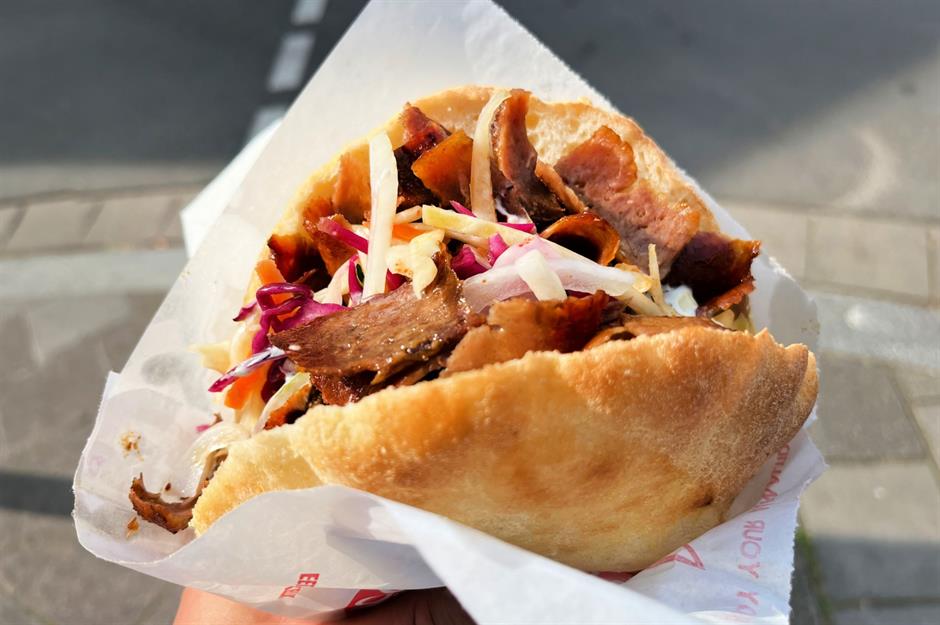
The Association of Turkish Döner Producers in Europe recognises Kadir Nurman as the inventor of the döner kebab. Nurman, a Turkish immigrant, started selling a flatbread stuffed with grilled meat and salad in West Berlin in 1972 after realising busy locals needed a meal they could eat on the go. Germany fell head over heels for the kebab; in fact, it's estimated that Germans eat two million a day.
3: Pizza al taglio, Italy
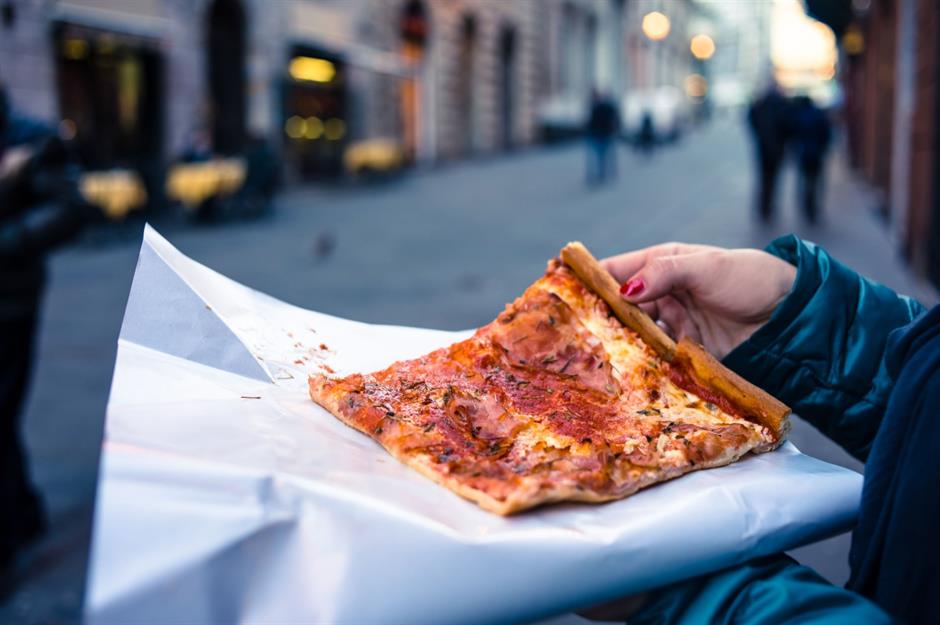
Among Italy's most ubiquitous street snacks are these squares or rectangles of pizza. Known as pizza al taglio, the style dates back to the 1950s, when it was first served on the streets of Rome with a simple olive oil and tomato sauce topping. Today, it's available across the country with all sorts of flavour combinations, and it's usually priced by weight.
Sponsored Content
2: Crêpe, France
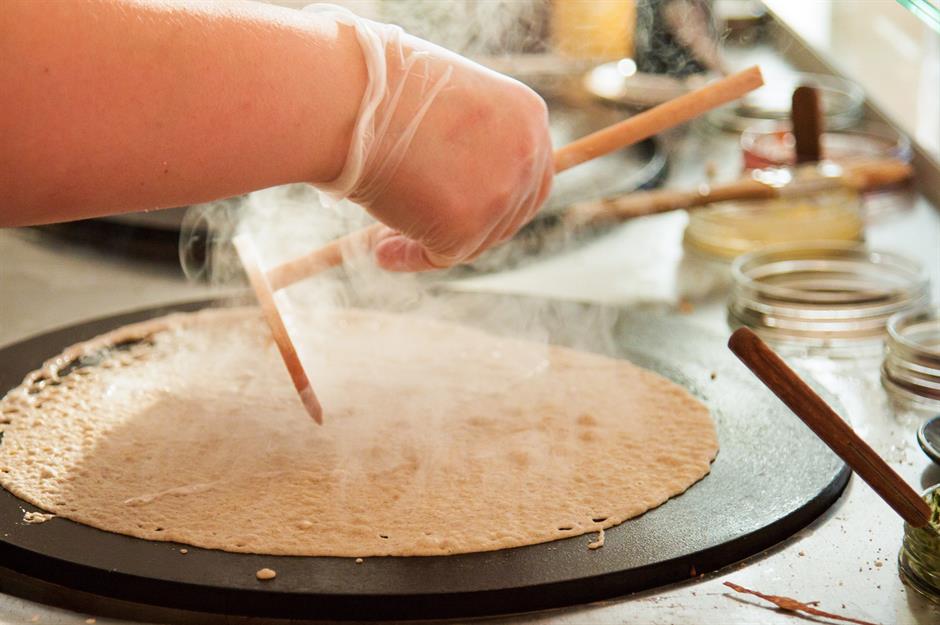
The true origin of crêpes might never be untangled from the many myths surrounding them. Some claim these thin, unleavened pancakes were invented by accident in the 13th century, while others believe they've been around since at least 472 AD. But whatever the real story may be, there's no doubt that crêpes are the perfect street food. The French enjoy them in sweet and savoury forms, with fillings varying from Nutella and fruit to seafood and meat.
1: Tacos, Mexico
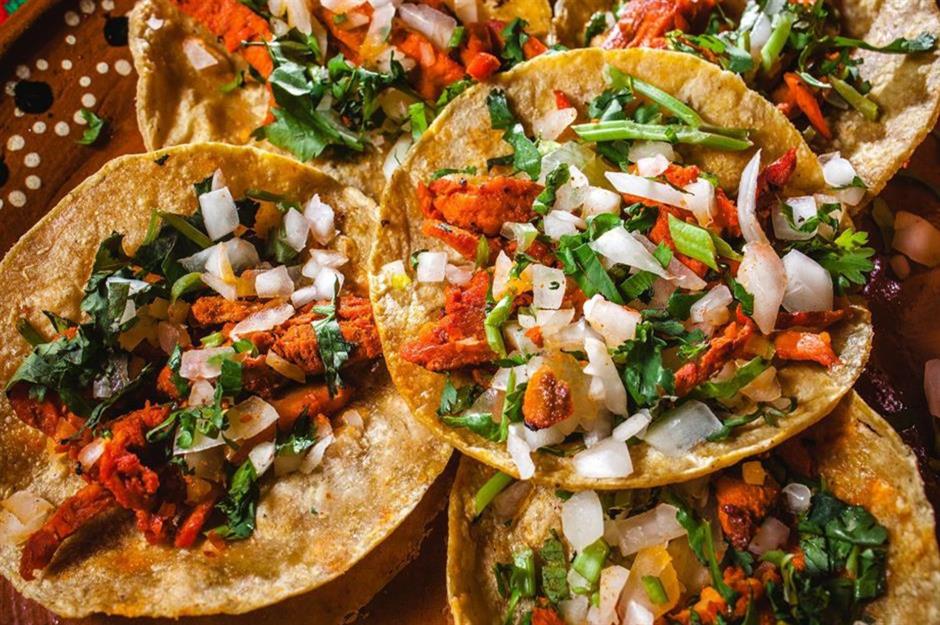
Among the world's most well-known street foods and, for many, something of an obsession, tacos have roots in the Mexican silver mines of the 18th century. Today, the word taco refers to a tortilla that's topped with a variety of fillings, folded, then eaten by hand. The classic carne asada version involves grilled, thinly sliced meats, salsa, onion and guacamole, finished a lime wedge. Toppings vary, with fried fish and mayonnaise popular in Baja. Meanwhile, in Mexico City, tacos de cabeza – tacos filled with steamed offal – are a speciality.
Now discover the greatest limited-edition fast food items of all time
Last updated by Dominique Ayling.