How to cook like a Michelin-starred chef at home
Tricks of the trade
Cook seasonally

Buy fruit and veg at farmers' markets if you can

Your local farmers' market is a great spot to buy seasonal produce. Look for a certified market which has rules about what can be sold – you want to buy produce fresh from the fields, not from an individual who has bought from a wholesaler to sell on. Talk to the producers about how their food is grown and what’s coming into season. Michelin-starred chefs swear by the relationships they have with their suppliers. A vegetable box subscription is also a good option.
Sponsored Content
Spot the best produce with your senses

Get meat from local independent butchers

You might have to spend a bit more but meat from a good-quality butcher is worth it – ethical, traceable meat is important to them. They can give you advice on how to cook different cuts and will slice or debone meat for you. They can also cater to more obscure requests such as chicken bones for stock, a suckling pig or an ox heart. It’s also worth visiting your local fishmonger for fish, or check out online delivery schemes.
Grow your own herbs

You don't need access to a balcony or garden to grow your own food – and you can't beat the flavour of fresh herbs. Many Michelin-starred restaurants have small veg patches for this reason. You could start with a simple basil plant or grow microgreens to use as a fancy garnish.
Sponsored Content
Store fruit and vegetables correctly

Master the French mother sauces

Add butter

Much of the time, the secret to great-tasting food worthy of a Michelin star is simple: use an almost unreasonable amount of butter in your cooking. The secret to the perfect steak, for example, is to add a knob of butter and a sprig of herbs to the pan halfway through cooking.
Sponsored Content
Season well

Buy good-quality oil

Don't just season well, choose quality oil too – and make sure you use the right type for your dish. Use extra-virgin olive oil for dressings and vinaigrettes rather than for cooking. Higher heats demand a sunflower or vegetable oil.
Invest in kitchen kit

Sponsored Content
Mise en place

Make food from scratch

Michelin inspectors love attention to detail and while some techniques are best left to the restaurants, making elements of a meal such as a salad dressing, mayonnaise or bread at home is a nice touch.
Stock up on hero ingredients

Ingredients were not all created equal and there are a handful of store cupboard saviours which have transformative qualities. A drizzle of balsamic vinegar can add sweet and sour notes to a dish; anchovies make a wonderful salty sauce; chilli flakes infuse dishes with warmth and spice; honey adds floral, sweet notes and sticky glazes to roast meat; a squeeze of lemon balances rich dishes; and umami-rich miso elevates both sweet and savoury dishes.
Sponsored Content
Marinate everything

Michelin-star cooking means adding flavour at every stage, even before you start to cook. It’s not unusual to marinate meat for up to two days, to tenderise and flavour the produce. But more than meat can be marinated. Infusing fish, tofu and vegetables with flavour does wonders too.
Toast nuts and spices

Michelin-quality cooking is all about little techniques and small touches that add depth to dishes such as toasting nuts and spices before cooking with them. Toast nuts in a dry pan or in the oven for 5 to 10 minutes at 150–170°C (350–375°F) until golden in colour – once cooled they’ll be crisp and refreshed. Cook whole and ground spices in a dry pan to unlock their aroma but watch carefully to ensure they don’t burn.
Deglaze pans

Sponsored Content
Set aside vegetable scraps for stock

Sear steak on cast iron to get a crust

Create a steak with a charred surface and tender interior by searing it on a cast iron griddle pan – they’re the best at retaining heat. Make sure the pan is roaring hot before you begin and don’t add butter first. Add a knob before you finish cooking the steak for ultimate caramelisation. Resting the meat is also incredibly important. It should equal the time spent cooking so if you fried your steak for five minutes, let it rest for another five.
Try unusual cuts of meat in the slow cooker

Ever had a delicious, unusual cut of meat in a restaurant that you'd never consider buying? The secret to the melt-in-the-mouth texture and rich flavour is likely to be slow cooking, which can turn even the most unpromising of cuts into something wonderful. The low and slow method does wonders to the likes of beef shin or lamb neck. Better still, just like in a restaurant, slow cooking can be done ahead of time with the dish warmed before serving.
Sponsored Content
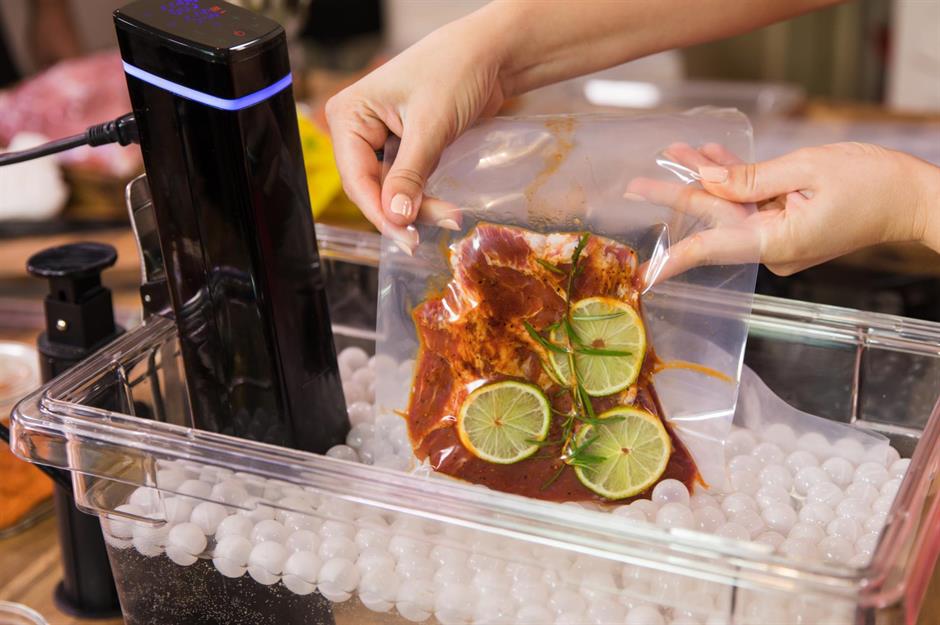
Try sous-vide

Blanch vegetables

Master a quick pickle

Pickled vegetables will elevate any meal by adding acidity and crunch, plus a pop of colour on the plate. Make a quick 20-minute pickle with thinly shaved vegetables soaked in a bowl of white vinegar, salt and sugar.
Sponsored Content
Carpaccio more than just meat

Carpaccio is a traditional Italian dish of thinly sliced raw meat or fish served as a starter, however top chefs have applied the technique to fruit and vegetables. Make a beetroot carpaccio with a mixture of different coloured varieties for a visually appealing starter. Alternatively, try thinly sliced kohlrabi marinated in lime juice, balsamic, honey, olive oil, salt and pepper.
Try flambéing

Flambé refers to the technique when alcohol is added to a hot pan to create a burst of flames, adding a rich flavour to the dish and some theatre in the kitchen. Have a go at home with a 40% proof alcohol that complements the dish. Be sure to use a large ladle with a long handle and warm the booze in a pot first – pouring straight from the bottle is a safety hazard.
Make melt-in-the-mouth confit

Confit means to preserve through slow cooking in fat. Meat, fish or vegetables are poached in oil slowly, over a low heat, until they are tender and rich. A classic recipe is confit duck legs or turkey legs. To really go high-end, try confit egg yolks for the ultimate Michelin meal.
Sponsored Content
Experiment with flavour combinations

One of Michelin's criteria is creativity and pushing traditional rules. One example is Heston Blumenthal’s bacon ice cream (pictured) – it's an unusual flavour pairing that works. Experiment with different combinations that you might not usually put together and see if they taste good.
Turn plating into an art

Create a dish that captivates by choosing a large white plate that showcases the food. Take the main element of the dish and switch up the proportions. For example, serve strawberry sorbet with button-sized meringue bites and dots of cream, instead of a traditional layered pavlova. Arrange components in odd groups (one, three or five); twirl pasta; serve rice or mashed potato in metal rings then remove to create towers; and artfully pour jus or gravy.
Tidy as you go

Finally, if your kitchen and dining space are the same room, try to prep as much as you can in advance and tidy as you go. Just like the theatre, people don't mind seeing the orchestra and lights but they don’t want to see the whole cast in the wings, or in this case, a load of dirty pans.
Now take a look at these top cooking tips from your favourite TV chefs