The incredible history of In-N-Out Burger
A Southwest success story
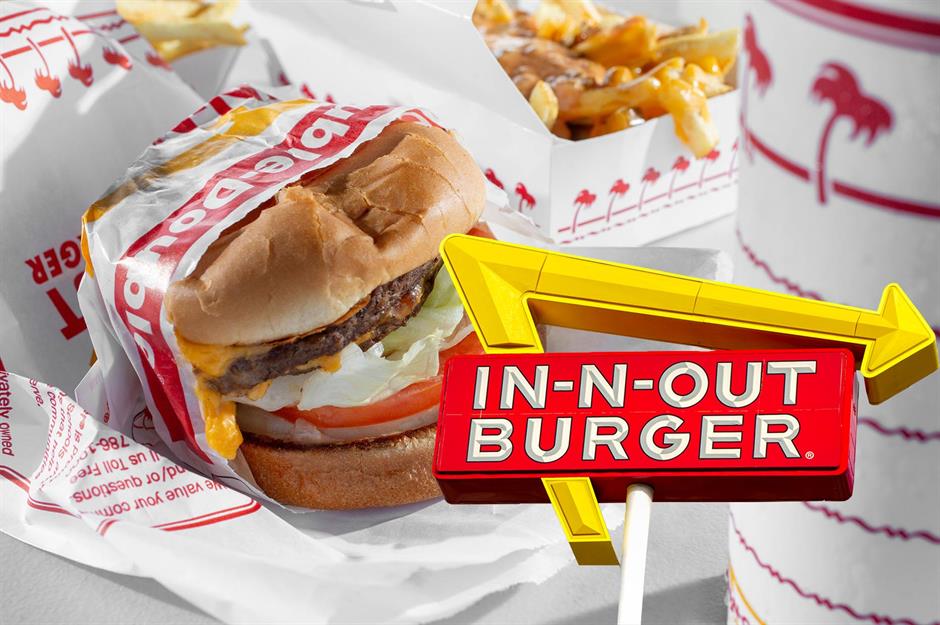
Despite never opening a permanent restaurant outside of the US, In-N-Out Burger has become globally renowned, with over 400 branches across eight US states and devoted fans around the world. Here, we chart the fascinating rise of In-N-Out, from its tiny first location to its status as one of the most iconic American fast food chains around.
Feeling hungry? Click or scroll our gallery to discover the incredible story of In-N-Out.
1948: humble beginnings
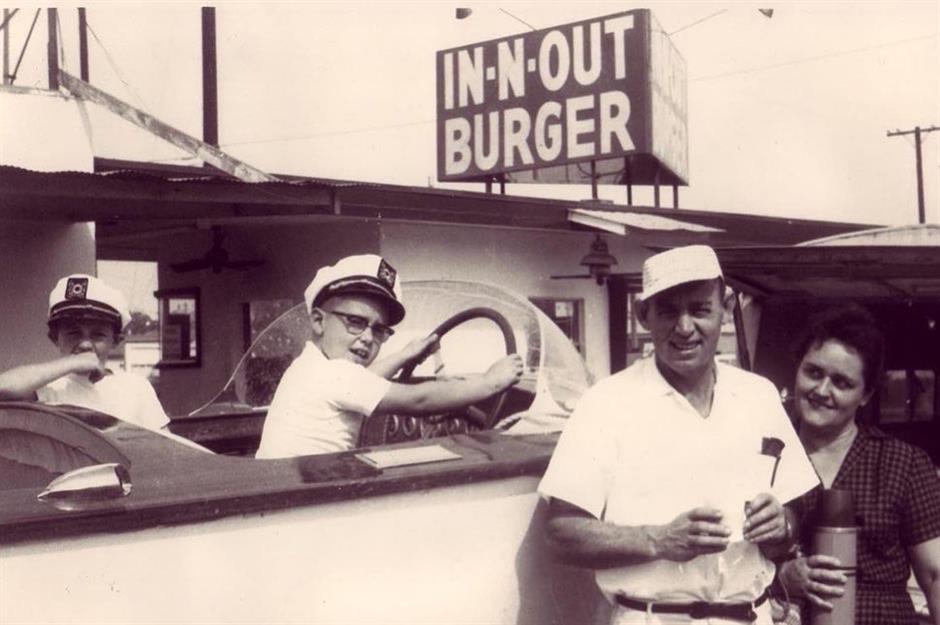
Following his service in World War II, Harry Snyder was working in the kitchen of a Seattle catering company when he met his future wife, Esther. Wanting to return to his hometown of Baldwin Park, California, the budding businessman convinced his wife to move to a different state and set up their own restaurant. In 1948, his dream became a reality, and In-N-Out was born in a space barely 100 square feet (around 9sqm), across the road from his childhood home.
1948: California’s first drive-thru
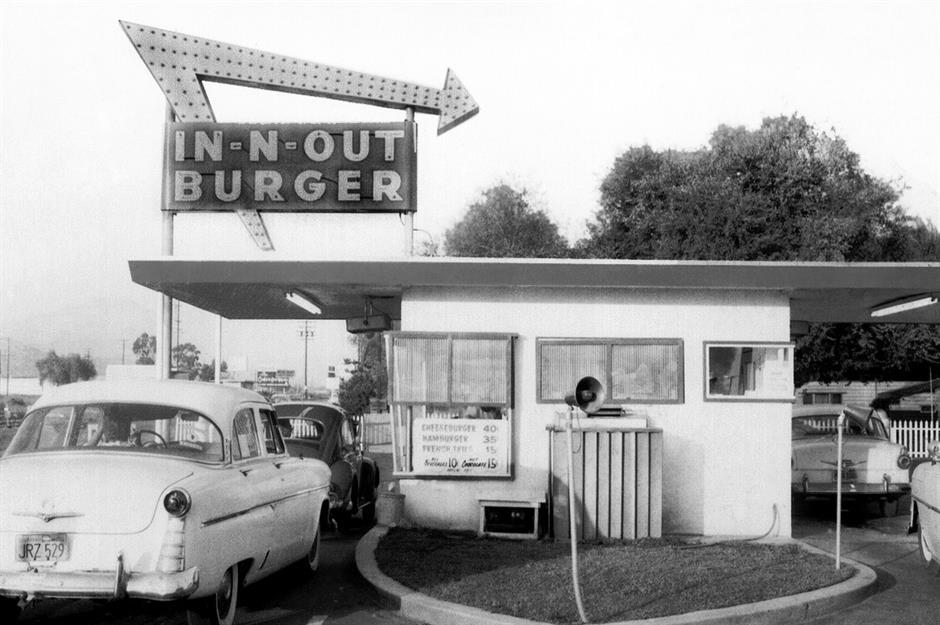
Working in his garage by night, Snyder came up with the idea that would change everything: a two-way intercom and pick-up window to allow customers to receive their food order without leaving their vehicles. Californians loved the drive-thru concept, and the husband and wife saw the popularity of their small burger bar grow and grow.
Sponsored Content
1948: quality, not quantity
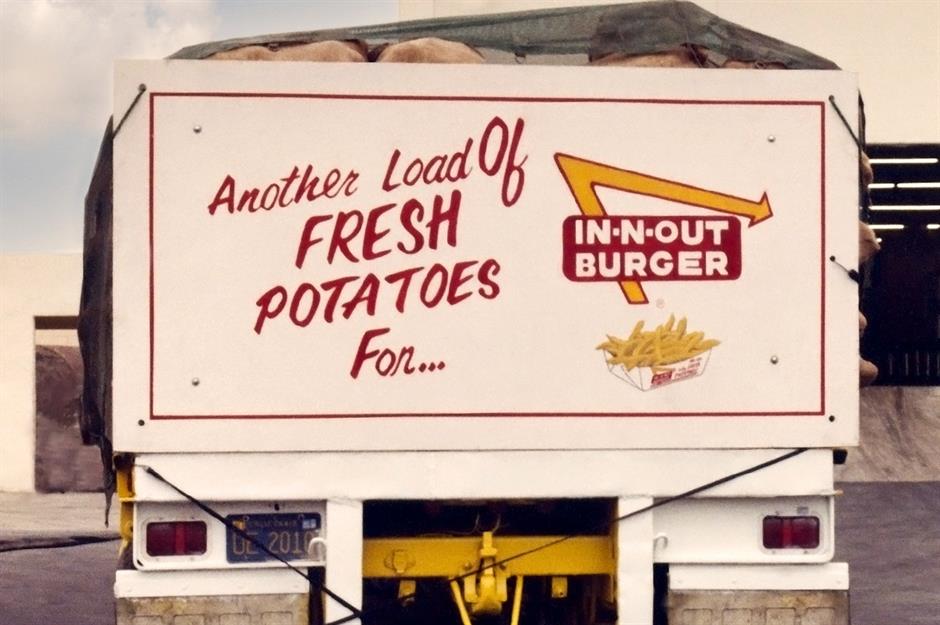
While competitors used frozen beef patties and pre-cut fries to keep costs low, In-N-Out stayed focused on providing a streamlined menu (three types of burger, fries and drinks), made using top-quality produce. Snyder visited markets before dawn daily to pick up his ingredients, with In-N-Out burger patties formed from beef butchered by hand and fries made from freshly cut potatoes. This commitment to freshness remains, and the brand is still firmly against using frozen meat and fries.
1954: expansion – and a new logo
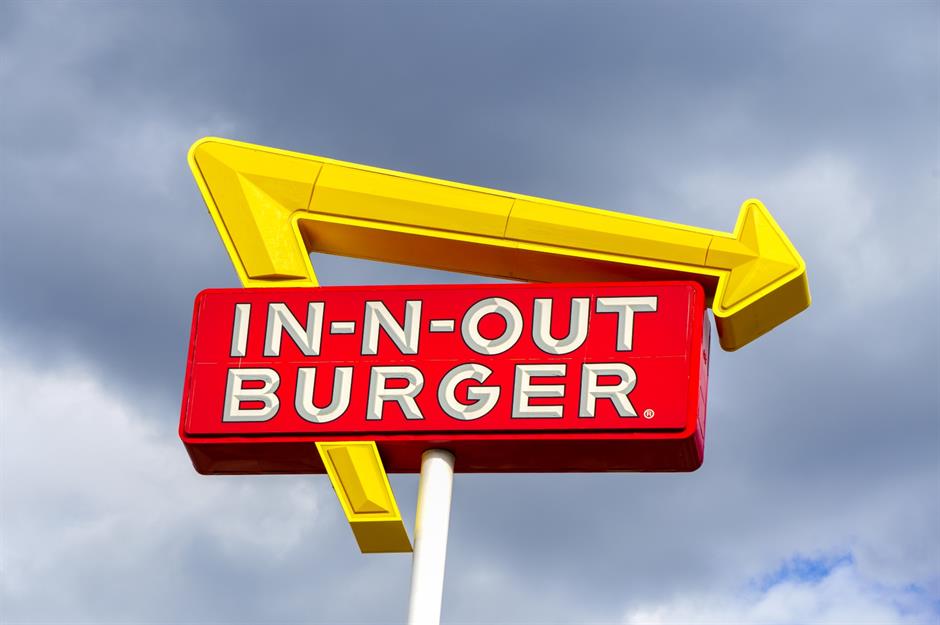
Three years after the Snyders launched In-N-Out Burger, the couple opened their second restaurant in Covina, California. By 1954, they felt it was time for a logo redesign, replacing the original white letters on a brown background with an eye-catching yellow boomerang-style arrow with white text on a red background. Inspired by the new logo, restaurant workers adopted the slogans 'The arrow points to pride' and 'We all work under the same arrow'. Meanwhile, expansion continued and come 1958, there were five In-N-Out restaurants in Southern California.
1958: fountain drinks arrive
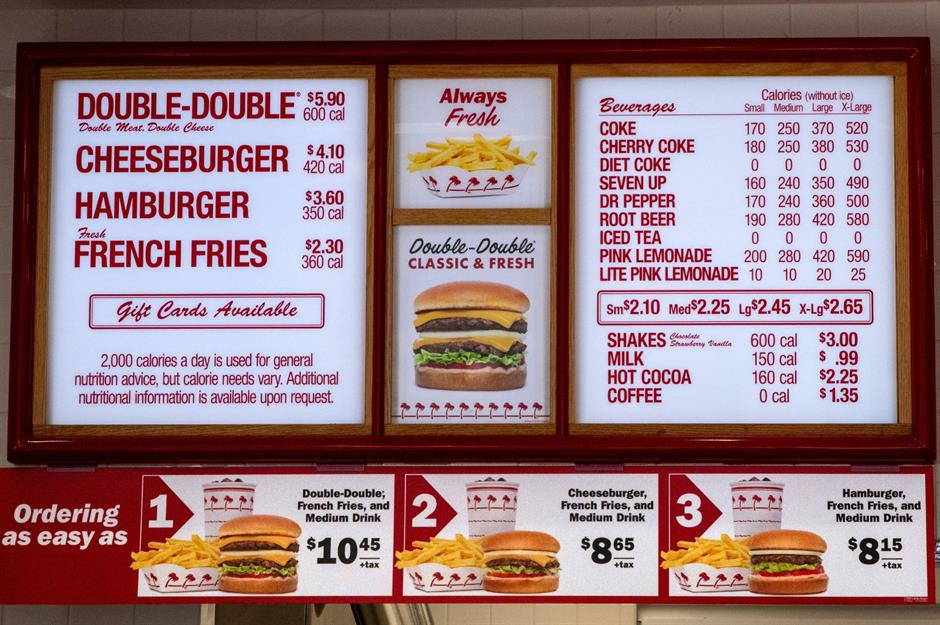
For the first 10 years, In-N-Out only sold drinks by the bottle, but this all changed in 1958 when the chain introduced fountain options. This switch saw the company now offering a choice of Pepsi Cola, Nesbitt Orange and Hires Root Beer, and a 12fl oz (350ml) cup was priced at just 10 cents. In-N-Out has since updated its beverage options, with a mix of pink lemonades, shakes and other fountain drinks now available.
Sponsored Content
1961: can you keep a secret?
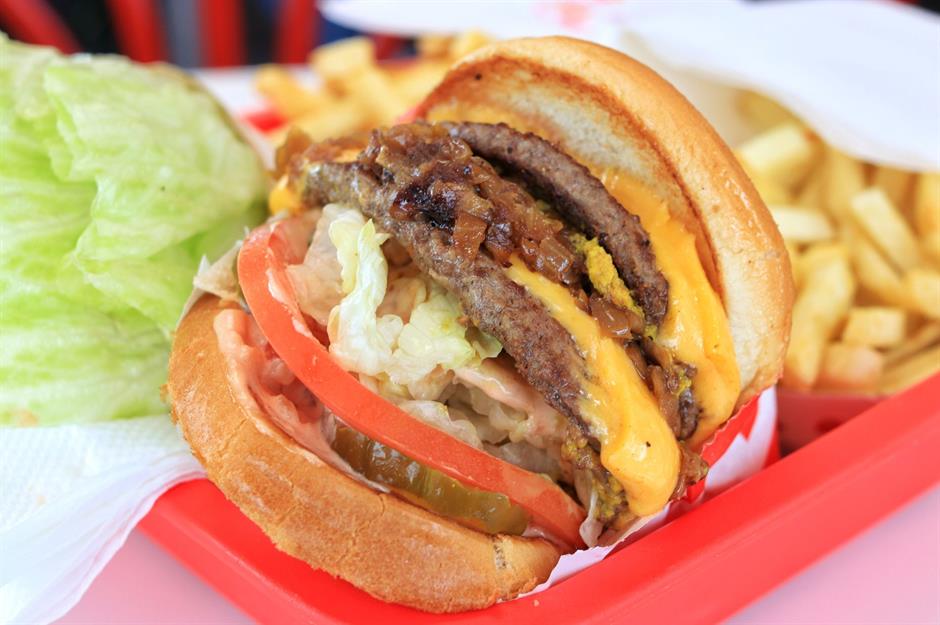
In 1961, following a customer request, the Animal Style burger was born. So popular was the option, which featured two mustard-cooked beef patties, lettuce, tomato, extra spread and grilled onions, it made its way onto In-N-Out’s now famous ‘Secret Menu’ and remains there today. Other items on that menu include Animal Style fries, Neapolitan milkshakes, a Protein Style burger (a patty wrapped in lettuce instead of served in a bread bun) and the indulgent 4x4, with its four patties and four slices of cheese.
1963: on the Double-Double
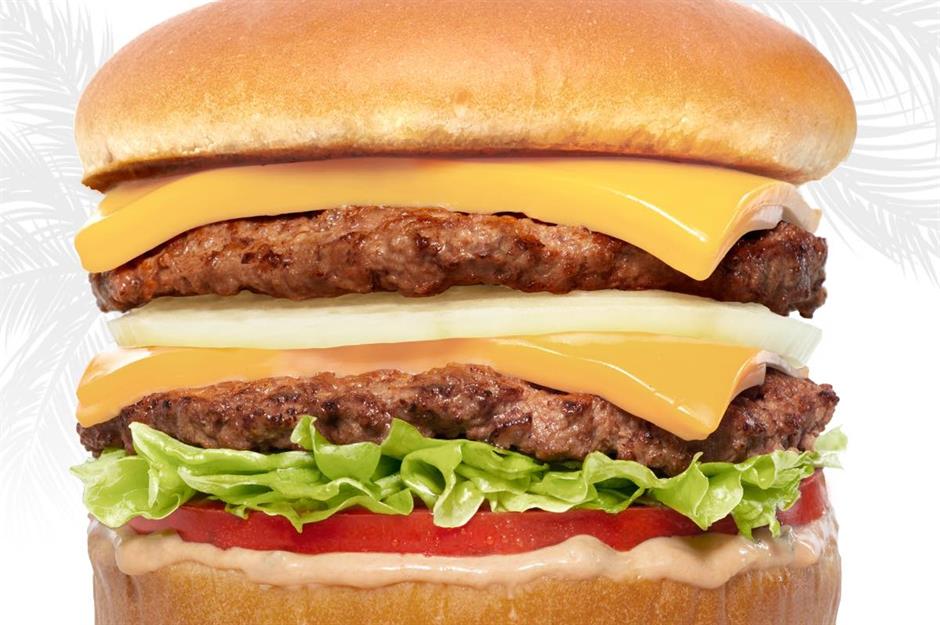
Two years on from the creation of the Animal Style burger, the Double-Double – consisting of two beef patties with cheese – was born, and the fast food chain subsequently opened a new patty-making facility to keep up with demand. Prior to this, the chain had used a manual press to make the burger patties. The Double-Double remains a staple on the stripped-back menu today, sitting alongside a standard hamburger and a cheeseburger. Each is served with fresh tomato, lettuce and onion.
1965: ahead of the race
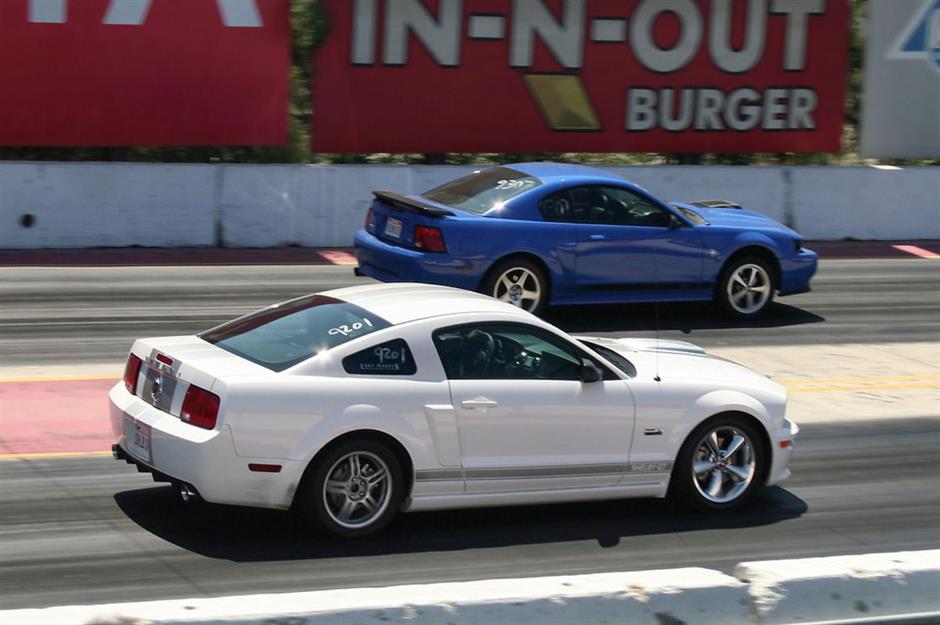
A drag race fan, Snyder invested in the Irwindale Speedway in 1965 and set his sons, Rich and Guy, up selling In-N-Out burgers at a concession stand. This canny business move saw race fanatics spreading the word about the delicious burgers they’d sampled at the raceway across the country. The family also developed a lifelong interest in drag racing, which soon featured in In-N-Out advertisement designs, restaurant artwork and across lucrative merchandise.
Sponsored Content
1972: look for the palm trees!
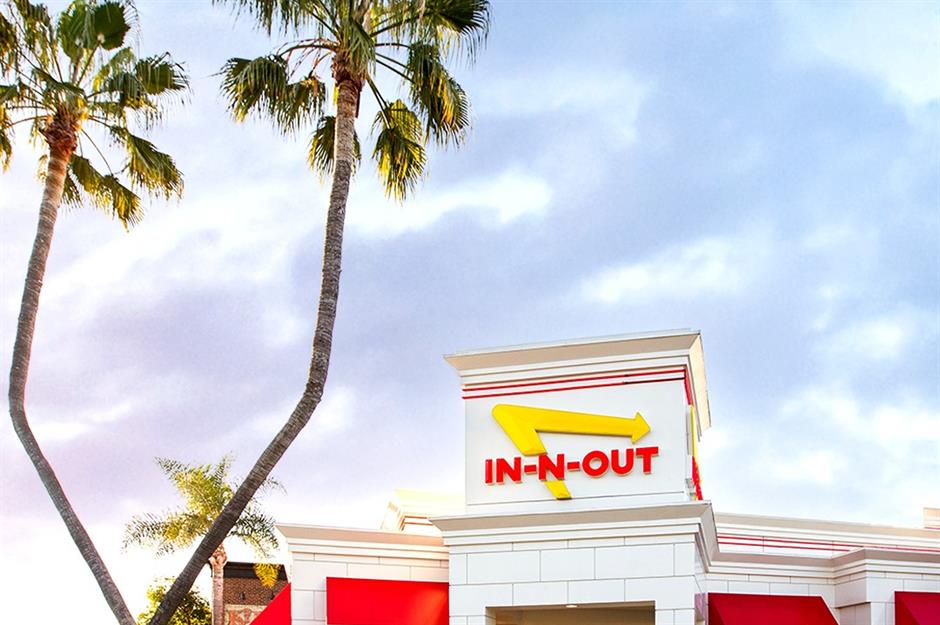
Taking inspiration from the Hollywood film It's A Mad, Mad, Mad, Mad World, in 1972 the Snyders started a tradition of planting crossed palm trees outside the front of In-N-Out locations. In the movie, characters race to find treasure buried under palm trees planted to resemble a ‘W’, and Harry said that In-N-Out was his treasure. It’s a tradition that remains in place to this day.
1974: the first cookout
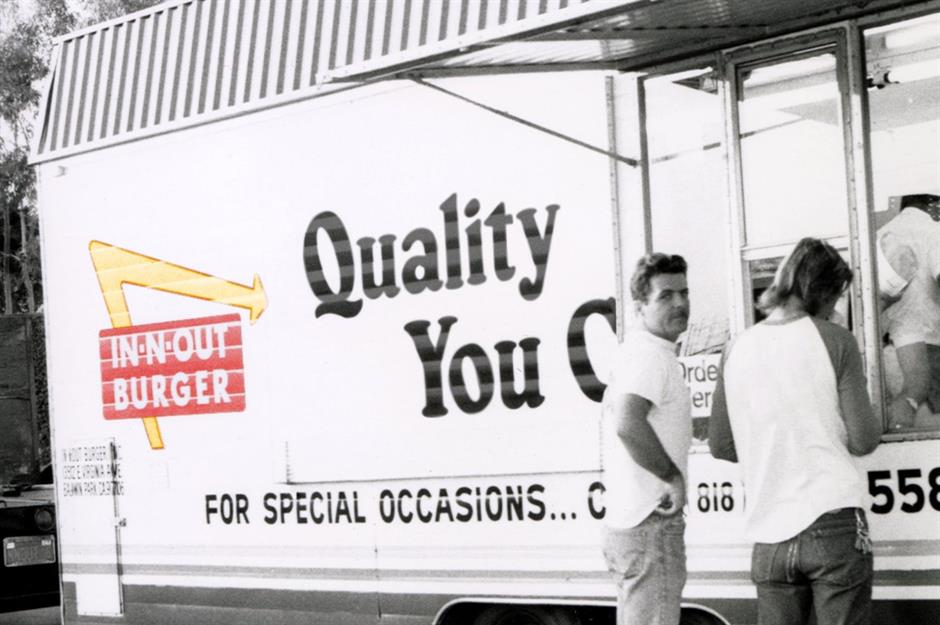
Ever fancied having In-N-Out at your birthday party? Well, it can actually be a reality thanks to the brand’s cookout scheme. In 1974, the company hosted its first-ever cookout event, loading a grill onto a small pickup truck and sending two workers to a school gathering in Covina, California. These days, more than 10 fully self-supported cookout trucks are available for hire for different events (think churches, schools, charities, weddings and more).
1974: get ahead, get a hat
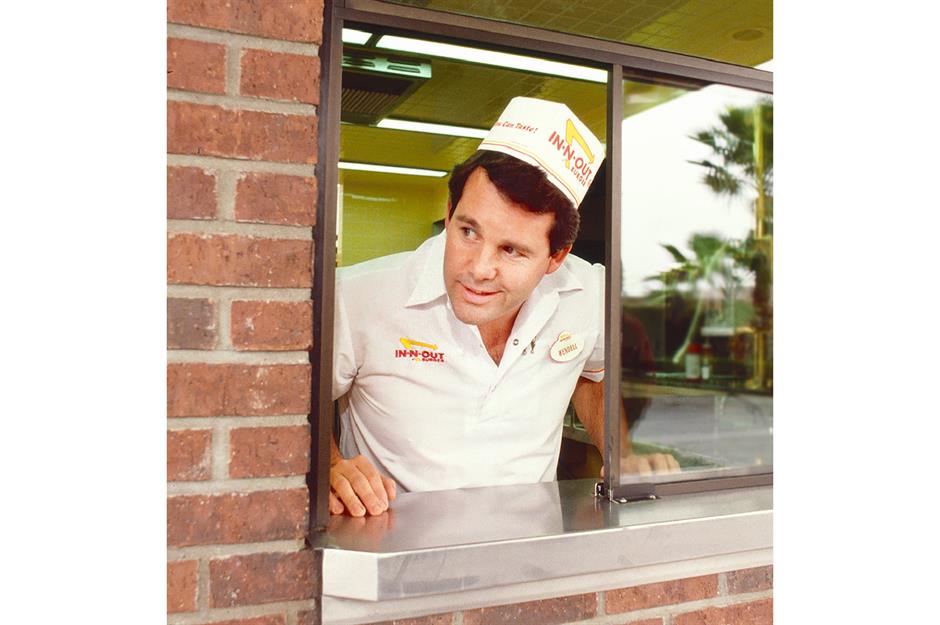
In 1974, the colour of the aprons worn by In-N-Out staff changed from white to red. The easily recognisable dress code also included a paper hat featuring the famous arrow and palm trees for male employees, while female employees continued to sport red and white baseball caps. Customers can request a free hat at any In-N-Out location – it's become a tradition for diners to snap a photo wearing one.
Sponsored Content
1975: got the T-shirt
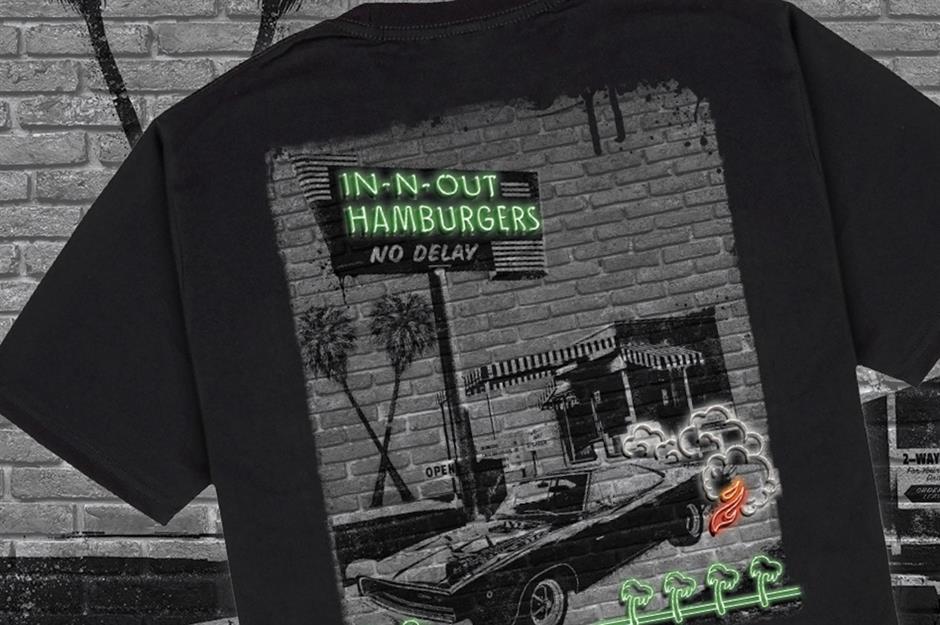
As well as getting their hands on one of those iconic paper hats, In-N-Out fans can purchase a selection of memorabilia, from branded folding beach chairs to charm bracelets. The company's collectable T-shirts launched in 1975, with the first one, featuring a cartoon fryman, designed by the founder himself. In 1984, In-N-Out began the tradition of launching a different design each year. Pictured is 2023’s black T-shirt, emblazed with a print of the first drive-thru and a drag race car on a brick wall background.
1975: creamy shakes were introduced
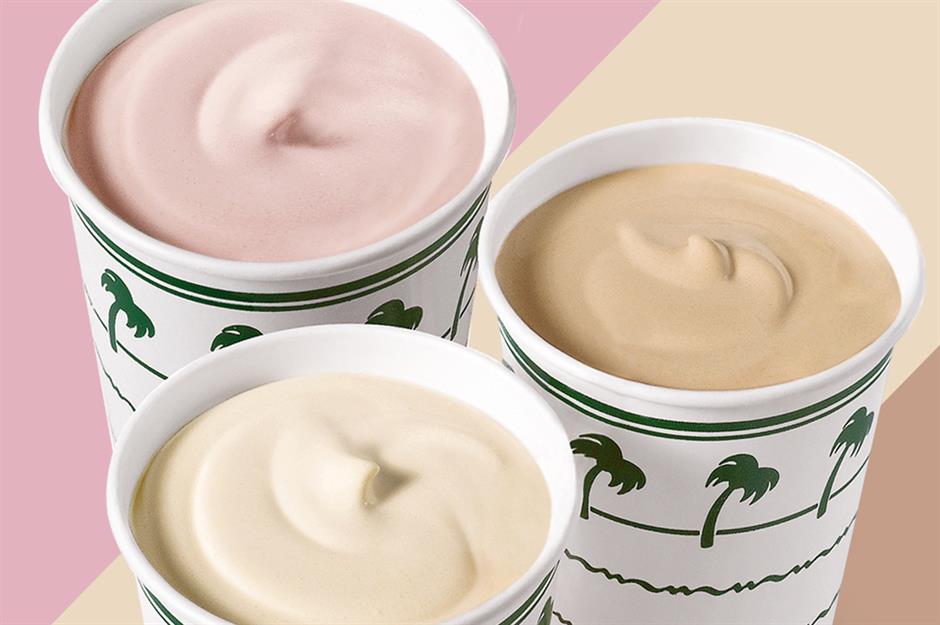
Made from real ice cream, shakes were added to In-N-Out's official menu in 1975, and as you would expect, they became an instant hit. The decade prior, malts had only been available at select locations and were prepared in each serving cup. These required a great deal of skill on the part of staff members who had to try not to rip the paper beakers as they made the drinks.
1976: keeping it in the family
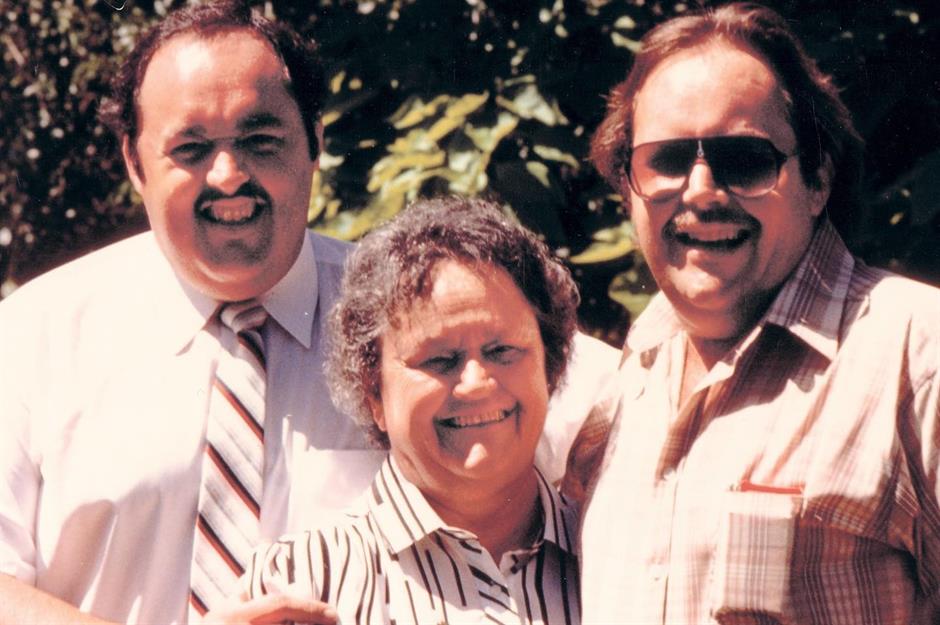
Harry Snyder passed away in 1976 after a battle with lung cancer, handing over his burger empire of 18 restaurants to his sons (Rich, pictured on the left, and Guy, right). In-N-Out remains a family business with no franchises or investors. Harry and Esther's granddaughter, Lynsi Snyder, is the current owner and president of the company.
Sponsored Content
1977: fast food university
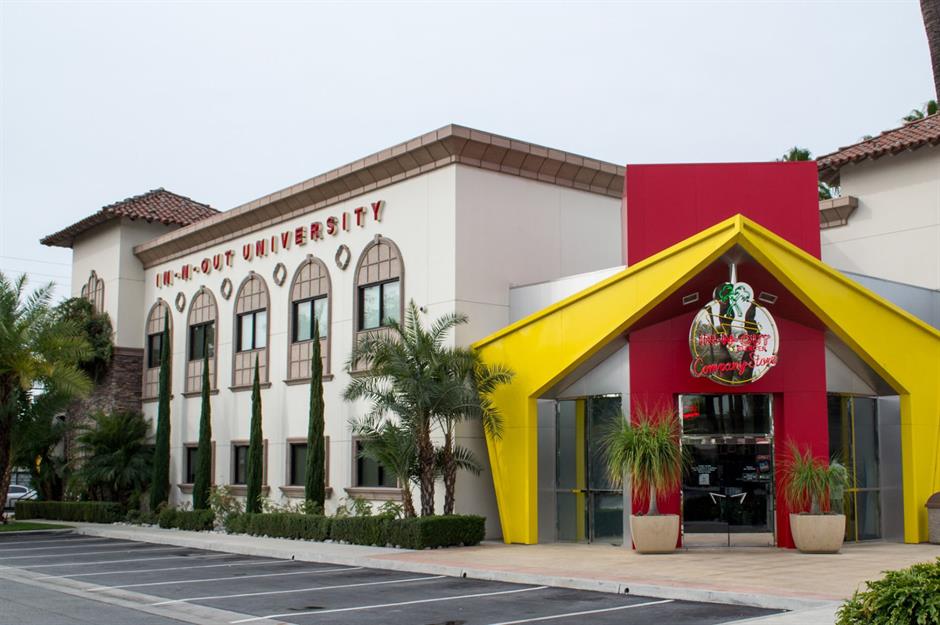
To ensure training standards were up to scratch, the fast food chain opened the In-N-Out University in 1977. For the first few years, it operated in the original store location, before eventually getting its own building (pictured) in 1984, located on the site of the Synder’s original home from 1948. It continues to function as a space where managers receive training, including customer service skills and understanding of quality control.
1979: first dine-in restaurant
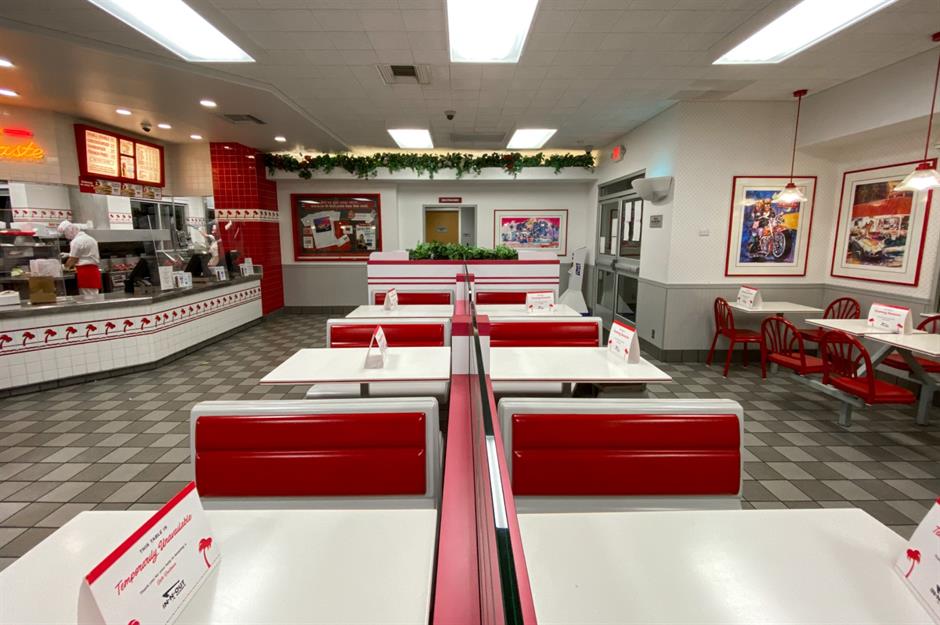
A new era of In-N-Out dawned in 1979, with the brand's first dine-in restaurant opening in Ontario, California. It gave customers the choice to eat in the restaurant or use the drive-thru lane. Five years later, in 1984, branch number 32 in Placentia, California, opened and became the first In-N-Out dine-in restaurant without a drive-thru.
1984: burgers that give back
Esther and her son Rich launched the In-N-Out Burger Foundation in 1984 to help raise money for children in need. Over the years, the foundation’s charity work expanded, including a Feed the Homeless initiative in 1990, and the launch of the Slave To Nothing Foundation in 2016, supporting families affected by substance abuse and human trafficking.
Sponsored Content
1987: Bible scriptures
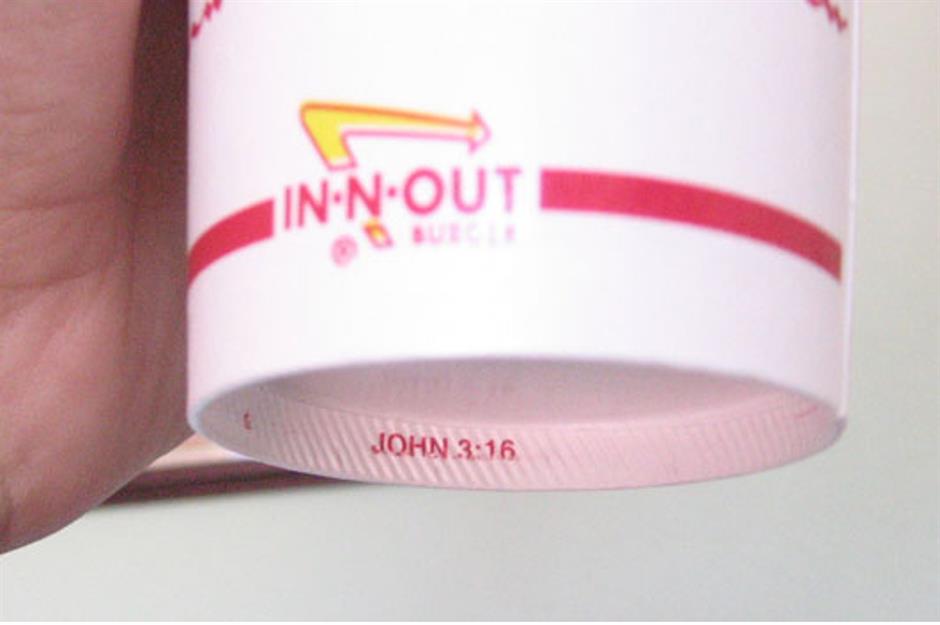
Wanting to express his Christian faith, Rich introduced the idea of having Bible scriptures printed on In-N-Out packaging in the late 1980s, notably on soda and milkshake cups and Double-Double wrappers. When Lynsi took over as president, she increased the number of products bearing Bible verses to include fry boat containers and coffee and hot cocoa cups.
1992: viva Las Vegas!
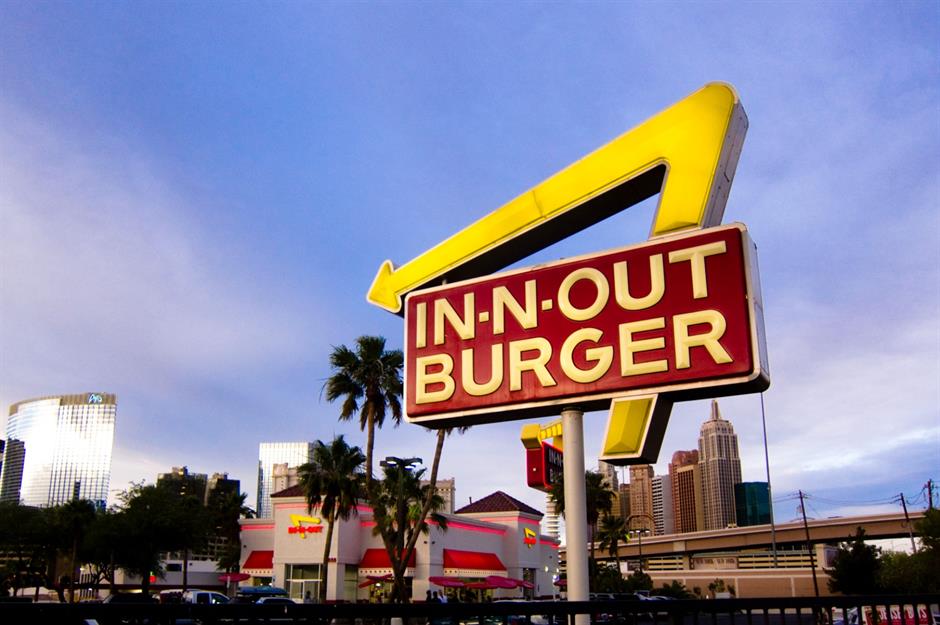
Following successful growth in California, the fast food chain opened its first branch outside of the Golden State. Restaurant number 80 launched in Las Vegas, Nevada in 1992 to much fanfare and excitement. The move was a successful one, and there are now over 20 In-N-Out restaurants in Nevada alone.
1994: post-Oscar parties
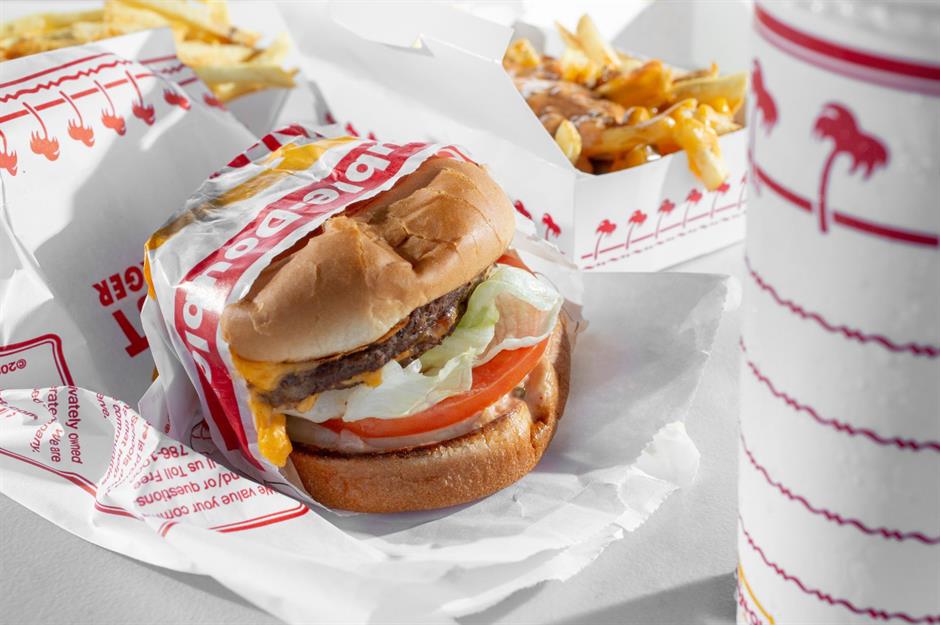
From Kylie Jenner to Gordon Ramsay, it’s no secret that In-N-Out is adored by celebrities. Alongside the fact that it’s largely California-based (and most importantly, delicious), the chain has been popping up at award show afterparties for decades, most notably Vanity Fair’s yearly Oscar Party. In-N-Out first appeared at the event in 1994, with the intention of feeding the staff working the party, but celebs soon caught wind and wanted a taste, and it has since become an annual tradition.
Sponsored Content
2000: expansion continues
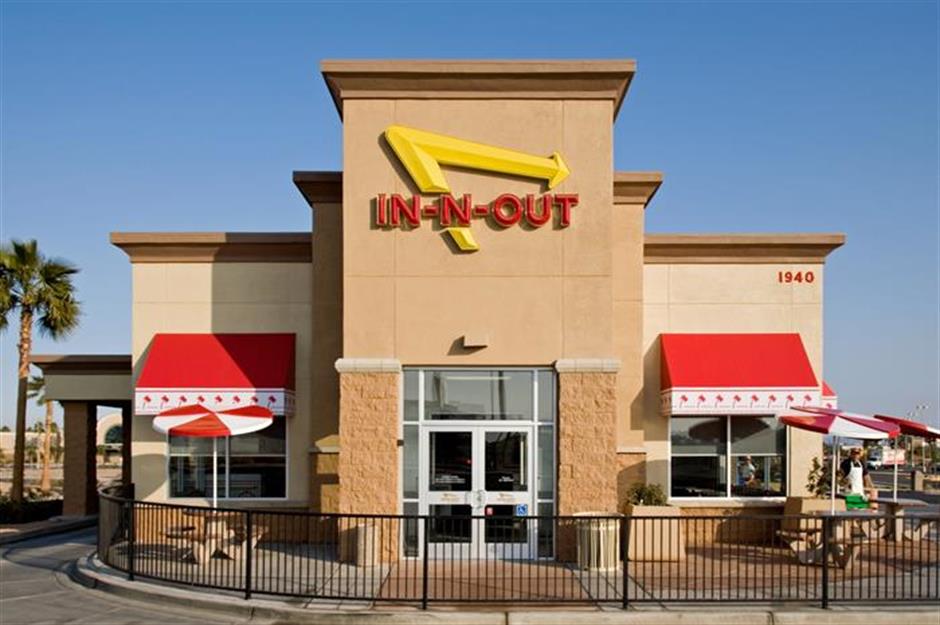
In 2000, In-N-Out arrived in Arizona, with the launch of the chain’s 143rd burger bar. The first Utah location opened its doors eight years later, taking the total number of branches across all four states to 215. Fast forward to 2025, and there are over 400 locations across eight states, including Colorado, Idaho, Texas and Oregon.
2004: monster burger
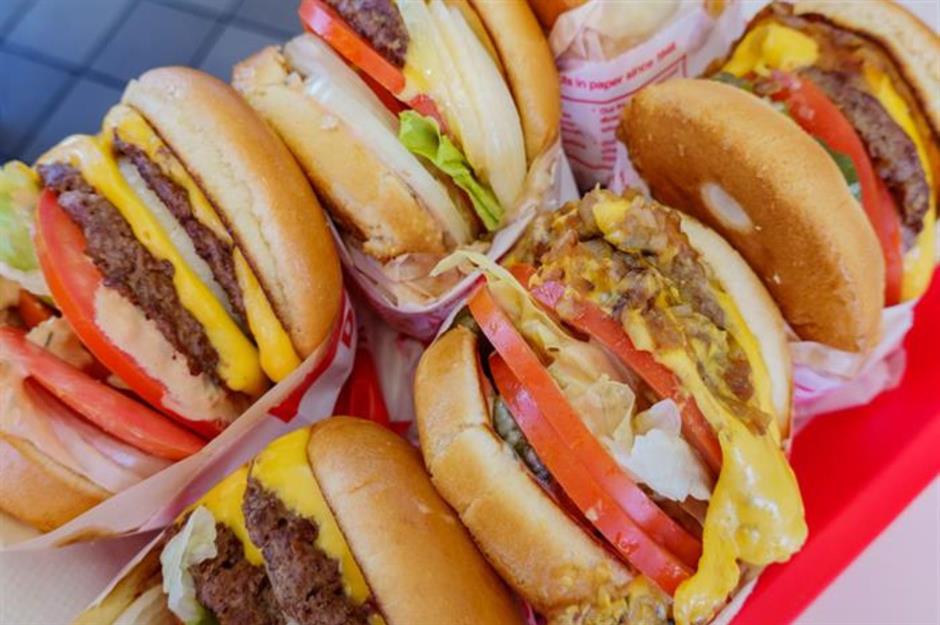
In 2004, food blogger Will Young pushed In-N-Out’s Secret Menu ethos of honouring all requests to its limits by ordering a 100x100 from one of the Las Vegas branches. While staff prepared the order – a Double-Double with 98 extra patties and 98 additional slices of cheese – and charged him $97.66 (around £72) for doing so, the 4x4 is now the largest burger available.
2014: remembering the past
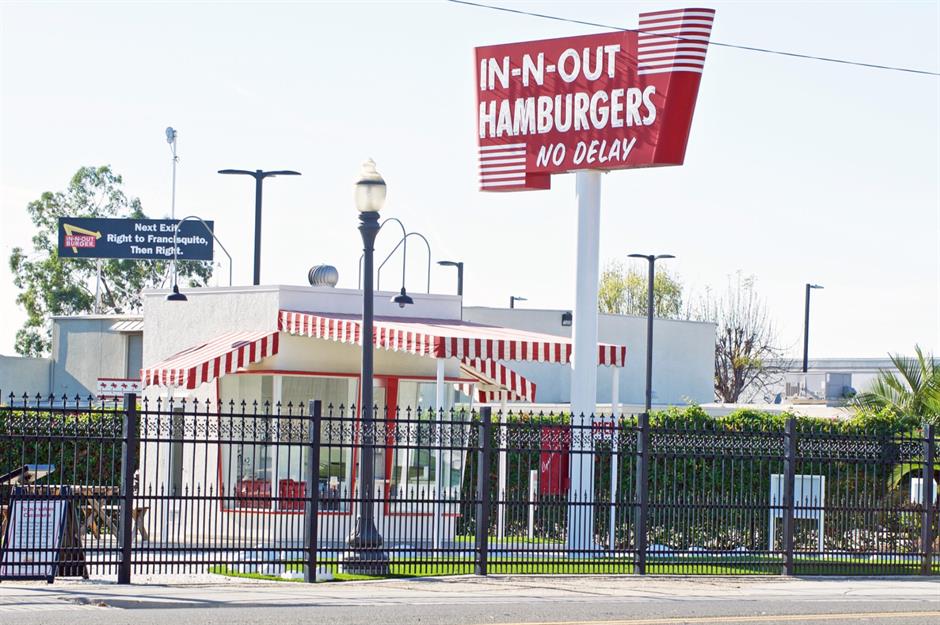
Honouring its long legacy, the Snyder family opened an exact replica of the first In-N-Out restaurant in its original location in Baldwin Park, California in 2014, acting as a strong reminder of where Harry and Esther's dream began. Fans can continue to visit the burger stand to view historical memorabilia and find out more about the In-N-Out journey.
Sponsored Content
2018: hot cocoa makes a return
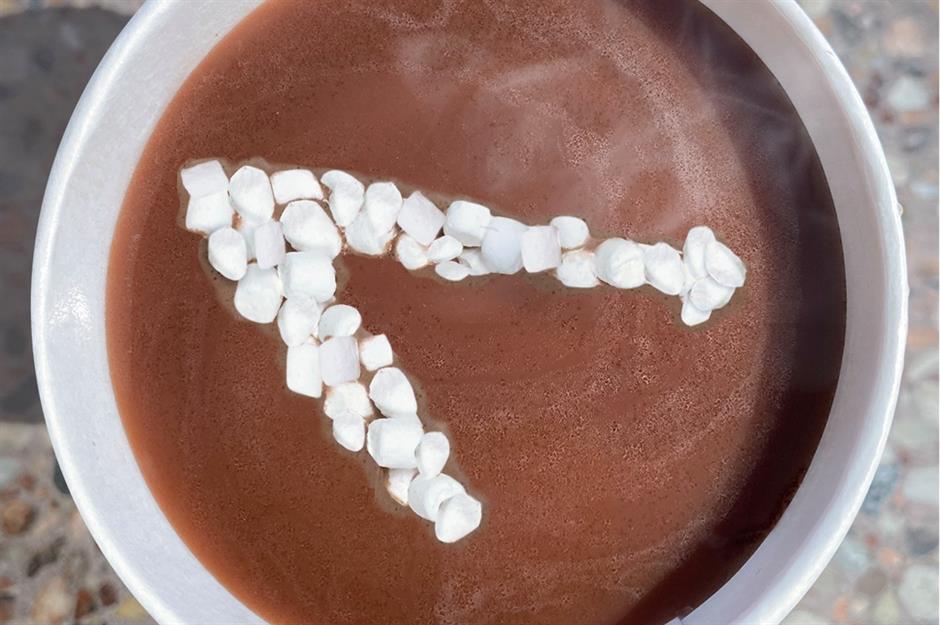
Hot cocoa served with fluffy marshmallows made a welcome reappearance on the In-N-Out menu in 2018, having previously been served at the burger bars during the 1950s. The cocoa used comes from the Ghirardelli Chocolate Company, and branches treat under-12s and eligible adults to a free hot cocoa on rainy days. This marked the first menu addition since lemonade some 15 years prior.
2016: burger mad Brits
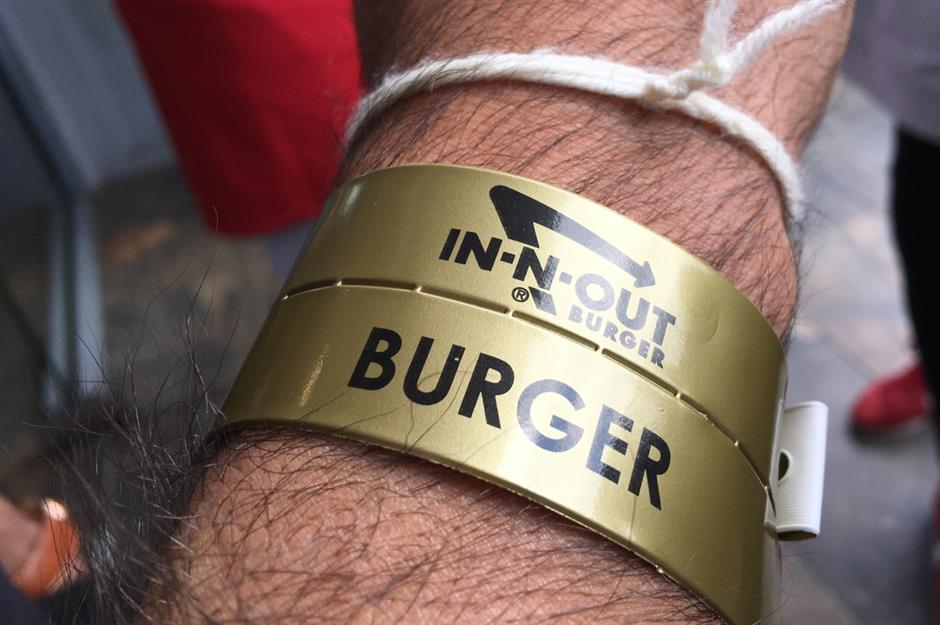
In-N-Out mania spread to the UK in 2016, when a pop-up landed in the small northwest London suburb of Swiss Cottage. Fast food fans queued for up to five hours, with some offering to pay £100 ($135) for an In-N-Out wristband guaranteeing them a burger. It sparked the first of many UK pop-ups from the brand, though there have been no hints regarding a permanent location.
2018: In-N-Out goes Down Under
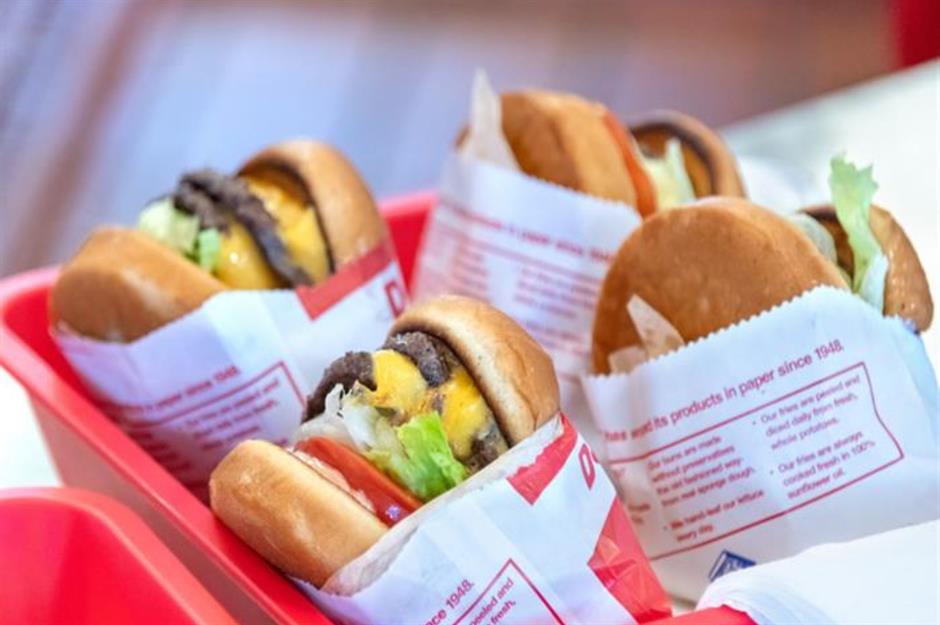
In March 2018, an In-N-Out pop-up restaurant in Melbourne, Australia, sold out of 300 burgers in 30 minutes, despite news of its opening only being released two hours prior. Similar success had previously been seen in Perth and Sydney, but the family firm says there are no plans to expand to the country.
Sponsored Content
2022: burger hysteria hits Berlin
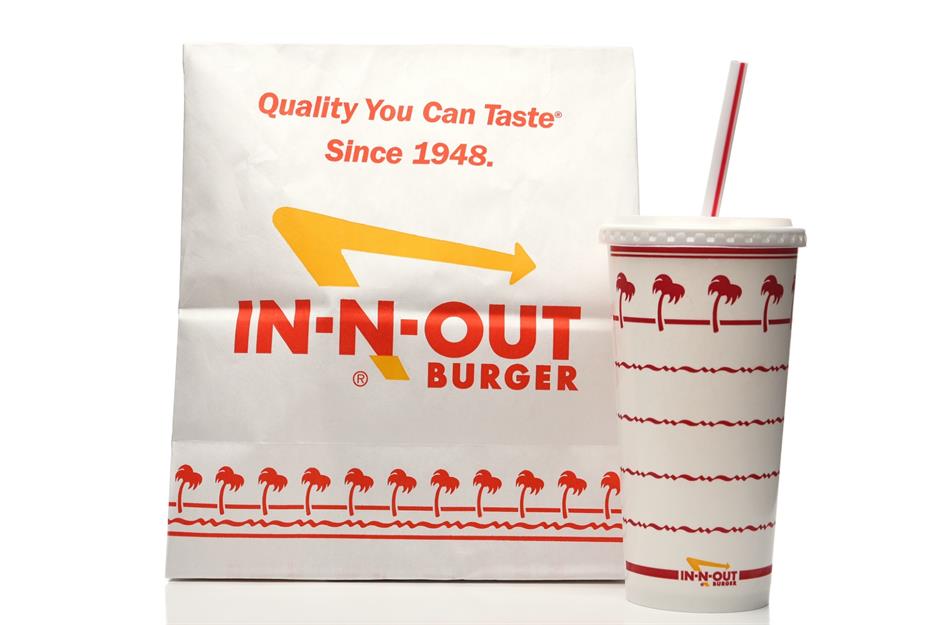
Hamburger hysteria also hit Germany in 2022, when In-N-Out hosted a pop-up inside a Berlin hotel. Doors opened at midday, and within 30 minutes, people were queuing up around the block. To the dismay of European fans, In-N-Out confirmed once again that there were no plans to expand overseas.
2023: modern marketing
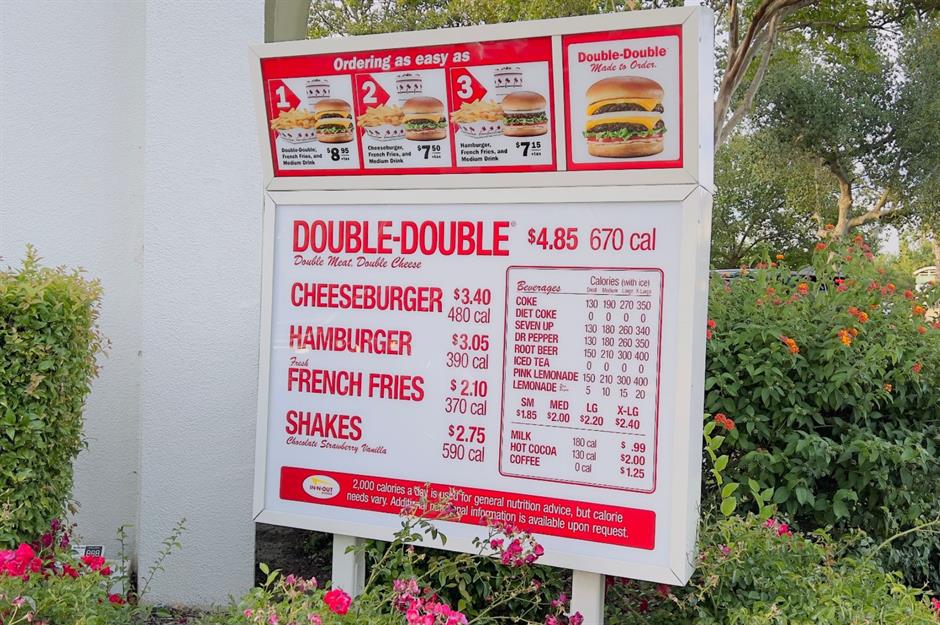
While these pop-ups cause a frenzy, the smart marketeers at In-N-Out aren’t (sadly, for global fans) scoping out new branch locations – they’re simply keeping the cult status of the brand alive. In-N-Out has trademarked its name across the world, and regular activity abroad ensures it can stop other businesses opening with a similar name and concept. It’s also a great way to make sure In-N-Out is at the top of every tourist’s must-visit list.
2023: a tasty tell-all book
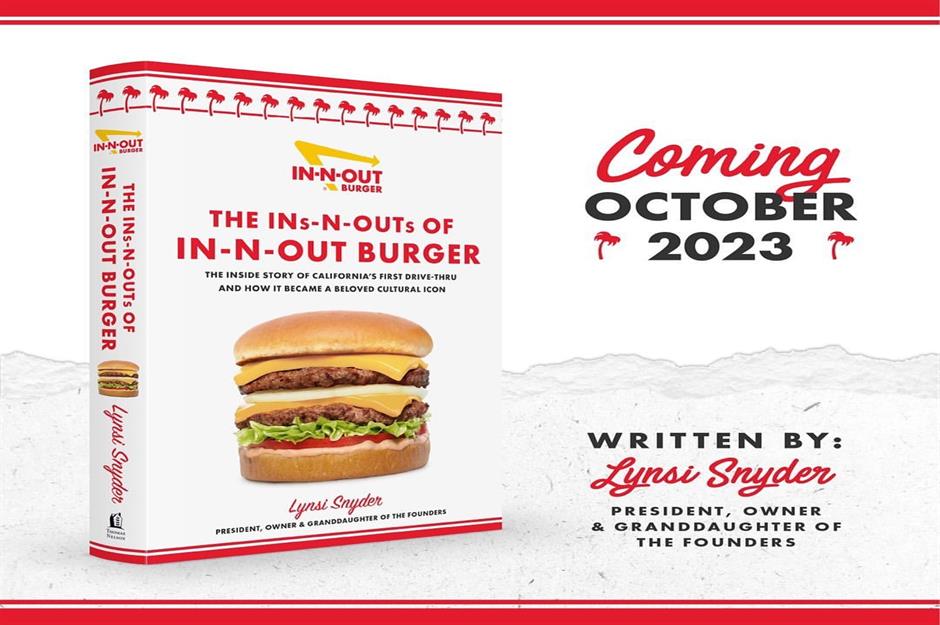
While fans based outside of the US continue to dream about the chain opening up somewhere near them, we can all learn more about the fast food brand from Lynsi’s book. The Ins-N-Outs of In-N-Out Burger: The Inside Story of California’s First Drive-Through and How it Became a Beloved Cultural Icon was published in October 2023, to tie in with the company’s 75th anniversary celebrations. In it, Lynsi promised to ‘share the whole truth’ about the famously secretive company, including revealing where exactly the name Animal Style came from.
Sponsored Content
2025: conscious menu changes
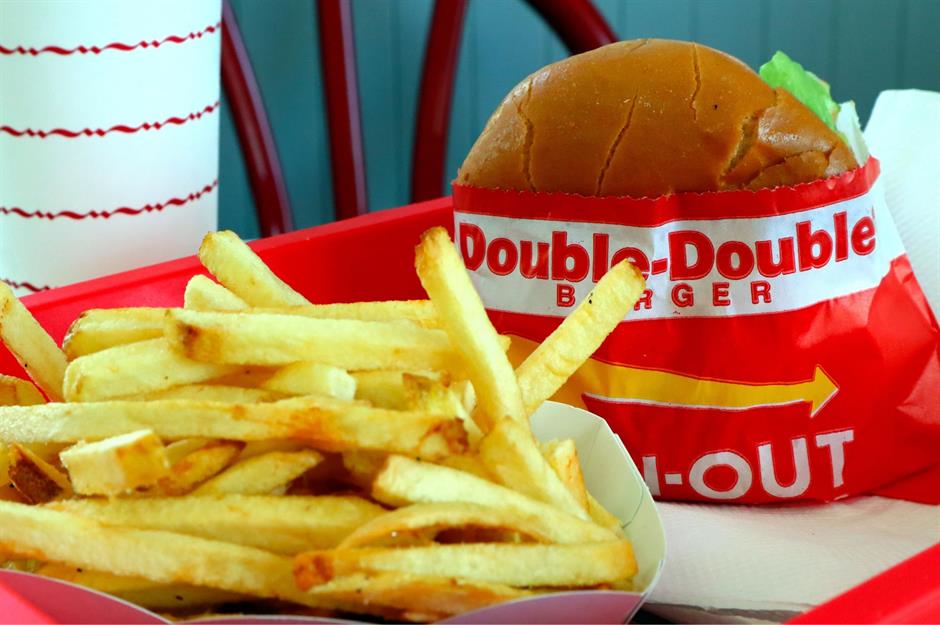
Because of the small but mighty menu, any In-N-Out food changes cause a stir – including its conscious move to replacing the artificial colouring in its Strawberry Shakes and Signature Pink Lemonade. The removal followed an announcement from the Food and Drug Administration, stating that synthetic food dyes must be phased out across the US by 2026. The brand’s tomato ketchup has been given a facelift, too, upgrading it to an option made with real sugar, rather than fructose corn syrup.
Now discover the incredible story of how McDonald's conquered the world
Last updated by Lottie Woodrow.