
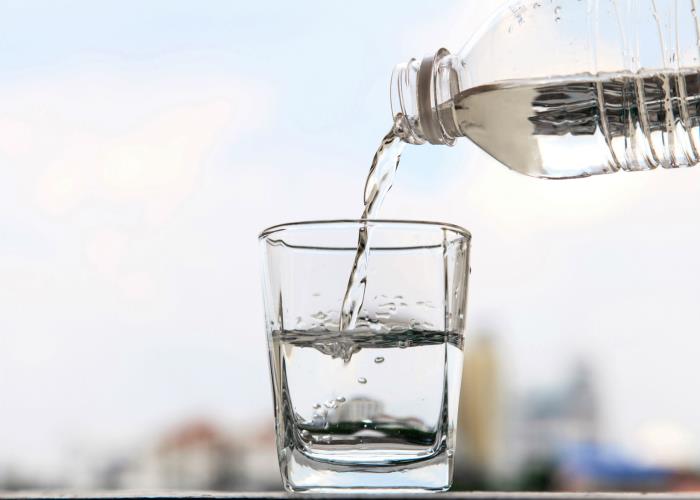
Is our water evil?
by Priscilla Pollara | 08 September 2011 |
0 comments
Tweet
Drinking a lot of water may do you more harm than good.
It's so typical, isn't it?
Guaranteeing us luminous skin, hard nails, glossy hair, weight-loss, good kidney health and stable concentration levels, water can do little wrong. In many ways, it is the ultimate godsend.
Ever discovered a spot taking your face hostage? Feeling sluggish? Been a little ill? Notice your skin has turned scaly, flaky or dry? Drink a little water, someone may at some point have suggested, and it’s certain to vanish …
Dehydration is a myth
But now, it seems, it’s time for a change of heart.
New research has come forward to suggest that water may not in fact be the gem we all believe it to be.
Why? Apparently dehydration is a myth. Total make-believe. And worse, consuming eight glasses of water a day is 'bad' for us.
The claims have been made by Glasgow-based GP Margaret McCartney, who has said that advising people to drink more than six glasses of water a day, is 'not only nonsense, but thoroughly debunked nonsense'.
Despite the fact that water makes up two-thirds of the weight of a human body (which is why scales may tell you different things at different times of the day), it is apparently inessential to resupply what we lose through perspiration, evaporation and urination by taking in a minimum of 1.2 litres.
Its dangers
We glug and glug at water hoping to keep wrinkled skin and overwhelming fatigue at bay, but while we assume we are aiding our health by drinking more, we may in fact be damaging it, too.
Few are aware, but an abundance of water in the body can in fact lead to heart failure through a diluting of sodium and electrolyte levels.
Water intoxication, or hyponatremia, to give it its proper title, can be fatal.
A liquid obsession
Acknowledgment of its perils, of course, wouldn't be as hard to digest if we weren't all hell bent on consuming our body weight in the stuff. And it certainly doesn't help that culinary celebrity Nigella Lawson openly admits that despite the raised alarms, she is a self-confessed ‘aquaholic’, often imbibing 2 litres before going to bed at night.
In effect, water has transformed from necessity, to something to which we all feel we constantly need access. Last year, Britons drank 2.06 billion litres of bottled water, a figure that far outweighs the mere 1.42 billion from the year 2000.
No surprise then, that the bottled water industry is currently worth £90 million in the UK this year alone - a 41% mark up from 2006.
As a result of our newest social obsession, flavoured water has also taken off in spectacular style. Be it lime, strawberry, blackcurrant and even 'oxygen-flavour', water has shed its 'boring' tag and now become just as good, just as healthy and just as plentiful as a replacement to a pudding, or meal.
In some ways, it is reassuring to know that Britons are still drinking more tea and coffee than they do water. But then again, it does make one think twice about the amount of money consumers are happily handing plastic bottle water companies.
Long gone are the days when we walked over to the tap and filled up a container through its free-flowing, just-as-good water. Is it really necessary for us to buy a new bottle every time we feel thirsty?
Even Nigella, who normally has the public hanging off her every last slice of advice, is finding it hard to cut this particular habit.
So what do we drink now?
Despite this furore, it’s crucial we do not forget water’s essential qualities – after all, we need hydration in order to function.
It was because of this that we never thought to question the validity of its advantages - after all, what would we have to fear from a clear, tasteless liquid that contained no alcohol?
Over the last few decades, we’ve taken to having handy little plastic bottles of the stuff by us at all times. In handbags, in the crannies of our elbows and on our desks at work, water has become this century's must have accessory.
But perhaps these findings – whose claims have been lambasted by other members of the NHS who now worry that the public will dramatically reduce its consumption and find itself dehydrated – do encourage us to step back a little. While it’s important to keep ourselves running properly, it is simply not necessary to reduce our stomachs into unnecessary water sacks. (Or make bottle companies filthy rich off our fads.)
“As long as one keeps hydrated and is drinking plenty of fresh water throughout the day, they are helping the body retain its moisture,” a local GP, explains. “There is no need to panic over water being dangerous, but it’s always important to be aware of the consequences of indulgence. Water may not seem harmful, but in excessive amounts, it can be. Just be sensible.”
But where do you sit in this debate? Let us know in the comments box below.
Also worth your attention:
Vitamin water is not nutritious


Comments
by Natural Hydration Council | on 06 September 2011
Dr McCartney’s claims seem to be dismissing the years of research by scientists in this country and across Europe, and are misleading and unhelpful. UK government guidelines advise drinking 6-8 glasses of fluid per day (as opposed to water alone) to stop us getting dehydrated(1).
For a healthy person a 1 to 2% reduction in body weight over the day can signal mild dehydration and reduce our ability to concentrate. Dehydration can leave us feeling tired, dizzy and suffering from headaches(2). The NHS advises that ‘water is the healthiest choice for quenching your thirst at any time’(3).
Over-hydration is very rare and usually only occurs when large amounts of water are consumed over a short period of time but not when spread over the day.
As highlighted by a report in The Lancet in August the obesity crisis in the UK and across the globe is getting worse. Weight gain is caused by an excess in calories we eat, and calories we burn off in physical activity. Children aged 4-10 get about one-fifth of their sugar intake from soft and sugar sweetened drinks and those aged 11-18 get about one-third of their sugar intake from soft and sugar sweetened drinks(4). In fact the average Briton drinks just 200ml of water a day - equivalent of less than one glass(5).
Drinking water is one of the best ways to hydrate and contains zero sugar, calories, preservatives or additives. So when the country is facing an obesity crisis it’s not helpful to denigrate water.
Chloe Bilgorri
Co-ordinator
Natural Hydration Council
Sources
1 NHS Choices: http://www.nhs.uk/Livewell/Goodfood/Pages/water-drinks.aspx
2 Mayo Clinic (2008) Dehydration Symptoms: http://www.mayoclinic.com/health/dehydration/DS00561/DSECTION=symptoms
3 NHS Choices: http://www.nhs.uk/Livewell/Goodfood/Pages/water-drinks.aspx
4 NHS Choices http://www.nhs.uk/chq/pages/how-many-soft-or-fizzy-drinks-can-children-have-a-day.aspx?categoryid=74&subcategoryid=741
5 DEFRA National Tap Water Consumption Survey 2008
by Mike10613 | on 08 September 2011
The UK is a nation of alcoholics, if you drink alcohol you need to drink more water. Even moderate alcohol consumption needs more hydration. Bottled water in supermarkets is a waste of money, but some people have so much money they have to waste it.
by Ida | on 08 September 2011
Oh for goodness sake! Drink when you're thirsty. If it's a hot day keep some water with you as you're likely to feel thirsty. If you go to the gym, take a bottle as you're likely to feel thirsty. Just pay attention to your body and plan ahead a little bit. Nobody knows better that your own brain when and how much you should imbibe.
by Heraclitusll | on 08 September 2011
Yes - I have always felt that we should listen to our bodies re water just as we do in respect of food. We don't feel we have to eat when we're not hungry - so why not only drink when we're thirsty? Surely our bodies know best.
However - there is a point about tap water. I have not drunk it knowingly for many years because it is taken from the river Thames and "purified". That water in the Thames has "purified" water from two sewage farms up river emptied into it. The systems used cannot remove the small quantities of contraceptive pills and other drugs - antidepressants and tranquillisers for example, that enter the water from human urination, which then goes to the sewage farm and into the Thames. There are many other drugs too.
Our bodies are very sensitive to even these small amounts.
And I don't like chlorine either. And those authorities who add fluorine to their drinking water are definitely harming their customers. It should be, and may even be, illegal.
by feetman | on 08 September 2011
What a waste of space and time.....GP Margaret McCartney should see the bigger picture and know the problems dehydration causes.
Dont tell the people that drinking water can lead to heart failure! the extreme amounts of water needed for that is beyond the point of our body rejecting it anyway. Treatment for dehydration and dehydration related problems far out numbers treatment for water intoxication.KEEP IT SIMPLE 6-8 GLASSES A DAY. I cycle 50 miles a day and drink 6 ltrs a day sometimes more in hot weather. Mike10613 (first comment) you are spot on mate. If the binge drinkers replaced water with alcohol then GP Margaret McCartney may have a point for them but every day folk need targets and like Eda says "common sense".
by rrsheard | on 08 September 2011
I wish that the National Hydration Council had said who they were - an organisation sponsoored by bottled water manufacturers - not very neutral.
Heraclitusll attacked tap water. I and millions of others live in London and drink tap water and remain healthy. Where are the scientific papers backing his claim. As to fluoride addition it is legal, it should be and it is not poisonous in thge quanatites used; the addition of fluorides has given recent generations far better teeth. To Thames Water - keep up the good work!
by martin0642 | on 08 September 2011
I don't understand the idea of giving people arbitrary amounts to consume as though hydration is a one-size-fits-all thing. Like every aspect of nutrition it changes daily and according to the very specific needs of the individual at the time.
There is no question that staying hydrated is crucial for a wide range of reasons but we have a perfect barometer for it built in - the colour of our wee. I subscribe to the idea that you should wee nearly clear, at least twice a day. Aiming for that seems to work out well for me and anyone i've suggested it to. Admittedly things like Vit C supplementation can have an impact on this (by colouring the wee) but otherwise..it's a pretty good basis for working out how much water you need each day.
I'm not sure i've written the word "wee" that many times in one paragraph ever....I really must get out more.....
by ladymissfear | on 08 September 2011
The '6-8 glasses a day' recommendation as promoted by the NHS and many, many other people comes from a piece of research done in 1928 - an investigation into what nutrition precisely we receive from our daily food intake. The conclusion was that we imbibe the equivalent of 6-8 glasses of water in the food we eat each day. Not that we drink it. Not that we should drink it. Just that the food contains that much water. That result was misread/misinterpreted and the resulting fallacy (you should drink 6-8 glasses of water) has been repeated ad nauseum for nearly 90 years! I echo the earlier comments - drink when you're thirsty, drink from a tap (the testing procedures/residue allowances are far more stringent than mineral or spring water), and stop stressing about all this nonsense of what one should or shouldn't be doing to stay healthy.
by daveA | on 08 September 2011
Just a quick thought about the need to drink six to eight glasses of water a day, this is all based on a study conducted in the 80's and funded by... surprise surprise, Evian.
The major flaw in the methodology (well it wasn't really a flaw it just meant the study didn't mean what it has been represented as ) was that they measured the amount of water that people took in and assumed that this was how much you needed.
Probably not a bad way of figuring it out, but at some point over the years the six glasses of water has become prescriptive rather than descriptive. The other interesting thing about this study was that they included the water contained in food, so people only drank 6 glasses of water if there was no water in there food, given that a steak is about 60% water and a cucumber 98% water it would be a pretty weird diet where you didn't get most of the water you needed from food.
obviously dehydration is bad for you, it can be fatal very rapidly, but that doesn't mean that overhydration is good for you. Malnutrition is bad for you but we all know what happpens when you eat too much.
by aqua_nuda | on 08 September 2011
Ida, I am 100% with you! If somebody cannot tell if they are thirsty or not, then they certainly need guidance how much to drink:)
I find that measuring own water intake is often related to a psychological problem of some kind and that person should go and see a doctor - not the one who specialises in dehydration...the other one!
And something for the hard core bottled water lovers - if you guys feel the need to produce really expensive urine, you have already found the solution on the supermarket shelf!
by prominentw | on 08 September 2011
A point no one has mentioned so far is that the type of plastic used in water bottles is toxic. So much so that many health conscious Americans will only buy glass bottled water. The longer the plastic bottle hangs around, the more toxins leach out, particularly when it is shaken about in transit, and when a bottle is opened and left partially consumed. The long term effects are not known but cannot be positive.
So if you must buy bottled water, buy it in glass bottles.
by rupertnorwich | on 08 September 2011
water is the best natural drink....so just drink it when your body asks for it, not swamping it with a half gallon every day, flush your kidneys of course,but dont overwork the blighters!!!
by yazmazminal | on 08 September 2011
I respectfully disagree with this article 100%. I recommend you read "Cellular Awakening" by Barbara Wren. Dehydration is NOT a myth and correct hydration levels are essential for optimal health and the ongoing daily elimination of toxicity from our bodies. Dehydration is first registered in the colon. When we become dehydrated we allow toxins to stagnate and this gradually contributes towards deterioration of our health. As a child I was constantly dehyrdated and not even remotely in good health, as an informed adult, I have kept my hydration levels up and am blessed with great health, so from my own experience, I can say that good hydration levels are essential. However, there is plenty of sturdy research to back this up.
Consumption of water (or herbal tea not fruit tea) should be, like everything else, sensible and in moderation. 6 to 8 glasses per day serves most adults very well and especially if consumed steadily over the course of the day, rather than in short sharp bursts of high amounts. As for bottled water, the effects of drinking water that has been sitting in plastic bottles is a concern and the easiest way to ensure clean drinking water is to use a water filter at home.
by unclehunty | on 08 September 2011
Can someone please remove the post by the Natural Hydration Council. It's clearly an advertisement on behalf of bottled water manufacturers.
On the whole, this is a fairly good article highlighting the misconceptions using some decent research, something that is lacking in pretty much the rest of the internet, this site included.
by yazmazminal | on 08 September 2011
As an additional comment I have to say that if one drinks when one is thirsty, it is already too late, thirst is a sign that the body is already dehydrated.
Also, the addition of fluoride to drinking water may well be legal but it is a major cause of concern to our health. Fluroide aggressively coats the iodine receptors in our thyroid glands, thus preventing iodine from being able to do its job, which is to regulate the thyroid gland which affects our metabolism and much more. Iodine is already severely lacking in our modern diets and yet is an essential nutrient for health. Fluoride may or may not improve our dental health but it is far safer to drink green tea anyway, which has the effect of reducing tooth decay. The Japanese drink plenty of green tea and have great dental health.
by SuBo | on 08 September 2011
I had a fairly minor procedure done in a big hospital not long ago and my blood pressure fell dramatically. Later I wasn't allowed to go home unless I agreed to drink a TWO LITRE bottle of water over the next two hours to raise my blood pressure!!! I suppose it made more blood!?
by aqua_nuda | on 08 September 2011
yazmazminal, I agree - dehydration is not a myth, it is a very well known condition and a very dangerous one if you, say, get lost in the desert!
And please, lets be sensible and not describe the physiological fluctuations of our body content as dehydration! To avoid these fluctuations simple drinking is not good enough and to be on the safe side, one should seriously consider returning to aquatic stile of living - fish never seem to get dehydrated. And they must enjoy clean, toxins free digestive tracts!
by marram | on 08 September 2011
The truth of the matter is, too much of ANYTHING is bad for you. What we all need to do is learn moderation and wave goodbye to fads. If someone is getting rich from the latest so-called 'healthy' idea then you can be sure it is not THAT good for you. And just because a little of something is good, doesn't mean a lot will be better!
by finnol49 | on 08 September 2011
There was a bill before Parliament earlier this week, making water companies liable for prosecution if they added fluoride to water. I haven't heard whether it was passed or not (!). Why is fluoride an industrial poison (by-product of aluminium production), but not if it is used in drinking water or in toothpaste? In my opinion, fluoride should never be added to drinking water, & fluoride toothpaste should only be available in 25 ml tubes, with the recommendation that it is used no more than once a week. Yes, fluoride is required by human beings, but in minute quantities. In the amounts currently in some water companies drinking water, the fluoride is carcinogenic, causes osteoporosis, Alzheimer's & displaces iodine from thyroid hormones, as reported above.
My advice about drinking water is, drink when you're thirsty! Avoid fluoride & chlorine!
by rrsheard | on 08 September 2011
To finnol49 I say where is the proper evidence that fluoride in drinking water "is carcinogenic, causes osteoporosis, Alzheimer's & displaces iodine from thyroid hormones"
Please finnol49 and others concerned, Google department of health fluoride in water.
by John Eaton | on 08 September 2011
Sorry, rrsheard, but the evidence as to the harmful medical consequences of imbibing a "cumulative protoplasmic enzyme poison three times stronger than Arsenic (not my opinion, but that of George Heyd MD, a Past President of the American Medical Association), is overwhelming; I could happily supply him/her with a lorryload or two, if she would like to send a lorry round!
However, my overwhelming objection to putting Fluoride in the drinking water is not medical or dental, but ethical. How can it be right to use public water supplies to force everyone - irrespective of their wishes or bodily requirements - to undergo a medical treatment aimed at a tiny minority (children who eat too many refined carbohydrates?!
If my Doctor or Dentist forced me to take a fluoride pill against my wishes, I could sue him for assault. Why should the Water Companies or the Helath Authority be able to do so with impunity?
If it were safe, why is it banned or illegal in most of the rest of the world?
"What about all the other chemicals in the Water Supply, then?" is often the next question. Well, all the other chemicals are inserted in order to treat the WATER itsefl (i.e. to make it safe to drink( - Fluoridation involves treating the CONSUMER - a very different proposition.
Finally, even the most ardent proponents of Fluoridation admit that it is dangerous and toxic above "the safe limit" (currently estimated at a maximum dose of 1part per million). So tell me, please, anyone, how on earth can you limit the dosage when you can't limit the amount of water people drink?! Fluoride is a CUMULATIVE enzyme poison, and when you take into account the fluoride which is already in beer, fish and even the atmosphere around us, it simply wouldn't be possible to limit anyone's intake of Fluoride to 1 ppm, even if we were all happy about the principle of compulsory mass medication -which I for one, am NOT!! Let those that want fluoride have it, but let me drink water with as few chenicals as possible, please - whether it's 8 glasses a day,. or only when I'm thirsty!
by AmIFoolish | on 09 September 2011
Fluorine in the water is a completely seperate issue, and one which needs a lot more coverage than posting comments here will provide.
However, Priscilla, I find this piece of writing to be "Scare-mongering" trash ... sorry, but it's true. You "pooh-pooh" the idea that drinking water helps keep our skin healthy, promote good kidney function, and increase concentration levels, and general good health ... yet, you have offered no real guidelines on what is an "excessive" amount of water? ... is it 1L per day or 22L per day?
The fact that drinking "excessive" amounts of water is bad is not a new one ... It was covered maybe 15 or 20 years ago in the press (and maybe it's time has come again) ... but the 6 to 8 glasses a day, or say 2-3L per day, is far from being harmful ... as someone who does NOT drink anything like that amount, I can say for sure, that when I do ... I feel a lot better ... and as someone who suffers occassionally trying to stay awake in the afternoon, after I've got up very early for work, drinking fresh water helps me with concentration and fatigue a lot better than a cup of coffee (but I still prefer to drink coffee).
It is important to drink adaquetly ... and as Yazmazminal wrote above, it's definitely true that by the time you feel thirsty you're already dehydrated. Drinking too little has a significant effect on Skin elasticity, as well as on your bodies ability to function, and you don't need to be in a desert to suffer dehydration.
... but, also, drinking 20L of water (or any other liquid) would also seriously affect your health ... stripping the water soluble vitamins from your body,: flushing them through the kidneys, and leaving you, in a matter of only days, feeling lethargic and very under the weather.
Join the conversation
Please sign in or register to post a comment.